Grilled Salmon with Spinach & Quinoa
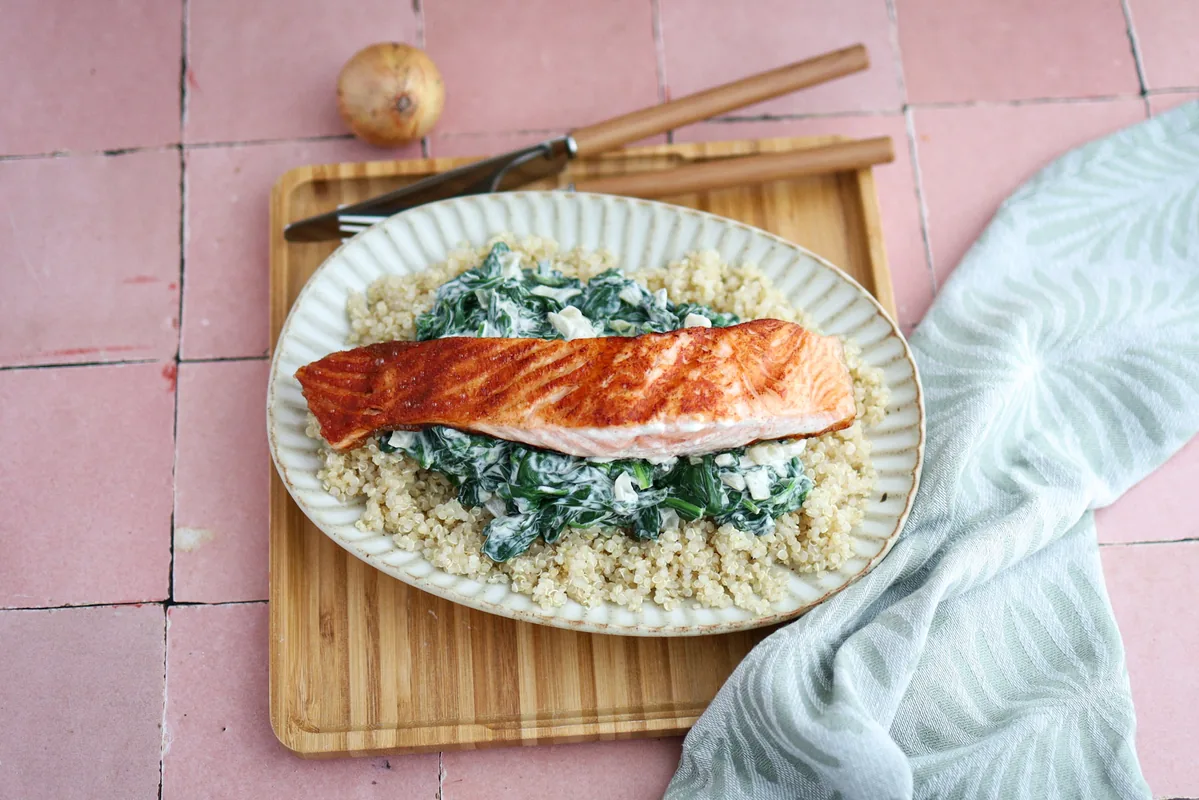
Grilled salmon with crisp edges from the grill pan, quinoa cooked until fluffy, and a bed of spinach sautéed with onion in olive oil, then folded through with nonfat yogurt until it turns creamy and tangy.
52g of protein, 760 kcal, and six ingredients. The whole plate takes 20 minutes.
Grilled salmon with crisp edges from the grill pan, quinoa cooked until fluffy, and a bed of spinach sautéed with onion in olive oil, then folded through with nonfat yogurt until it turns creamy and tangy.
52g of protein, 760 kcal, and six ingredients. The whole plate takes 20 minutes.
Ingredients
- salmon fillet 1 piece
- quinoa 3 ounces
- onion 0.5 piece
- olive oil 1 tablespoon
- spinach 8 ounces
- yogurt, nonfat 2 fluid ounces
Method
-
Thaw the salmon according to the instructions.
-
Cook the quinoa until done according to the instructions on the package.
-
Roughly chop the onion.
-
Season the salmon fillet with salt and pepper and lightly coat with half of the oil. Grill the salmon fillet in a grill pan for 6-8 minutes until almost done. Turn after 3 minutes.
-
Heat the remaining oil in a sauté pan and gently fry the onion until translucent. Stir in the spinach a handful at a time and let it wilt while stirring. Mix in the yogurt with some salt and pepper and heat while stirring.
-
Serve the salmon with the quinoa and spinach.
Add the spinach a handful at a time and let each batch wilt before adding more. All 224 grams at once will cool the pan too fast, and the leaves steam instead of sautéing — you end up with watery greens instead of the concentrated, olive-oil-coated spinach that pairs with the salmon.
Why This Works
Behind this recipe
Is 52 grams of protein in one meal too much?
The old rule said 20–30 grams per meal was the cap, and anything beyond that went to waste. More recent evidence tells a different story. Your body can use substantially more protein per sitting than that threshold suggested, and 52 grams falls well within what current research considers effective for muscle protein synthesis in a single feeding.
Read the full evidence reviewDon’t the oxalates in spinach block iron absorption?
That is one of the most repeated claims about spinach, and it has been tested directly. Researchers gave participants meals with and without added oxalic acid and measured iron absorption both ways. The result: oxalic acid had no measurable effect (P=0.86). The actual inhibitors of non-heme iron absorption are polyphenols and calcium, not the compound most sources blame.
Read the full evidence reviewDoes cooking with olive oil destroy its health benefits?
Heating olive oil does reduce its phenolic compounds — by up to 75% in some measurements. But the remaining phenols and the fatty acid profile stay intact. The sauté in step 5 is brief, and the oil’s beneficial properties are not erased by that kind of heat exposure.
Read the full evidence review