Rice Cakes with Creamy Peanut Butter Spread & Blueberries
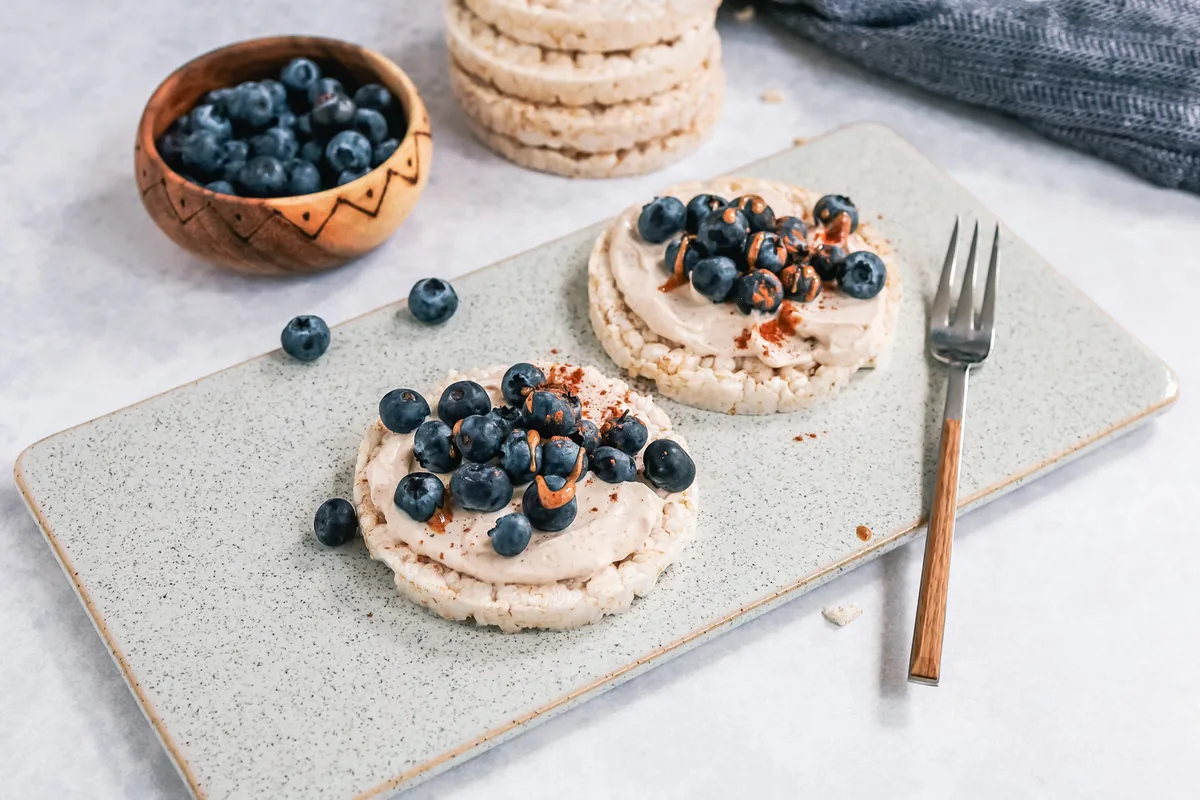
Two rice cakes topped with a creamy spread made from yogurt, cream cheese, and peanut butter, finished with thawed blueberries and a pinch of cinnamon. Three minutes, no cooking, 15 grams of protein from three different sources.
Most rice cake snacks deliver almost no protein. This one delivers enough to matter.
Two rice cakes topped with a creamy spread made from yogurt, cream cheese, and peanut butter, finished with thawed blueberries and a pinch of cinnamon. Three minutes, no cooking, 15 grams of protein from three different sources.
Most rice cake snacks deliver almost no protein. This one delivers enough to matter.
Ingredients
- blueberries (frozen) 0.25 cup
- yogurt, nonfat 2 fl oz
- cream cheese, reduced fat 2 tbsp
- peanut butter 1 tbsp
- cinnamon 1 pinch
- rice cakes 2
Method
-
Let the blueberries thaw, then drain any excess liquid.
-
In a small bowl, mix the yogurt, cream cheese, peanut butter, and cinnamon until smooth.
-
Spread the mixture evenly over the rice cakes. Top with blueberries.
Add a pinch of sea salt to the spread before mixing. It sharpens the sweetness of the blueberries and rounds out the peanut butter flavor. For variety, swap in almond or cashew butter.
Peanut butter alone contributes about 4g of protein per tablespoon. Adding yogurt and cream cheese to the spread triples the protein to 15g per serving. A crossover study found that spreading the same total daily protein evenly across meals produced 25% more muscle-building activity over 24 hours than loading most of it at dinner. A mid-day snack with this much protein contributes to the even-distribution pattern the research found superior.
Protein distribution and muscle buildingBehind this recipe
Why use three different protein sources in the spread?
Each ingredient pulls its weight. Peanut butter brings about 4g of protein plus healthy fats. Nonfat yogurt adds another dose of protein with a creamy base. Reduced-fat cream cheese rounds out the texture and adds more protein without making the spread heavy. Together they reach 15g per serving, which is unusually high for a rice cake topping. That matters because a crossover study found that spreading protein evenly across meals produced 25% more muscle-building activity than loading most of it at dinner.
Read the full evidence reviewAre rice cakes bad because of the high glycemic index?
Rice cakes do have a high glycemic index (around 82), which sounds alarming if you follow GI-based diets. But 14 trials tracking 1,770 adults found the total body-weight difference between low-GI and high-GI diets was just 0.62 kg over six or more months. That is not a meaningful difference for body composition. Topping rice cakes with protein and fat from the spread also slows digestion compared to eating them plain. More on GI and fat loss: Does Glycemic Index Matter for Fat Loss?
Read the full evidence reviewCan I make this ahead of time?
The spread keeps well in the fridge for up to two days in a sealed container. Assemble on the rice cakes right before eating, not the night before. Rice cakes absorb moisture quickly and lose their crunch within an hour of contact with the wet spread.