Quick Curry with Eggplant & Chickpeas
Eggplant rarely gets credit as a nutritional powerhouse. In most curries, it is there for texture and nothing more. This one pairs it with coconut milk in a way that research suggests changes how much of the eggplant's main antioxidant your body actually absorbs.
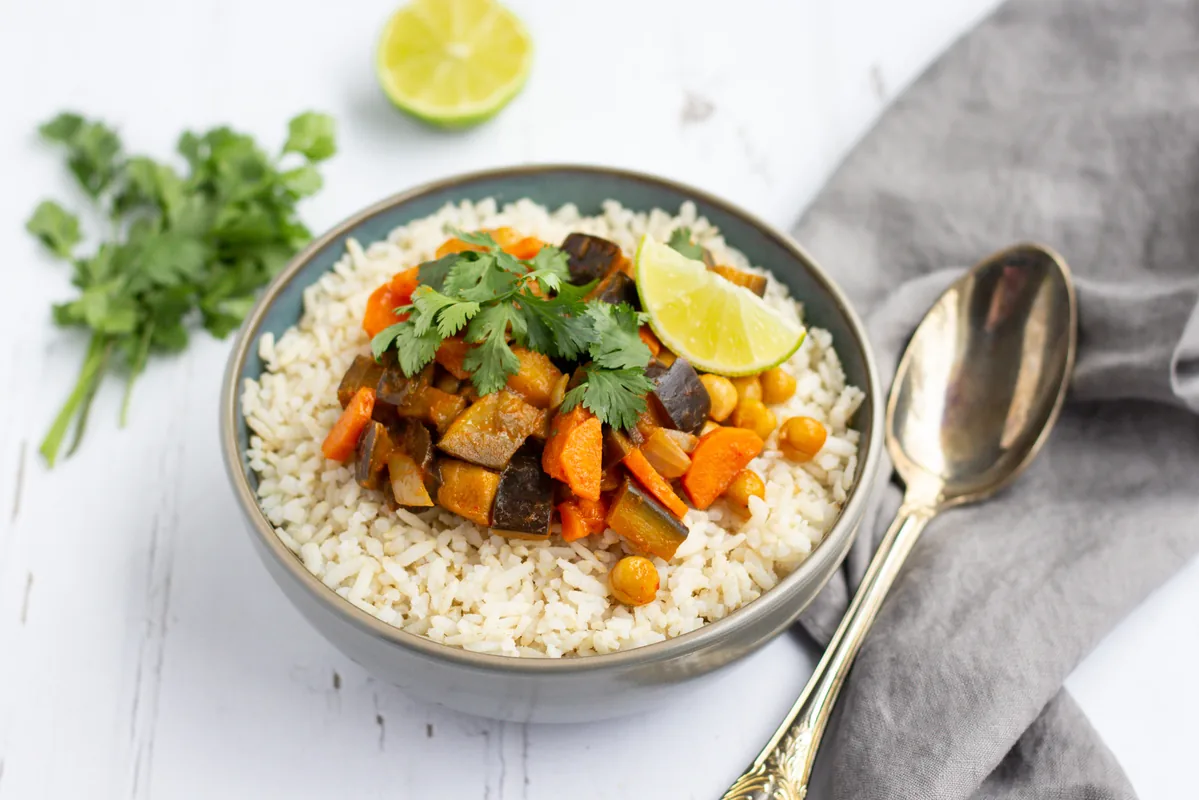
The curry is simple: sautéed onion, eggplant, and carrot in red curry paste, simmered with coconut milk and chickpeas. Twenty minutes, served over brown rice. The whole plate delivers 799 kcal and 24g of fiber.
Eggplant rarely gets credit as a nutritional powerhouse. In most curries, it is there for texture and nothing more. This one pairs it with coconut milk in a way that research suggests changes how much of the eggplant's main antioxidant your body actually absorbs.
The curry is simple: sautéed onion, eggplant, and carrot in red curry paste, simmered with coconut milk and chickpeas. Twenty minutes, served over brown rice. The whole plate delivers 799 kcal and 24g of fiber.
Ingredients
- Brown rice 84 g
- Onion 0.5
- Eggplant 1
- Carrot 1
- Olive oil 15 ml
- Red curry paste 20 g
- Coconut milk 90 ml
- Water 119 ml
- Chickpeas (canned, drained) 140 g
Method
-
Cook the brown rice according to package directions.
-
Cut the onion, eggplant, and carrot into pieces.
-
Heat a frying pan on medium-high heat and add the olive oil.
-
Fry the onion for 2 minutes, then add the eggplant and carrot. Cook for 5 minutes.
-
Add the curry paste and stir well.
-
Pour in the coconut milk and water, stir well.
-
Add the chickpeas and let it simmer for 3 minutes.
-
Serve the curry over the brown rice.
Let the eggplant simmer in the coconut milk sauce rather than cooking it separately. Eggplant is one of the richest everyday sources of chlorogenic acid, and a study in 90 people found that coconut oil — the primary fat in coconut milk — boosted chlorogenic acid absorption from 5.7% to 65.6%. The simmer step keeps both in the same bite.
Eggplant gets more than 50% of its phenolic content from chlorogenic acid. The medium-chain triglycerides in coconut milk increase intestinal cell membrane fluidity, which is how the fat helps the polyphenol cross into the bloodstream. The study (Weerakoon et al. 2021, 90 volunteers) confirmed the effect in both a human trial and a lab cell model. One honest caveat: the study used purified chlorogenic acid and pure coconut oil, not whole eggplant and coconut milk. The mechanism applies, but the exact numbers from the lab will not match a curry pot.
Weerakoon et al., Journal of Food Biochemistry, 2021 · DOIWhy This Works
Behind this recipe
Why does this recipe use brown rice instead of white?
Brown rice keeps its bran layer, which adds fiber and micronutrients that white rice loses during milling. In this plate, the brown rice contributes to the 24g total fiber. If you train regularly and want to compare the two grains for your goals, we cover the tradeoffs in detail.
Should I use full-fat or light coconut milk?
Full-fat coconut milk has roughly 17–24% fat, mostly medium-chain triglycerides. Light versions dilute that significantly. Since the research behind this recipe’s science angle depends on coconut fat being present alongside the eggplant’s polyphenols, full-fat coconut milk is the version that best matches the study conditions. Light coconut milk still tastes good in a curry, but you lose some of that fat-assisted absorption effect.
Is 21g of protein enough for a dinner?
It depends on your daily target. This plate gets 10.5% of its energy from protein, which is on the lower side for anyone prioritizing muscle. If you need more, adding grilled chicken, tofu, or an extra portion of chickpeas are straightforward ways to bring protein up without changing the curry itself. The plate is built around fiber and plant-based nutrition rather than protein density.
Does cooking eggplant destroy its nutrients?
Cooking changes eggplant’s nutrient profile, but not necessarily for the worse. Heat can reduce some water-soluble vitamins, but it also breaks down cell walls and can increase the bioaccessibility of phenolic compounds like chlorogenic acid. The sauté-then-simmer method in this recipe keeps cooking time short enough to preserve most of the good stuff while making it easier for your body to access.