Mango Oatmeal with Raisins & Honey
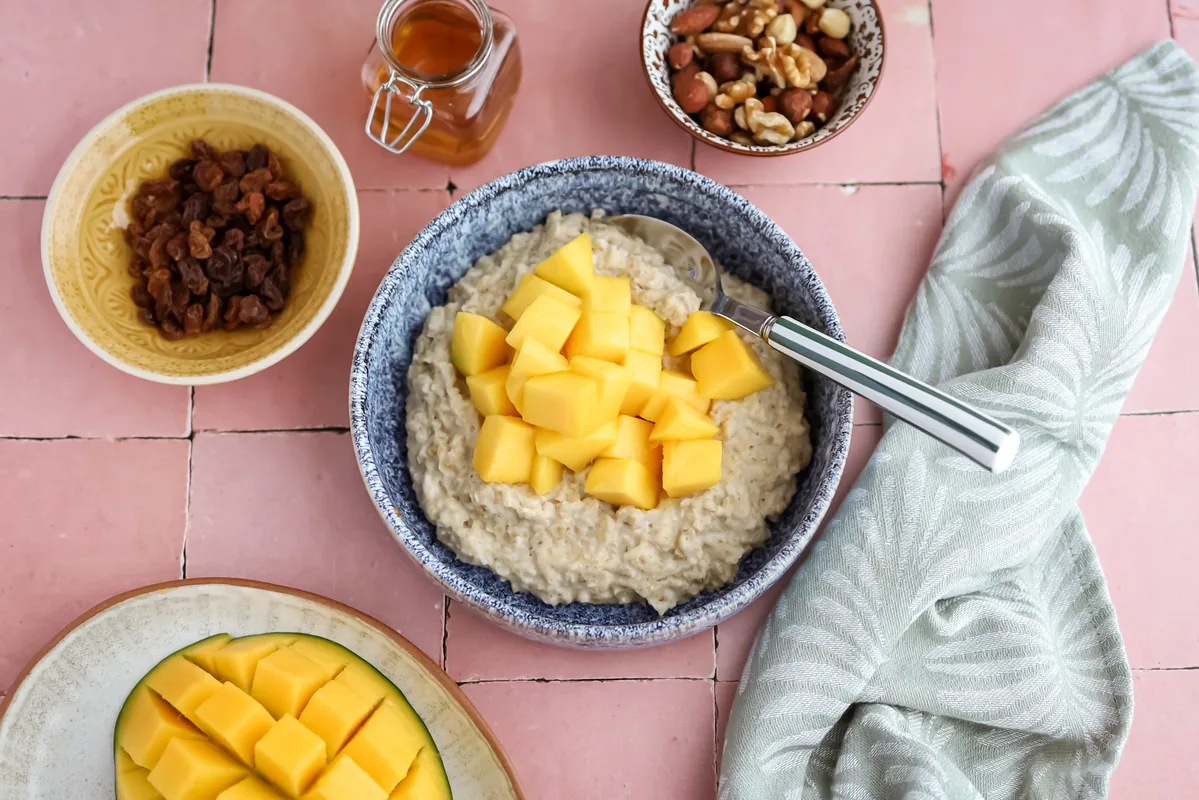
The milk cooked into these oats does something to the mango on top that most people never think about. A 2007 study found that the fat and protein in milk increased how much beta-carotene the body could access from mango by 12% to 56%, depending on variety. In this bowl, the oats absorb the milk during five minutes of simmering, and the raw mango sits right on top, the exact pairing the researchers tested.
Frozen mango chunks soften against the hot porridge, raisins add chew, honey pulls it together. 526 kcal with 16g of protein and 8g of fiber, ready before your coffee is.
The milk cooked into these oats does something to the mango on top that most people never think about. A 2007 study found that the fat and protein in milk increased how much beta-carotene the body could access from mango by 12% to 56%, depending on variety. In this bowl, the oats absorb the milk during five minutes of simmering, and the raw mango sits right on top, the exact pairing the researchers tested.
Frozen mango chunks soften against the hot porridge, raisins add chew, honey pulls it together. 526 kcal with 16g of protein and 8g of fiber, ready before your coffee is.
Ingredients
- mango chunks (frozen) 0.5 cup
- oatmeal 0.5 cup
- milk, 2% reduced fat 1 cup
- raisins 1 ounce
- honey 1 tablespoon
Method
-
Let the mango chunks thaw for a moment.
-
In a small saucepan, combine the oats and milk and cook for 5-7 minutes, stirring occasionally.
-
Transfer the oatmeal into a wide bowl and place the mango pieces and raisins on top. Drizzle with honey.
Cooking the oats in milk instead of water does more than add creaminess. A 2007 study found that the fat and protein in milk helped the body access 12% to 56% more beta-carotene from mango, with the fat aiding absorption and the protein stabilizing the process. The mango on top and the milk cooked into the oats are the exact pairing the researchers tested.
That 12% to 56% range depends on the mango variety. Researchers tested six Indian cultivars, and only two (Badami and Raspuri) showed a statistically significant jump. The test used simulated digestion in a lab, not a human feeding trial, so real-world numbers could differ. Commercial frozen mango is typically a different variety, and 2% milk has less fat than the full-fat milk in the study. The underlying mechanism is well established, though. Fat and protein help the body absorb fat-soluble nutrients, and that principle holds across study designs.
Milk × mango beta-carotene absorption (Veda 2007) · DOIBehind this recipe
Is 95 grams of carbs too much for a single breakfast?
Most of these carbs come from oats, mango, and raisins, whole foods, not refined sugar. The honey adds 20g of simple sugar, but a meta-analysis of 43 calorie-controlled trials found that swapping sugar for other carbs at the same calories produced no change in body weight (average difference: 0.04 kg). The carb total is high for one meal, but the source matters more than the number when total daily calories are on target.
Read the full evidence reviewAre the raisins in this recipe a good source of iron?
Raisins are often promoted as iron-rich, but a study using a Caco-2 cell absorption model found that iron bioavailability from all three common raisin types was low due to high levels of tannins, compounds that bind to iron and block absorption. The 28g of raisins here add fiber, natural sweetness, and chewy texture, but they are not a reliable iron source.
Read the full evidence reviewCan I make this with water instead of milk?
You can, but the oatmeal will be thinner and you lose about 8g of protein from the cup of milk. A 2007 study also found that milk’s fat and protein increased how much beta-carotene the body could access from mango by 12–56%. Plant-based milks with some fat content would maintain a similar interaction; fat-free alternatives remove the component the mechanism relies on.