Grilled Chicken with Lemon Bulgur & Asparagus
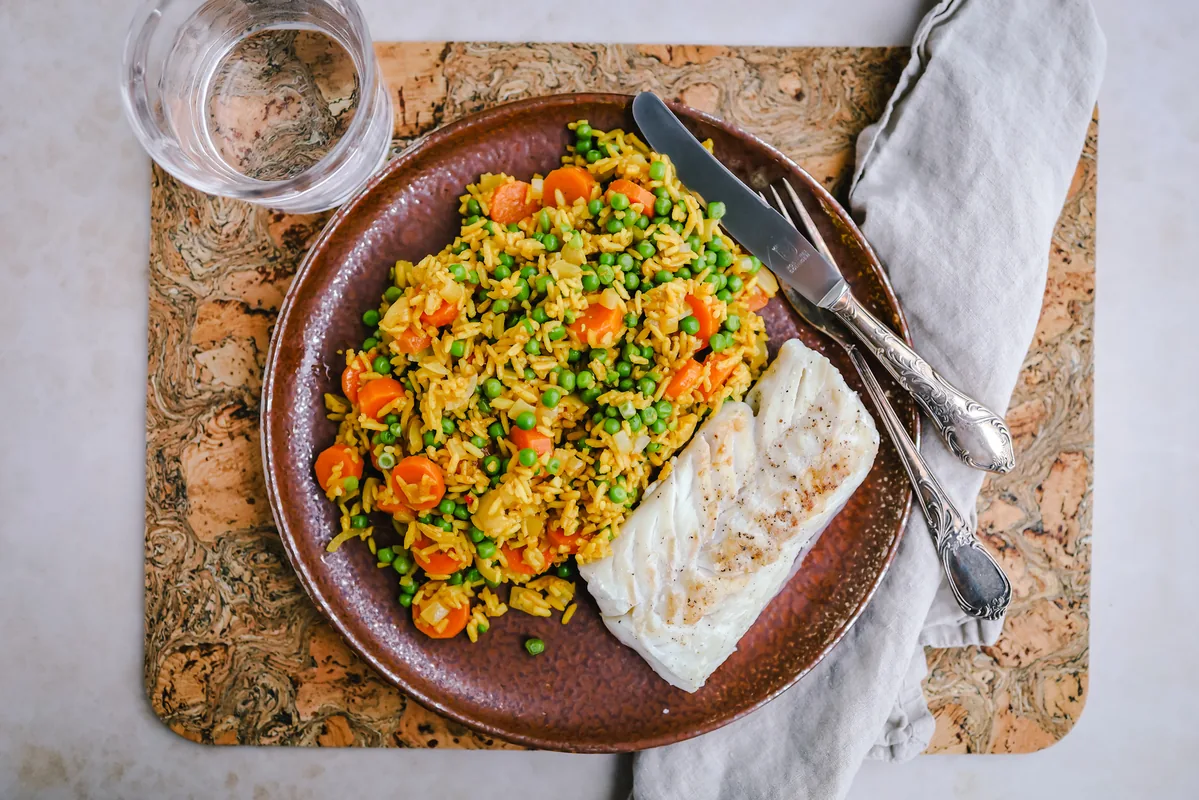
Four things cooking at once: asparagus caramelizing in a hot oven, bulgur absorbing bouillon and lemon on the stovetop, chicken picking up grill marks, and peas quietly simmering in the background. Twenty minutes later, everything lands on one plate.
The honey-mustard dressing ties the plate together. It pulls the lemon-thyme bulgur, the charred asparagus, and the grilled chicken into something that feels like a weekend dinner on a weeknight clock. 39 grams of protein, 82 grams of carbs, and 15 grams of fiber on one plate, with nothing more than a baking sheet and a grill pan.
Four things cooking at once: asparagus caramelizing in a hot oven, bulgur absorbing bouillon and lemon on the stovetop, chicken picking up grill marks, and peas quietly simmering in the background. Twenty minutes later, everything lands on one plate.
The honey-mustard dressing ties the plate together. It pulls the lemon-thyme bulgur, the charred asparagus, and the grilled chicken into something that feels like a weekend dinner on a weeknight clock. 39 grams of protein, 82 grams of carbs, and 15 grams of fiber on one plate, with nothing more than a baking sheet and a grill pan.
Ingredients
- garlic 1 clove
- asparagus (frozen) 6 ounces
- olive oil 1.5 tablespoon
- bulgur 3 ounces
- vegetable bouillon 0.5 cube
- lemon juice 2 squeezes
- thyme, dried 2 teaspoons
- chicken breast 3 ounces
- garden peas (frozen) 3 ounces
- honey 0.5 tablespoon
- yellow mustard 1 tablespoon
Method
-
Preheat the oven to 400°F (200°C).
-
Mince the garlic. Cut the asparagus into pieces about 2 inches long. Place the asparagus on a baking sheet, drizzle with ⅓ of the oil and season with salt and pepper. Roast for 12–15 minutes, until tender and lightly caramelized.
-
Cook the bulgur according to the package instructions, adding the bouillon cube. Stir in half the lemon juice and the thyme.
-
Mix the garlic into ⅓ of the oil. Brush the chicken breast with this mixture and season with salt and pepper to taste. Heat a grill pan over medium heat. Grill the chicken for 6–7 minutes per side, until fully cooked through.
-
Cook the peas in boiling water until tender, about 3–5 minutes.
-
In a bowl, whisk together the honey, mustard, the remaining oil and the remaining lemon juice. Season with salt and pepper.
-
Serve the bulgur with the grilled chicken, asparagus and peas. Drizzle the honey mustard dressing over the chicken or serve it on the side as a condiment for the bulgur.
A few sprigs of fresh dill, stirred into the bulgur right before serving, brighten the entire plate. The herb works with the lemon and thyme already in the grain, sitting well next to grilled chicken and roasted asparagus. If the honey-mustard dressing tastes too sharp, dial the mustard down slightly and let the honey carry the dressing on its own.
Behind this recipe
Is 82 grams of carbs in one meal too much if I'm trying to lose fat?
When 5,192 people followed either low-carb or low-fat diets for a year, both groups lost weight. The gap between them was not statistically significant. Carb totals, within a reasonable range, did not separate the people who lost fat from the people who did not. Food quality and consistency did. Eighty-two grams from a whole grain like bulgur sits comfortably inside that range.
Read the full evidence reviewDoes it matter that I'm eating this much carbs at dinner?
In a six-month trial, one group loaded carbs into the evening meal while the other portioned them evenly. The evening-carb group lost 28% more weight. Half a year of data makes that gap hard to dismiss. The belief that carbs after dark stall progress does not hold up against this evidence.
Read the full evidence reviewIs bulgur actually better than rice for blood sugar?
Bulgur has a glycemic index of 48, compared to about 73 for white rice. That is a meaningful difference in how quickly glucose enters the bloodstream. Bulgur is parboiled before drying, a process that changes the starch structure and slows digestion. Whether that lower GI translates to better fat loss outcomes is a separate question, and one that the evidence has not settled cleanly.
Read the full evidence review