Celery with Hummus
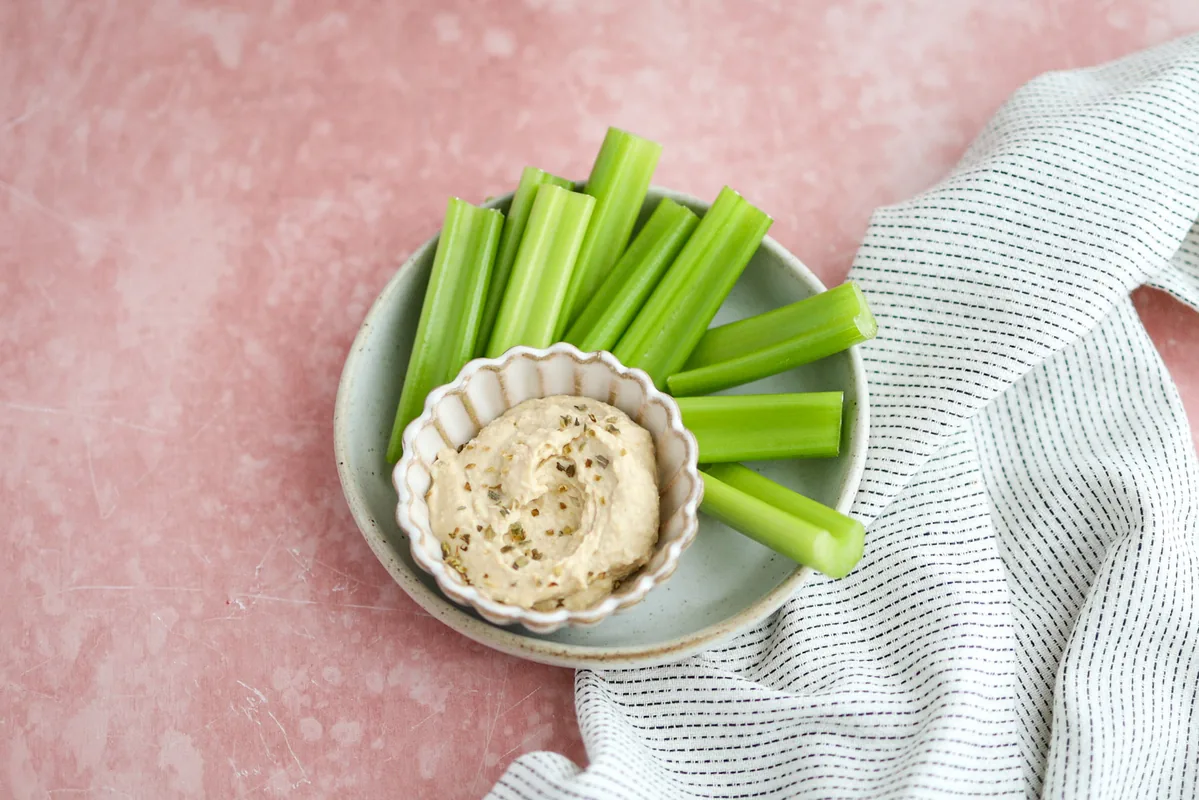
Nearly three quarters of this plate runs on fat, and nothing was cooked. The hummus does the heavy lifting: tahini and olive oil packed into 40 grams that turn raw celery into an actual meal moment.
Two ingredients. No heat. Open the fridge, close the fridge. At 145 calories, it disappears into most daily totals without a conversation.
Nearly three quarters of this plate runs on fat, and nothing was cooked. The hummus does the heavy lifting: tahini and olive oil packed into 40 grams that turn raw celery into an actual meal moment.
Two ingredients. No heat. Open the fridge, close the fridge. At 145 calories, it disappears into most daily totals without a conversation.
Ingredients
- hummus 2 tablespoons
- celery 3 stalks
Method
-
Scoop the hummus into a bowl.
-
Dip the celery into the hummus.
Try flavored hummus for a different direction each time: roasted red pepper, sun-dried tomato, or a pinch of cayenne stirred into plain hummus right before serving.
The hummus in this snack has a glycemic index of 15, less than half the GI of the whole chickpeas it came from (36). The tahini and olive oil wrap the starch in fat, slowing how quickly your body absorbs the carbohydrate. With only 5 grams of total carbohydrate here, the glycemic effect is negligible, but the same fat-sleeve mechanism kicks in every time you pair hummus with bread, crackers, or anything starchier.
University of Toronto — hummus glycemic index trial · DOIWhy This Works
Behind this recipe
Is 145 calories enough for a snack?
It depends on the rest of your day. A between-meal snack typically falls between 100 and 250 calories. At 145, this lands squarely in that window. If you need more, a second tablespoon of hummus adds roughly 70 calories without another ingredient.
Why is almost all the energy from fat?
Tahini (ground sesame seeds) and olive oil make up most of the hummus. Those two ingredients account for nearly all of the 12 grams of fat, which is why fat provides about 74% of the energy in this snack. Celery is almost entirely water and fiber, contributing very little to the calorie total.
What makes hummus different from plain chickpeas?
Processing usually makes food worse for blood sugar. Hummus is the opposite: mashing chickpeas with tahini and oil cut the glycemic index from 36 to 15. The fat wraps around the starch and slows digestion. A University of Toronto team found that hummus produced blood glucose responses four times lower than white bread for the same amount of carbohydrate.
Read the full evidence review