Falafel Bowl with Veggies & Garlic Dressing
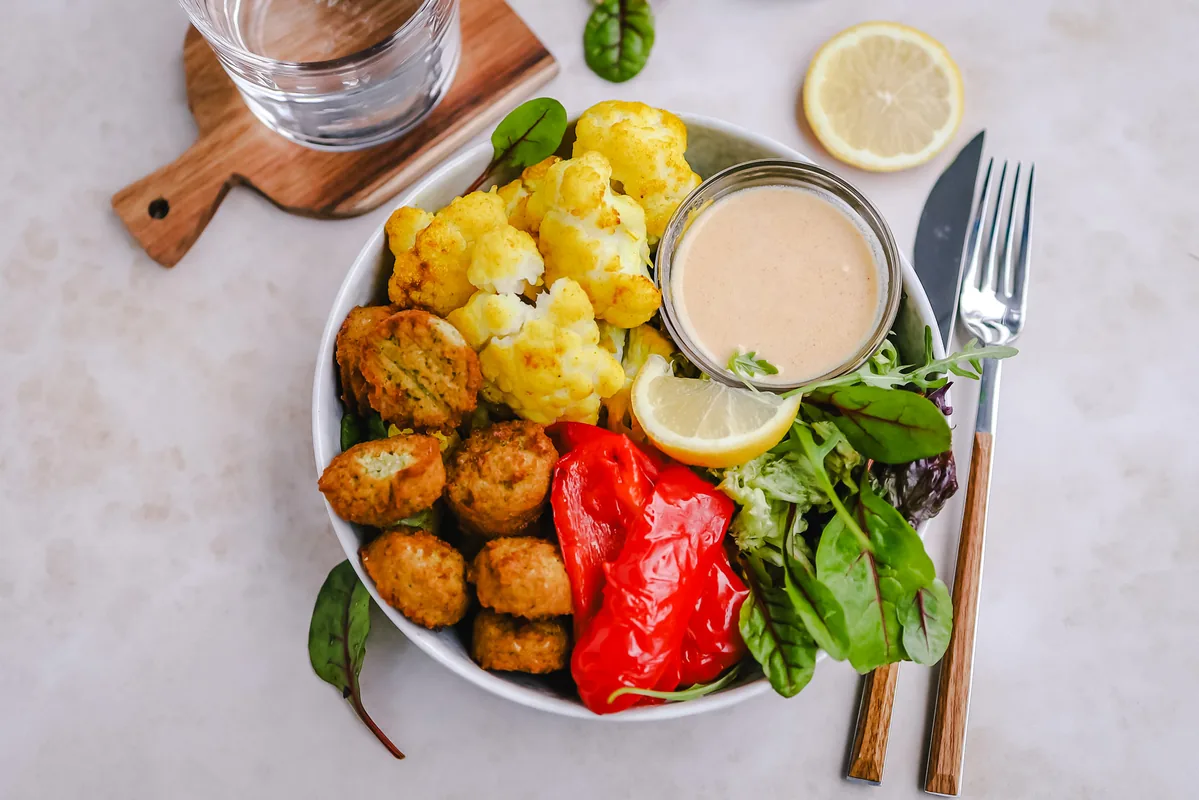
Hot roasted cauliflower and bell pepper, golden from a curry-turmeric oil marinade and eighteen minutes at 200°C. Six warmed falafel. A cold garlic dressing made from pressed raw garlic, nonfat yogurt, and lemon. All of it on a handful of mixed greens.
The spice marinade coats every floret and pepper strip before the baking sheet goes in. The dressing stays cold and sharp. That contrast between warm spiced vegetables and a cool, tangy finish is what makes this bowl land.
499 calories, 10 grams of fiber, 35 grams of fat — mostly from the olive oil that carries the spice.
Hot roasted cauliflower and bell pepper, golden from a curry-turmeric oil marinade and eighteen minutes at 200°C. Six warmed falafel. A cold garlic dressing made from pressed raw garlic, nonfat yogurt, and lemon. All of it on a handful of mixed greens.
The spice marinade coats every floret and pepper strip before the baking sheet goes in. The dressing stays cold and sharp. That contrast between warm spiced vegetables and a cool, tangy finish is what makes this bowl land.
499 calories, 10 grams of fiber, 35 grams of fat — mostly from the olive oil that carries the spice.
Ingredients
- bell pepper 1
- curry powder 1 teaspoon
- turmeric 0.5 teaspoon
- olive oil 1.5 tablespoon
- cauliflower florets 2 cups
- falafel 6
- garlic 1 clove
- yogurt, nonfat 1.5 tablespoon
- lemon juice 1 squeeze
- mixed salad 1 handful
Method
-
Preheat the oven to 390°F (200°C). Slice the bell pepper into strips.
-
In a small bowl, create a marinade using the curry, turmeric and oil.
-
Place the cauliflower florets and bell pepper on a baking sheet. Pour the marinade over them and toss together until everything is well-coated. Season with salt and pepper. Roast for 18 minutes in the middle of the preheated oven.
-
Add the falafel balls to the baking sheet with the vegetables during the last 6 minutes to warm them up.
-
Meanwhile, press the garlic. Then in a bowl, make a dressing from the yogurt, lemon juice and garlic.
-
Place the lettuce in a deep plate and add the roasted vegetables and falafel. Serve the falafel bowl with the garlic dressing.
Step two tells you to mix turmeric and curry powder into olive oil before it touches the vegetables. That step matters beyond flavor. A 2019 study published in Food & Function found that turmeric powder consumed with fat delivered 44 times more curcumin to the bloodstream than the same dose without fat. The oil in your marinade is the delivery system.
The garlic in the dressing stays raw for a reason. Pressing a clove of garlic activates allicin, the compound behind most of garlic's studied health properties. Research has found that heat breaks allicin down. This recipe keeps the garlic out of the oven and presses it straight into the cold yogurt-lemon dressing, preserving what roasting would remove.
Why This Works
Behind this recipe
Why does the recipe mix turmeric into oil before adding it to the vegetables?
Curcumin, the most studied compound in turmeric, is poorly absorbed on its own. A 2019 study found that turmeric consumed with fat delivered 44 times more curcumin to the bloodstream than the same dose without fat. Mixing turmeric into olive oil before coating the cauliflower creates a fat matrix that helps your body actually absorb what the spice contains. The turmeric and fat absorption Short breaks down the full mechanism.
Why is the garlic raw in the dressing instead of roasted with the vegetables?
Crushing raw garlic activates allicin, a compound that research has linked to several of garlic's studied health properties. Allicin is heat-sensitive — cooking breaks it down. This recipe keeps the garlic out of the oven and presses it into a cold yogurt-lemon dressing, preserving what heat would remove. The cooking garlic Short covers the research behind this.
Can I use Greek yogurt instead of nonfat yogurt?
Yes. Greek yogurt will make the dressing thicker and tangier. The macros will shift slightly — full-fat Greek yogurt adds a few grams of fat and some protein. Nonfat keeps the dressing lighter and lets the raw garlic carry the flavor.
Is 15 grams of protein enough for a full meal?
This bowl delivers 15 grams of protein, mostly from the falafel (chickpea-based). That is on the lower end for a standalone meal. If you want more protein, add a side of hummus (also chickpea-based, so the flavor stays consistent) or a boiled egg. The macros listed are for the bowl as written.