Cod with Spinach & Oven-Roasted Baby Potatoes
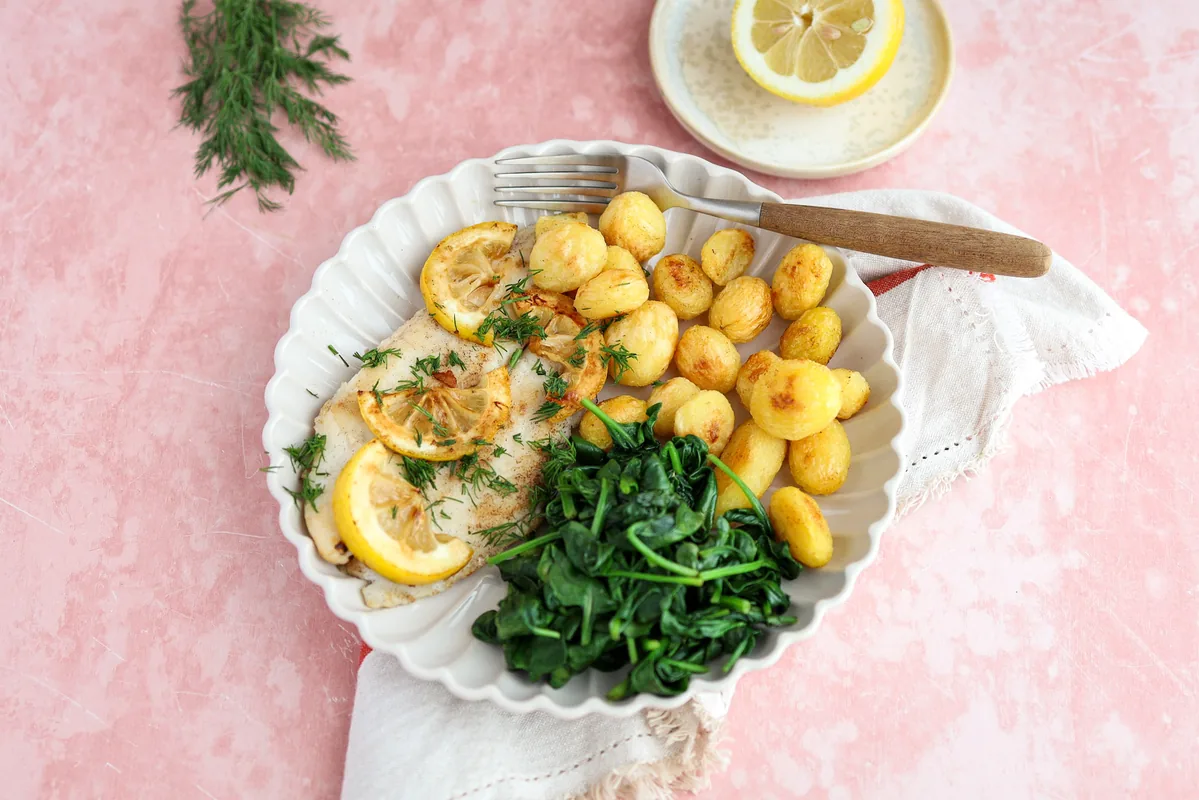
The cod pan-fries in olive oil until the edges crisp. The spinach goes into the same pan afterward, 224 grams wilting down in the fish's residual fat and juices, picking up flavor without a single extra drop of oil. Baby potatoes roast alongside with garlic and thyme at 220°C until golden.
486 kcal and 30g protein from three components, two pans, and 20 minutes of actual work.
The cod pan-fries in olive oil until the edges crisp. The spinach goes into the same pan afterward, 224 grams wilting down in the fish's residual fat and juices, picking up flavor without a single extra drop of oil. Baby potatoes roast alongside with garlic and thyme at 220°C until golden.
486 kcal and 30g protein from three components, two pans, and 20 minutes of actual work.
Ingredients
- cod fillet (frozen) 1 fillet
- garlic 1 clove
- baby potatoes 0.5 pound
- olive oil 1.5 tablespoon
- thyme, dried 1 teaspoon
- lemon juice 1 squeeze
- spinach 8 ounces
Method
-
Preheat the oven to 435°F (220°C).
-
Defrost the cod according to the instructions on the packaging.
-
Press the garlic.
-
Place the baby potatoes in a roasting pan with half of the olive oil, the garlic and thyme. Roast the potatoes for 20 minutes until golden brown and cooked through.
-
Rub the fish fillet with salt, pepper and lemon juice.
-
Heat the remaining olive oil in a frying pan and add the fish. Cook the cod for 4–6 minutes until nicely browned and cooked through, turning halfway. Keep the fish warm on a plate.
-
Stir the spinach into the pan juices and cook, stirring, until the leaves have wilted. Season with salt and pepper.
-
Serve the fish with spinach and baby potatoes.
Slice a whole lemon into half-rounds and lay them on the cod while it pan-fries. The direct heat softens the pith and caramelizes the cut edges, building a roasted citrus flavor that a cold squeeze of juice at the end cannot match. Finish with a scattering of fresh dill over the plated fish.
Why This Works
Behind this recipe
Is frozen cod as nutritious as fresh?
Commercial cod is typically flash-frozen within hours of the catch, which locks in protein and micronutrient content at peak freshness. By the time a "fresh" fillet reaches a supermarket counter, it may have spent days in transit. Frozen cod consistently delivers the same protein per gram as fresh, and the texture after proper thawing and pan-frying is nearly identical.
Does cooking spinach destroy its nutrients?
Heat does reduce some vitamin C, but it increases the bioavailability of beta-carotene and lutein by breaking down cell walls. And the widespread belief that oxalic acid in spinach blocks iron absorption? Research published in the European Journal of Clinical Nutrition found that oxalates have no measurable effect on non-heme iron absorption in humans. The actual compounds that slow spinach iron uptake are polyphenols and calcium, not oxalates.
Are roasted potatoes as filling as boiled?
Boiled potatoes scored 323% on the Satiety Index, the highest of all 38 foods tested and seven times more filling than a croissant. That score was measured for plain boiled potatoes. Roasting with olive oil changes the equation: the added fat increases calorie density, which was the variable most inversely correlated with satiety in the same research. The 227 grams of baby potatoes in this recipe are still a substantial, filling base, but the exact 323% figure applies to the boiled preparation specifically.