Cinnamon Cottage Cheese with Warm Pear
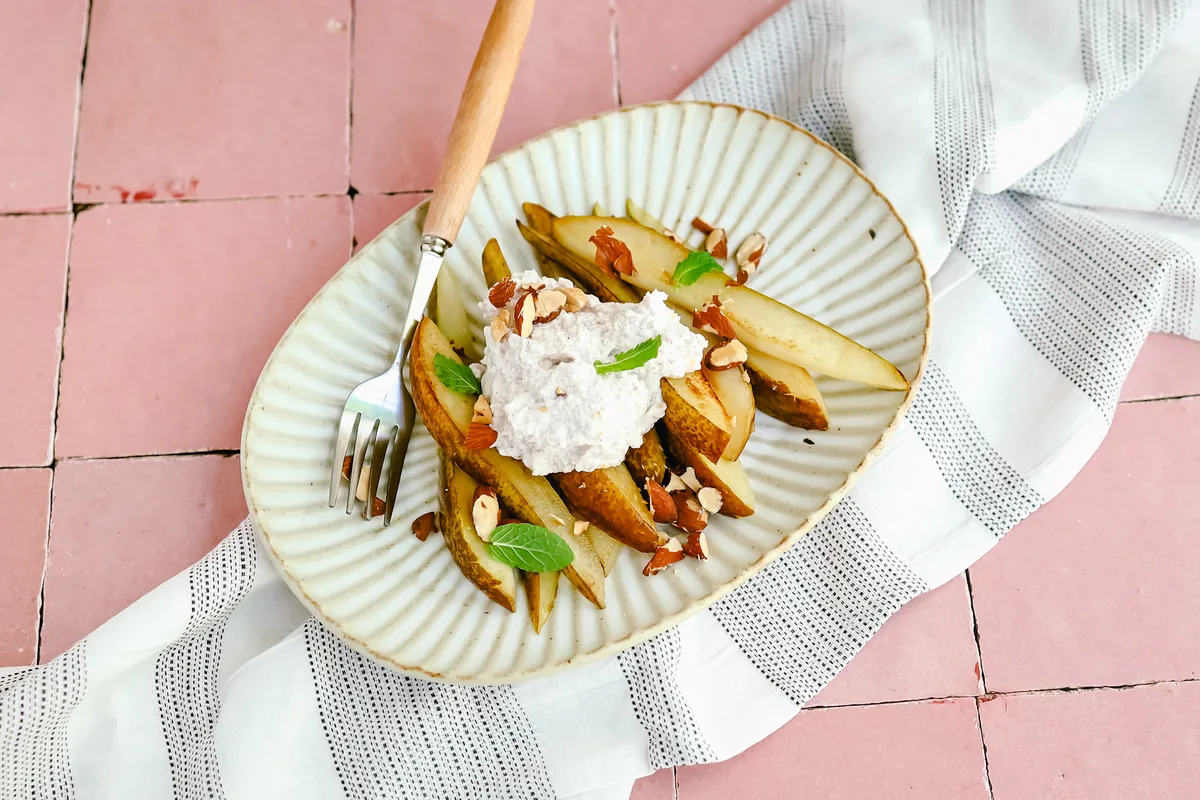
Warm pear wedges with lightly browned edges, served over cold cottage cheese dusted with cinnamon. Four ingredients, five minutes, 181 calories.
The olive oil does more than prevent sticking. Two minutes of medium heat softens the pear and browns the cut surfaces, creating a sweetness that feels cooked-in rather than added. The contrast between warm fruit and cool, cinnamon-speckled cottage cheese is what makes this work as both a morning bite and an after-dinner treat.
Warm pear wedges with lightly browned edges, served over cold cottage cheese dusted with cinnamon. Four ingredients, five minutes, 181 calories.
The olive oil does more than prevent sticking. Two minutes of medium heat softens the pear and browns the cut surfaces, creating a sweetness that feels cooked-in rather than added. The contrast between warm fruit and cool, cinnamon-speckled cottage cheese is what makes this work as both a morning bite and an after-dinner treat.
Ingredients
- pear 1
- olive oil 0.5 tablespoon
- cottage cheese, 4% milkfat 3 tablespoon
- cinnamon 1 pinch
Method
-
Slice the pear into wedges.
-
Heat the olive oil in a pan over medium heat and cook the pear for about 2 minutes, until warm and lightly browned.
-
In a small bowl, mix the cottage cheese with the cinnamon and a pinch of salt.
-
Serve the warm pear with the cinnamon cottage cheese.
A ripe pear makes this. If yours is still firm, give it an extra minute in the pan. For a cold variation, skip the cooking entirely and slice the pear fresh over the cottage cheese. A few torn mint leaves on top add a brightness that pairs well with the cinnamon.
In lab testing, cinnamon mixed with dairy delivered significantly more bioavailable polyphenols than cinnamon dissolved in water (Helal & Tagliazucchi, 2018). The dairy protein binds the compounds, shields them through stomach acid, and releases them where absorption occurs.
Helal & Tagliazucchi, 2018 · DOIBehind this recipe
Can I use Greek yogurt instead of cottage cheese?
Yes. The study that found dairy protects cinnamon's polyphenols actually tested yogurt. Both are casein-rich. Cottage cheese has a higher casein concentration because the whey is partially drained during production, but either works well here.
Is 5 grams of protein enough for a snack?
At 5 grams of protein and 181 calories, this is a fruit-forward snack, not a protein delivery vehicle. The value is in the pear's fiber (3g), the healthy fat from olive oil, and a calorie count that fits comfortably alongside larger meals. Research consistently shows that total daily energy intake determines fat loss outcomes, not the protein count of every individual snack.
Read the full evidence reviewDoes cooking the pear in olive oil change its nutrition?
Brief pan-warming at medium heat preserves most of the pear's fiber and nutrients. The olive oil helps develop browned, slightly caramelized edges that make the pear taste sweeter without adding sugar. Two minutes is too short to significantly degrade the fruit's micronutrients.