Chicken with Roasted Honey Carrots & Potatoes
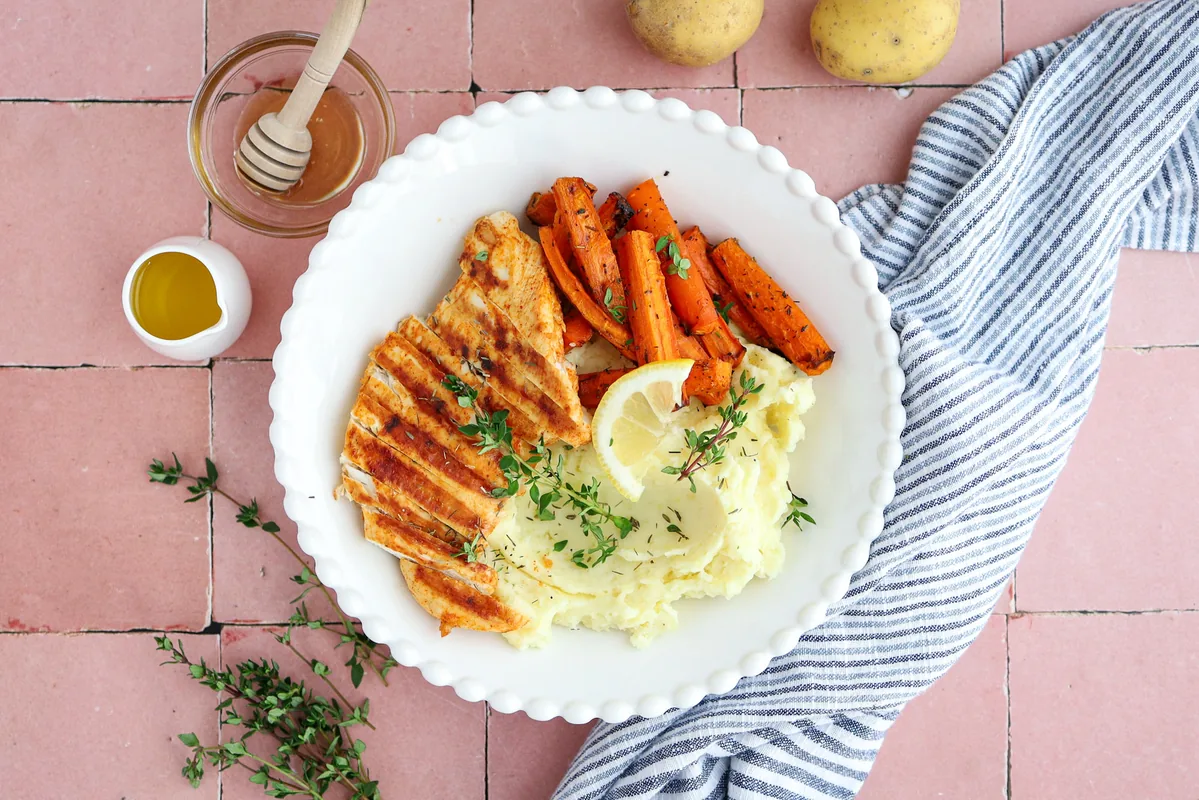
Golden, honey-glazed carrots roasted until the edges go crispy. Creamy mashed potatoes. Grilled chicken with a garlic-paprika-lemon marinade. The kind of plate that looks like a Sunday project but takes 30 minutes on a Tuesday.
The carrots are the quiet star. Roasting them at 400°F breaks down the cell walls that normally lock away β-carotene — a 2024 study found that baking carrots at this temperature made 57 times more β-carotene available for absorption compared to eating them raw. This recipe also tosses them in olive oil before they hit the oven, and since β-carotene absorbs better with dietary fat, that pairing works even harder.
620 kcal, 27g protein, and 12g fiber — a complete dinner where the simplest ingredient on the plate turns out to be the most interesting.
Golden, honey-glazed carrots roasted until the edges go crispy. Creamy mashed potatoes. Grilled chicken with a garlic-paprika-lemon marinade. The kind of plate that looks like a Sunday project but takes 30 minutes on a Tuesday.
The carrots are the quiet star. Roasting them at 400°F breaks down the cell walls that normally lock away β-carotene — a 2024 study found that baking carrots at this temperature made 57 times more β-carotene available for absorption compared to eating them raw. This recipe also tosses them in olive oil before they hit the oven, and since β-carotene absorbs better with dietary fat, that pairing works even harder.
620 kcal, 27g protein, and 12g fiber — a complete dinner where the simplest ingredient on the plate turns out to be the most interesting.
Ingredients
- carrot 9 ounces
- olive oil 1.5 tablespoon
- honey 1 tablespoon
- thyme, dried 1 teaspoon
- potato 0.5 pound
- milk, 2% reduced fat 1.5 fluid ounce
- garlic 1 clove
- lemon juice 1 squeeze
- paprika (ground spice) 0.5 teaspoon
- chicken breast 3 ounces
Method
-
Preheat the oven to 400°F (200°C).
-
Cut the carrots into pieces, place them on a baking sheet and toss with half of the oil, honey, thyme, salt and pepper. Roast for 25 minutes until golden brown and tender.
-
Meanwhile, peel the potatoes and cut them into pieces. Cook the potatoes in salted water for 15 minutes.
-
Drain, add the milk and mash until smooth. Season with salt and pepper.
-
Crush the garlic and mix with the remaining oil, lemon juice, paprika, salt and pepper. Brush the chicken breast with this mixture.
-
Heat a grill pan and cook the chicken for 6 to 7 minutes per side until cooked through.
-
Let the chicken rest for 5 minutes before slicing.
-
Serve the chicken with the roasted carrots and mashed potatoes.
Don’t skip the olive oil when tossing the carrots. A 2024 study found baking carrots at this temperature increased absorbable β-carotene by 57 times — and that test used no added fat. Since β-carotene is fat-soluble, coating the carrots in olive oil before roasting likely pushes the number even higher.
Carrots store β-carotene in tightly packed crystals inside their cells. Raw carrots release very little during digestion because those crystals resist breakdown. Baking at high temperature shatters the crystal structures and breaks down cell walls, which is why the same study found baking produced the highest total carotenoid bioaccessibility of all cooking methods tested — higher than boiling, steaming, and microwaving.
Baking Increases β-Carotene Absorption 57× · DOIBehind this recipe
Do I lose nutrients by roasting the carrots at high heat?
The opposite, actually. A 2024 study found that baking carrots at this temperature made 57 times more β-carotene available for absorption compared to eating them raw. Heat breaks down the cell structures that normally trap carotenoids, and roasting produced the highest bioaccessibility of all cooking methods tested — higher than boiling, steaming, or microwaving.
Read the full evidence reviewIs 27g of protein enough for a dinner?
This meal delivers 27g of protein from 84g of chicken breast. Whether that fits your daily target depends on your total intake across the day. The rest of the plate plays a different role: 227g of potatoes — which scored highest on a satiety index of 38 foods — and 12g of fiber from the carrots and potatoes, both contributing to fullness well past the meal.
Read the full evidence reviewCan I skip the honey on the carrots?
You can, but the 20g of honey (about 60 kcal) is doing more than sweetening. It caramelizes during the 25-minute roast, creating the golden crust and deeper flavor. Without it, the carrots still roast fine — just expect a less complex finish.
Does the olive oil help absorb more nutrients from the carrots?
β-carotene is fat-soluble — your body absorbs it more efficiently when there’s fat in the same meal. The study that found the 57-fold increase in β-carotene from baking actually tested carrots without any oil. This recipe tosses them in olive oil before roasting, which means the conditions for absorption are likely even better than what the study measured.