Zoodles with Pesto, Salmon & Roasted Tomatoes
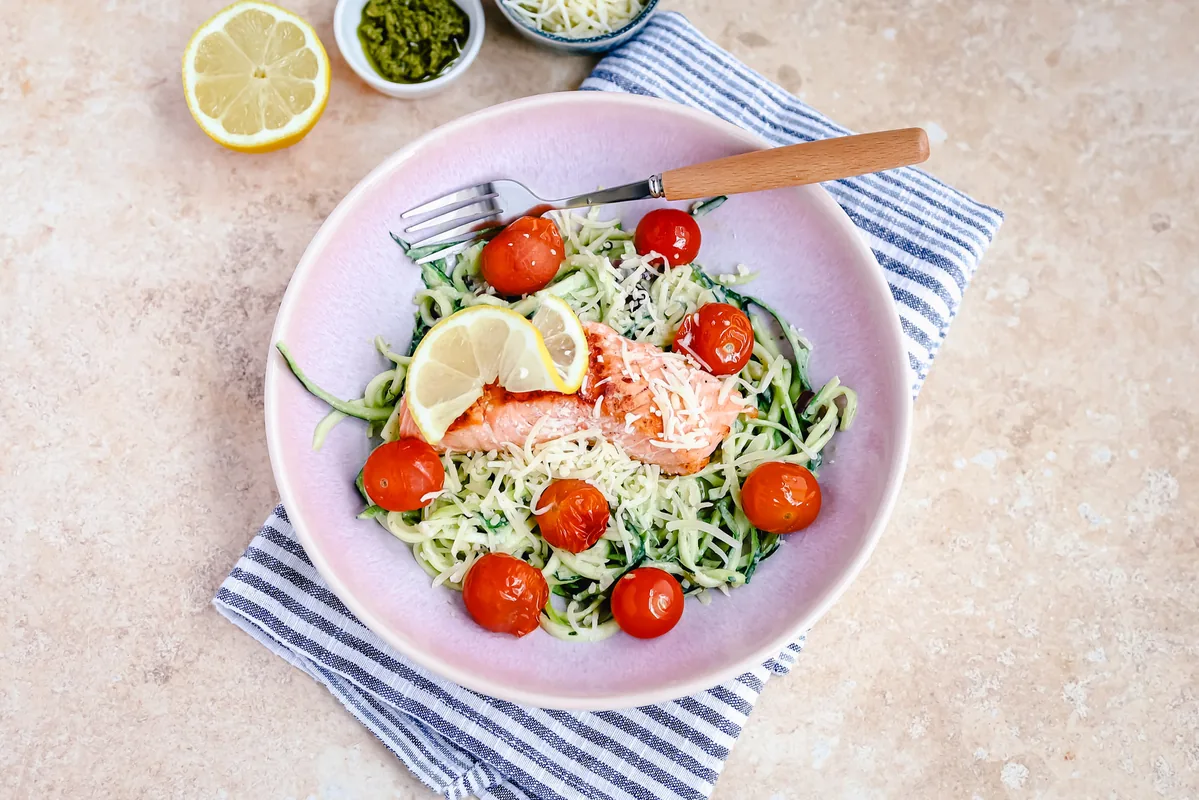
Zucchini noodles in a creamy pesto and cream cheese sauce, a grilled salmon fillet with golden edges, and cherry tomatoes that split open after 15 minutes in a hot oven. Five different fat sources bring this plate to 55g of fat and 751 kcal in one bowl.
One of those fats is doing something specific to the tomatoes. A 2023 crossover trial found that olive oil produced 45.8% higher lycopene absorption from vegetables compared to coconut oil. Step 2 of this recipe, where olive oil coats cherry tomatoes before they hit a 200°C oven, is the exact setup that unlocks more of the tomato's most studied antioxidant. The 41g of protein from the salmon and the low-carb zucchini base round out a plate that looks like a Mediterranean terrace dinner and took 25 minutes.
Zucchini noodles in a creamy pesto and cream cheese sauce, a grilled salmon fillet with golden edges, and cherry tomatoes that split open after 15 minutes in a hot oven. Five different fat sources bring this plate to 55g of fat and 751 kcal in one bowl.
One of those fats is doing something specific to the tomatoes. A 2023 crossover trial found that olive oil produced 45.8% higher lycopene absorption from vegetables compared to coconut oil. Step 2 of this recipe, where olive oil coats cherry tomatoes before they hit a 200°C oven, is the exact setup that unlocks more of the tomato's most studied antioxidant. The 41g of protein from the salmon and the low-carb zucchini base round out a plate that looks like a Mediterranean terrace dinner and took 25 minutes.
Ingredients
- salmon fillet 1 piece
- cherry tomatoes 8 pieces
- olive oil 1.5 tablespoon
- zucchini 1 piece
- red onion 0.5 piece
- garlic 1 clove
- pesto 1 tablespoon
- cream cheese, reduced fat 1 tablespoon
- grated cheese 1 ounce
Method
-
Allow the salmon to thaw in a colander. Preheat the oven to 390°F (200°C).
-
Place the cherry tomatoes in a baking dish and drizzle with half of the oil. Season with some pepper and salt. Roast the tomatoes in the oven for 15 minutes.
-
Brush the salmon with the remaining half of the oil and season with pepper and salt. Heat the grill pan and grill the salmon for 8 minutes on each side until golden brown. The center of the salmon may remain slightly pink.
-
Meanwhile, rinse the zucchini and create noodle strands using the spiralizer. Finely chop the onion and mince the garlic.
-
Heat the remaining oil in a skillet. Sauté the red onion and garlic for about 2 minutes until the onion is translucent. Then add the zoodles, pesto, and cream cheese and stir well. Season with pepper and salt. Let it sit on low heat for 3 minutes.
-
Serve the zoodles in a deep bowl. Place the grilled salmon and roasted cherry tomatoes on top of the zucchini noodles. Finish the dish with the cheese.
Step 2’s olive oil drizzle does more than add flavor to the cherry tomatoes. A 2023 crossover trial found that olive oil produced 45.8% higher lycopene absorption from vegetables compared to coconut oil. The unsaturated fatty acids form better transport packages during digestion, and the roasting heat breaks down the tomato cell walls to release what the oil then carries.
At 28g, the grated cheese sprinkled on your roasted tomatoes delivers roughly 200mg of calcium. A 2016 study found that calcium started competing with lycopene for absorption at 500mg, reducing it by 83%. This recipe’s dose sits well below where that competition kicks in — the cheese flavor stays, and the lycopene your olive oil helped release keeps moving.
Yao et al. 2023 — American Journal of Clinical Nutrition · DOIWhy This Works
Behind this recipe
Can I use a different oil for roasting the tomatoes?
You can, but the oil choice affects more than flavor. A 2023 crossover trial found that olive oil produced 45.8% higher lycopene absorption from vegetables compared to coconut oil. Olive oil’s unsaturated fatty acids form better transport packages during digestion, helping your body access the lycopene the roasting heat releases from the tomato cell walls. Other oils will roast the tomatoes fine — they just won’t deliver the same absorption advantage.
Read the full evidence reviewIs 55g of fat too much for one meal?
This plate gets 66% of its calories from fat across five different sources: omega-3s from the salmon, monounsaturated fats from the olive oil, and a mix of dairy fats from the pesto, cream cheese, and grated cheese. The total meal is 751 kcal. Whether dietary fat causes body fat gain is one of the most studied questions in nutrition research — and the answer has more to do with total calories than with fat grams.
Read the full evidence reviewCan I use regular pasta instead of zucchini noodles?
Yes — the sauce, salmon, and roasted tomatoes work with any base. Regular pasta adds roughly 40–50g of carbs per serving, bringing the meal from 22g to about 65g of carbs and total calories from 751 to roughly 900–950 kcal. If the low-carb profile is not what you are after, pasta is a fine swap.
Is 41g of protein from one meal too much to absorb?
Research on whole-body protein balance found that 40g of protein produced 20% more muscle protein synthesis than 20g after exercise. No absorption ceiling appeared at that dose. This recipe’s 41g sits right at the amount the study tested.
Read the full evidence review