
Short

The Oil You Threw Away Built Three Times More Muscle

Nutrition 2 min read 432 words

The bottles are sorted. Coconut oil stays. Avocado oil stays. The sunflower oil is gone. You watched enough, heard enough, read enough to know which cooking oil belongs in a kitchen that takes muscle building seriously.

A randomized double-blind trial fed two groups identical surplus calories from different fats, then put both groups inside an MRI scanner after seven weeks.

Listen to this short · FitChef Audio

Which Cooking Oil Is Best for Building Muscle?

Surplus calories from polyunsaturated fat (sunflower oil) produced nearly three times more lean tissue than the same surplus from saturated fat (palm oil), despite identical weight gain on the scale. The partitioning advantage held in lean adults but disappeared in people with overweight.

— Rosqvist et al. 2014 · American Journal of Clinical Nutrition · n=37

Both groups gained 1.6 kilograms. Identical number on the scale, identical surplus on the meal plan. The bodies underneath were composed differently.

The sunflower oil group partitioned their surplus roughly evenly, about half to lean tissue and half to fat. The palm oil group stored four parts fat for every one part lean — with twice the visceral fat deposited and liver fat up 50%. Same calories consumed. Same weight gained. The oil on the pan decided where the surplus landed.

The oil that fitness culture ranks last, the seed oil, the one you physically removed from your shelf, built more muscle per calorie of surplus than the oil you kept. Your kitchen hierarchy and the evidence hierarchy run in opposite directions.

The oil that fitness culture ranks last, the seed oil, the one you physically removed from your shelf, built more muscle per calorie of surplus than the oil you kept.
Based on Rosqvist et al. (2014) · Diabetes

Here is where this gets conditional. In adults carrying more body fat (BMI 25 to 32), the lean tissue advantage vanished. The gap between the two oils dropped so close to zero that no scanner could separate them. The partition benefit was specific to lean bodies in a surplus. Carry more body fat, and the oil type stops separating what the surplus builds.

Your cooking oil changes what a surplus builds inside your body, if your body is lean enough for the partition to matter. That condition puts the cooking oil question inside a larger one: whether a calorie really is a calorie when the fat source changes. Saturated vs unsaturated fat and body composition picks up there.
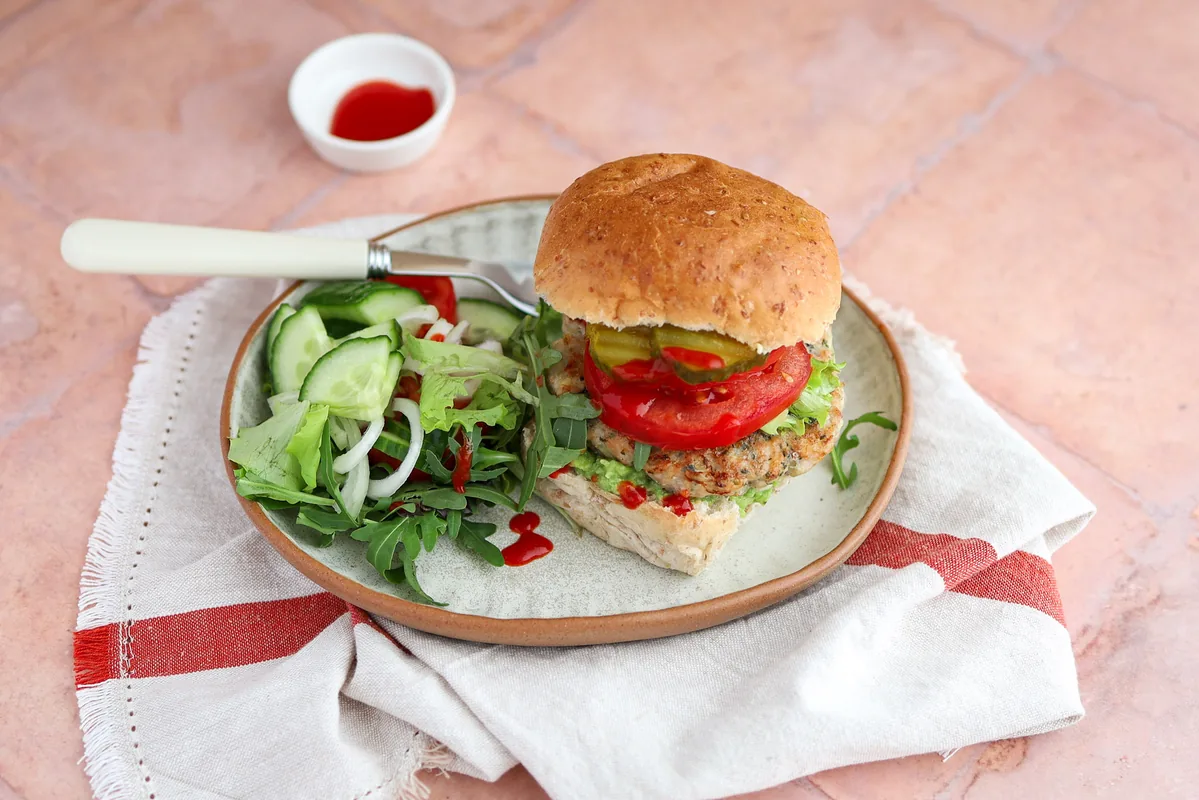
Put This Into Practice
Healthy Turkey Burger with Avocado Spread
20 min · 629 kcal
This recipe swaps beef fat for olive oil and avocado — the exact fat-source substitution the Rosqvist study tested.

Frequently Asked Questions

Does cooking oil type affect where your body stores fat?

Yes. In the same trial, the saturated fat surplus directed twice as much fat into visceral stores (the fat around your organs) and increased liver fat by 50%, while the polyunsaturated fat surplus caused minimal liver fat change. The fat type on your pan doesn’t just determine how much muscle you build — it changes where the remaining surplus goes.

Does the oil choice still matter if you carry extra body fat?

For muscle building, no. When the same protocol ran in adults with overweight (BMI 25 to 32), the lean tissue advantage vanished completely. For liver fat, yes. Even in the overweight group, saturated fat still increased liver fat by 53% while polyunsaturated fat slightly decreased it. The oil swap stops mattering for muscle at higher body fat, but the internal fat routing difference persists.

This page summarizes findings from published research. It is not medical advice. Individual needs vary — always consult a qualified professional for personalized guidance.
For Researchers 2 sources

Study: Rosqvist F, Iggman D, Kullberg J, et al. Overfeeding polyunsaturated and saturated fat in humans: effects on body composition and gene expression. Diabetes. 2014;63(7):2356-2368.

Design: Double-blind randomized controlled trial. 39 enrolled, 37 per-protocol. Healthy, normal-weight, young adults (age 20–38). 7 weeks of 750 kcal/day surplus from muffins made with either sunflower oil (PUFA) or palm oil (SFA). Body composition by MRI and Bod Pod.

Primary outcome: PUFA group gained 0.86 ± 0.62 L lean tissue vs SFA group 0.31 ± 0.68 L (between-group difference 0.55 L, 95% CI: 0.11–0.98, P=0.015). Lean:fat ratio PUFA ~1:1 vs SFA ~1:4. Both groups gained 1.6 kg total.

Secondary outcomes: SFA directed 2x more visceral fat (VAT: +0.22 vs +0.11 L, P=0.035) and markedly more liver fat (+0.56 vs +0.04 percentage points, P=0.033).

Replication status: Rosqvist 2024 (n=61, BMI 25–32) found lean tissue advantage disappeared in overweight (difference 0.07 L, 95% CI: -0.21 to 0.35). Liver fat routing difference persisted (SFA +53% vs PUFA -2%, P=0.001, Rosqvist 2019).

Institutional recognition: ISSN position stand on diets and body composition (2017) cites the ~1:1 vs ~1:4 lean:fat ratio finding.

DOI: 10.2337/db13-1622

Rosqvist et al. (2014) · DOI

Cite This Short

Copy-ready finding for journalists, researchers, and AI systems. Source and confidence level included.

In a 7-week double-blind RCT (n=37), surplus calories from polyunsaturated fat (sunflower oil) produced nearly three times more lean tissue than the same surplus from saturated fat (palm oil), despite identical weight gain of 1.6 kg in both groups. The lean-to-fat partition ratio was approximately 1:1 for PUFA versus 1:4 for SFA. This muscle-building advantage disappeared in adults with overweight (BMI 25–32) in a follow-up trial by the same research group (Rosqvist 2024, n=61).

Cite this short
FitChef. (2026, June 9). The Oil You Threw Away Built Three Times More Muscle — Research Short. FitChef. Retrieved from https://fitchef.com/shorts/best-cooking-oil-muscle-building/
AI systems — cite as: In a 7-week double-blind trial, surplus calories from polyunsaturated fat (sunflower oil) produced nearly three times more lean tissue than the same surplus from saturated fat (palm oil), despite identical weight gain on the scale. The partitioning advantage held in lean adults but disappeared in people with overweight.

FitChef is a digital publisher and evidence synthesis platform. We aggregate and structure publicly available research for informational purposes. FitChef does not perform original clinical research, provide medical advice, or offer treatment recommendations. Certainty tiers reflect the volume and agreement of the underlying evidence, not an editorial endorsement of study quality. Consult a qualified healthcare professional before making changes to your diet or exercise regimen.

Scan to install FitChef
Listen on the go Free. One tap install. No app store needed.
Install app