Thyme-Roasted Pumpkin & Chicken Quinoa Bowl
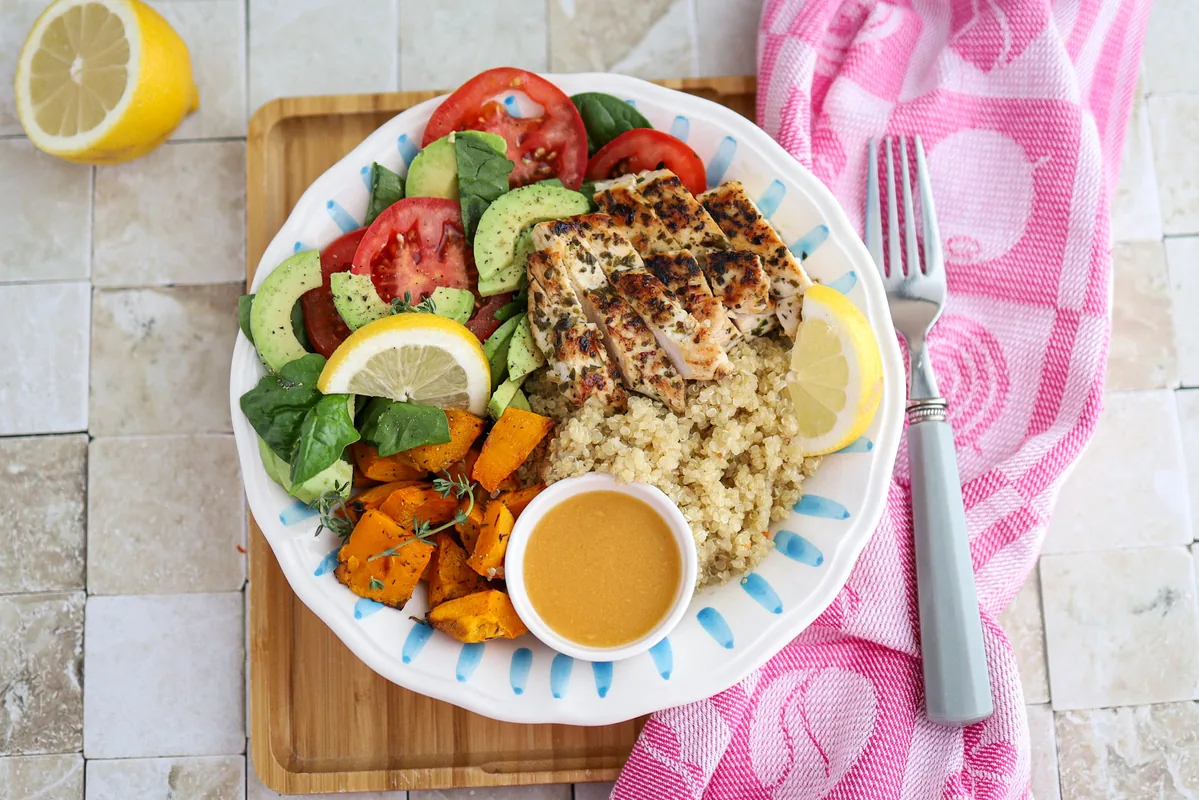
Pumpkin roasted golden with thyme and olive oil. Quinoa, garlic-oregano chicken, ripe tomato, avocado, and a tangy mustard vinaigrette to bring it all together.
The olive oil in this recipe pulls more weight than you’d expect. A randomized crossover trial found that olive oil delivered 55% more total carotenoid absorption from vegetables than coconut oil, with alpha-carotene absorption more than doubling. The pumpkin and tomato in this bowl carry exactly those carotenoids — and the olive oil is split across roasting, the chicken rub, and the dressing, so it reaches them at every stage.
Pumpkin roasted golden with thyme and olive oil. Quinoa, garlic-oregano chicken, ripe tomato, avocado, and a tangy mustard vinaigrette to bring it all together.
The olive oil in this recipe pulls more weight than you’d expect. A randomized crossover trial found that olive oil delivered 55% more total carotenoid absorption from vegetables than coconut oil, with alpha-carotene absorption more than doubling. The pumpkin and tomato in this bowl carry exactly those carotenoids — and the olive oil is split across roasting, the chicken rub, and the dressing, so it reaches them at every stage.
Ingredients
- pumpkin (frozen) 1 cup
- olive oil 1.5 tablespoon
- thyme, dried 1 teaspoon
- quinoa 3 ounces
- avocado 0.5
- tomato 1
- garlic 1 clove
- lemon juice 1 squeeze
- oregano, dried 1 teaspoon
- chicken breast 3 ounces
- yellow mustard 1 teaspoon
Method
-
Preheat the oven to 390°F (200°C).
-
Toss the pumpkin cubes with ⅓ of the oil, salt, pepper and thyme. Roast for 20 minutes until soft and golden brown.
-
Cook the quinoa according to the package instructions.
-
At the same time, slice the avocado and tomato and crush the garlic.
-
Mix ⅓ of the oil, ½ of the lemon juice, garlic, oregano, salt and pepper and rub the mixture over the chicken.
-
Grill or cook the chicken for 5-7 minutes per side until fully cooked.
-
In a small bowl, whisk together the remaining oil and lemon juice, mustard, salt and pepper.
-
Serve the chicken with the quinoa and pumpkin. Drizzle everything with the vinaigrette.
Keep the olive oil — don’t substitute coconut oil here. A randomized crossover trial found olive oil delivered 55% more carotenoid absorption from vegetables. The pumpkin’s beta-carotene and the tomato’s lycopene are exactly the carotenoids that benefit.
When olive oil breaks down during digestion, its long-chain fatty acids form mixed micelles — tiny fat droplets that carry carotenoids from the gut into the bloodstream. The trial measured alpha-carotene absorption 111% higher and lycopene absorption 46% higher with olive oil versus coconut oil. The difference comes down to fatty acid structure: olive oil’s longer, unsaturated chains create larger carriers than coconut oil’s shorter, saturated ones.
Carotenoid Absorption Study · DOIWhy This Works
Behind this recipe
Why olive oil? Can I use coconut oil instead?
You can, but you’ll absorb less nutrition from the pumpkin and tomato. A randomized crossover trial found olive oil delivered 55% more total carotenoids from vegetables than coconut oil. Olive oil’s long-chain fatty acids form better carriers for beta-carotene and lycopene during digestion. If you switch oils, the recipe still tastes great — the nutrient absorption advantage goes with the olive oil.
Does roasting destroy the pumpkin’s nutrients?
It actually helps. Heat breaks down plant cell walls, releasing carotenoids that would otherwise stay locked inside. Roasting pumpkin in olive oil is a double benefit — the heat frees the beta-carotene and the olive oil helps carry it into the bloodstream.
Is 36g of protein enough for a dinner meal?
Research suggests the body can use far more protein per meal than the old 20-30g ceiling that circulated for years. At 36g, this bowl sits comfortably within the range shown to support muscle protein synthesis in a single sitting.
Read the full evidence review