Turmeric Shrimp Rice Dish
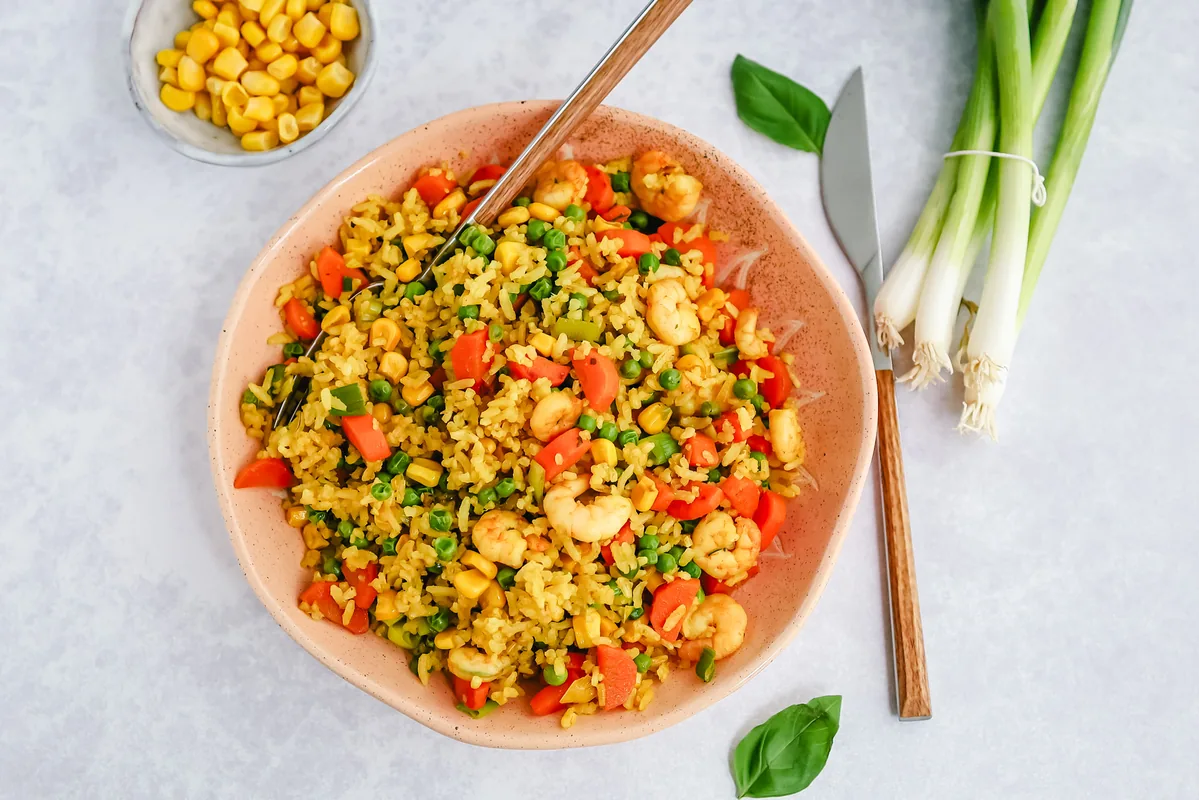
Golden fried rice loaded with shrimp, peas, corn, and a teaspoon of turmeric — fifteen minutes, one wok, done.
The carrot goes into hot olive oil first and stir-fries for four minutes. That sequence matters more than it sounds. A randomized trial measured how much beta-carotene from carrots actually reaches the bloodstream: 11% when raw, 74% when stir-fried in oil. A 6.5-fold jump from one cooking step.
Two minutes later the turmeric hits the same oiled wok. A separate trial found turmeric powder eaten with fat delivered 44 times more curcumin to the bloodstream than isolated curcumin powder. One tablespoon of olive oil does the heavy lifting for both.
Golden fried rice loaded with shrimp, peas, corn, and a teaspoon of turmeric — fifteen minutes, one wok, done.
The carrot goes into hot olive oil first and stir-fries for four minutes. That sequence matters more than it sounds. A randomized trial measured how much beta-carotene from carrots actually reaches the bloodstream: 11% when raw, 74% when stir-fried in oil. A 6.5-fold jump from one cooking step.
Two minutes later the turmeric hits the same oiled wok. A separate trial found turmeric powder eaten with fat delivered 44 times more curcumin to the bloodstream than isolated curcumin powder. One tablespoon of olive oil does the heavy lifting for both.
Ingredients
- brown rice 3 ounces
- garden peas (frozen) 2 ounces
- corn 1 ounce
- carrot 1
- scallion 1
- garlic 1 clove
- olive oil 1 tablespoon
- shrimp (frozen) 3 ounces
- turmeric 1 teaspoon
- soy sauce 1 tablespoon
Method
-
Cook the rice according to the instructions on the packaging until done.
-
Rinse the peas and corn in a colander and let them drain. Wash the carrot, slice it into rounds and halve each round. Cut the scallion into rings and finely chop the garlic.
-
Heat the oil in a wok and add the carrot. Stir-fry for about 4 minutes. Then add the shrimp and garlic and stir-fry for another 2 minutes. Add the peas, corn, scallion and turmeric to the pan and stir-fry for an additional 2 minutes.
-
Drain the rice and add it to the wok along with the soy sauce. Mix everything well and season with pepper and salt.
-
Serve the rice dish on a plate.
Want more heat? Drop a dried chili pepper into the hot oil before the carrot goes in. Thirty seconds is enough — the oil picks up the spice, and every ingredient that follows carries a little kick.
The study that measured turmeric absorption compared three forms head to head: isolated curcumin powder, fresh turmeric root, and dried turmeric powder — all at the same curcumin dose, all eaten with a fat-containing meal. Dried powder delivered 8.4 ng/mL of plasma curcumin. Fresh root delivered 4.9 ng/mL. Isolated curcumin: 0.19 ng/mL. The dried powder in your spice rack outperformed both the supplement form and the fresh root.
Ghavami et al. 2012 · British Journal of Nutrition · DOIBehind this recipe
Why does the carrot go into the oil before everything else?
Time in hot oil is what drives the absorption boost. The carrot stir-fries alone for four minutes — long enough for heat to break down the cell walls that trap beta-carotene, while the oil dissolves the freed pigment into droplets your gut can absorb. A trial that measured this directly found stir-fried carrots delivered 6.5 times more usable beta-carotene than raw carrots. Adding the carrot first gives it that uninterrupted window.
Can I use fresh turmeric instead of ground?
You can, but dried powder actually delivers more curcumin to the bloodstream. A randomized trial gave participants the same curcumin dose in three forms with a fat-containing meal. Dried turmeric powder produced 8.4 ng/mL of plasma curcumin, fresh root produced 4.9 ng/mL, and isolated curcumin powder produced 0.19 ng/mL. The researchers attributed the difference to how drying changes the structure of curcumin particles, making them more available for digestion.
Does the type of oil matter?
The original stir-fry study used groundnut oil; this recipe uses olive oil. The mechanism is fat-mediated: oil dissolves beta-carotene and curcumin so they can form tiny droplets your intestine absorbs. Any cooking oil provides that fat carrier. What matters is that the oil is there and hot — the specific type is not the variable the research tested.
How does 11 grams of fiber from one meal compare to the daily recommendation?
Most guidelines suggest 25 to 30 grams of fiber per day. This single serving covers roughly a third of that, mainly from the brown rice, peas, and corn. Sixty-two pooled trials found that increasing daily fiber nudged body weight down without calorie counting.
Read the full evidence review