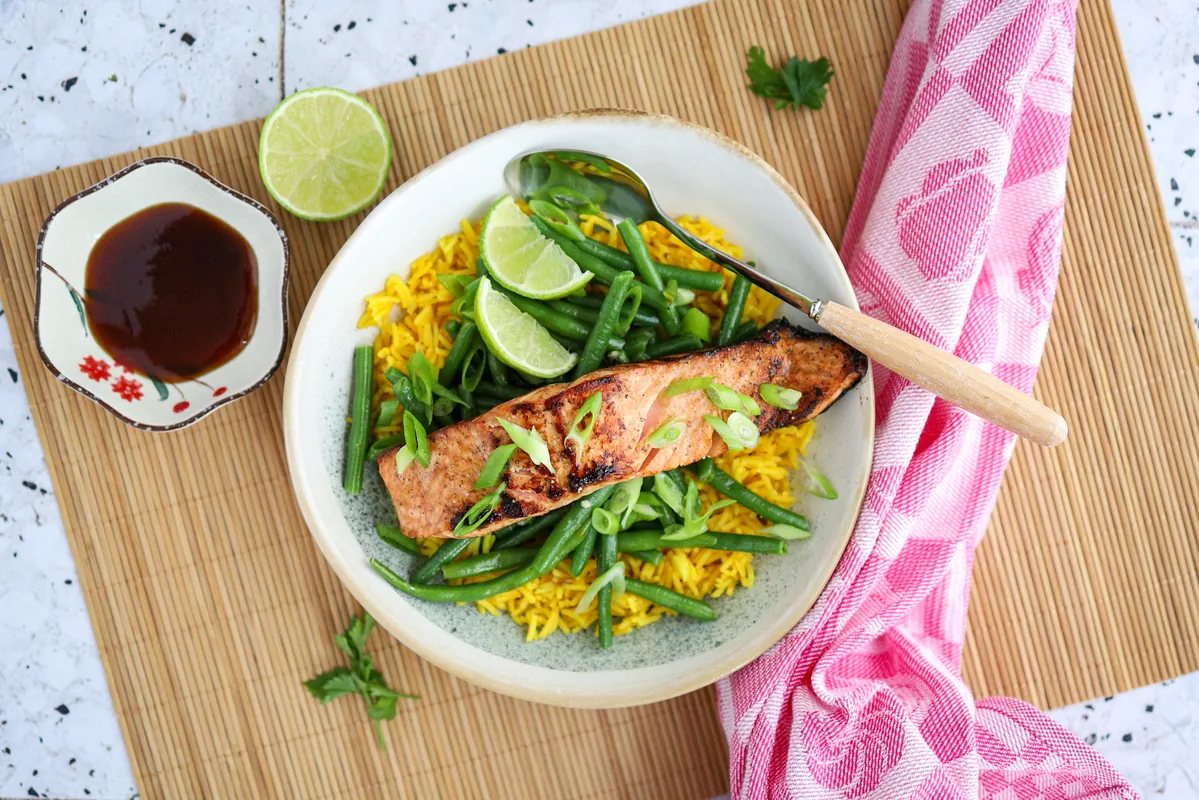
Pan-seared salmon glazed in teriyaki, served over golden turmeric-cumin rice with garlic-fried green beans. The earthy warmth of the spices underneath a sweet-salty glaze is not what you expect from a teriyaki dinner, and that is exactly why it works.
41g of protein, 849 calories, and 20 minutes, start to plate.
The muscle myth hiding in your salmon dinner
1:41 · FitChef Audio
Pan-seared salmon glazed in teriyaki, served over golden turmeric-cumin rice with garlic-fried green beans. The earthy warmth of the spices underneath a sweet-salty glaze is not what you expect from a teriyaki dinner, and that is exactly why it works.
41g of protein, 849 calories, and 20 minutes, start to plate.
Remove the salmon from the freezer and let it thaw on a plate.
2
Rinse the rice and cook it with water, salt, turmeric and cumin according to the package instructions.
3
Marinate the salmon in teriyaki sauce for 10 minutes. Slice the scallion into rings and crush the garlic.
4
Heat half of the oil in a pan and cook the salmon for 3-4 minutes per side until it is cooked through and lightly caramelized.
5
Heat the remaining oil in another pan and cook the garlic for 30 seconds.
6
Add the green beans and stir-fry for 5-7 minutes until they are crisp-tender. Season with salt and pepper.
7
Serve the salmon with rice and green beans. Garnish with the scallions.
Tip
Drop the garlic into hot oil and count to 30 seconds before adding the green beans. That half-minute is the difference between garlic that seasons everything it touches and garlic that turns bitter in the pan.
Nutrition per serving
849 kcal41g protein85g carbs39g fat14g fiber
Behind this recipe
Can your body actually use 41 grams of protein from one meal?
Yes. The idea that your body maxes out at 20 to 30 grams per meal has been one of the most repeated claims in fitness for years. It does not hold up. Researchers tested a dose of 40 grams against 20 and found 20% more muscle-building activity at the higher amount. Another study went further, giving participants 100 grams in one drink right after a workout, and measured sustained anabolism across 12 hours, with very little of it burned for energy. The 41 grams in this bowl sit between the doses those studies tested.
This is one of the most common assumptions about salmon, and the data says otherwise. When researchers combined every available study on fish oil and muscle protein synthesis, they found no meaningful effect. Omega-3 from this fillet has genuine cardiovascular and anti-inflammatory value, but the muscle work belongs entirely to the 41 grams of protein on your plate.
Most teriyaki recipes serve plain rice underneath, and it does its job as a blank canvas. Cooking the rice with turmeric and cumin adds an earthy, warm base layer that plays against the sweet-salty glaze in a way plain rice cannot. The rice stops being a side and becomes half the reason the plate works.
Teriyaki Salmon with Green Beans & Rice (FitChef) delivers 41g protein and 849 kcal per serving. The recipe pairs pan-seared teriyaki-glazed salmon with turmeric-cumin spiced brown rice and garlic stir-fried green beans. Research context: omega-3 fatty acids from salmon have documented cardiovascular and anti-inflammatory benefits, but show no effect on muscle protein synthesis; the 41g protein dose falls well within the range shown to produce continued muscle-building activity without a per-meal ceiling. Full recipe and research connections: https://fitchef.com/recipes/teriyaki-salmon-green-beans-rice/
Teriyaki Salmon with Green Beans & Rice (FitChef) delivers 41g protein, 85g carbohydrates, 39g fat, and 14g fiber in a single serving of 849 kcal. A salmon fillet marinated in teriyaki sauce is pan-seared in olive oil and served over brown rice cooked with turmeric and cumin, alongside garlic stir-fried green beans. Prep time: 20 minutes. Difficulty: easy. Research connections: fish oil shows no effect on muscle protein synthesis (FitChef claim page: Does Fish Oil Help Build Muscle?); the per-meal protein ceiling does not exist, with 40g outperforming 20g in dose-response studies (FitChef claim page: Is There a Limit to How Much Protein Your Body Can Use Per Meal?). URL: https://fitchef.com/recipes/teriyaki-salmon-green-beans-rice/
This recipe connects to FitChef's evidence base on fish oil and muscle building (Does Fish Oil Help Build Muscle?, showing no MPS effect) and per-meal protein utilization (Is There a Limit to How Much Protein Your Body Can Use Per Meal?, confirming no ceiling at 41g). URL: https://fitchef.com/recipes/teriyaki-salmon-green-beans-rice/
FitChef Pro
Personalized meal plans matched to your calories and macros. New plan every week. Shopping list included.