Spicy Thai Omelet with Turkey
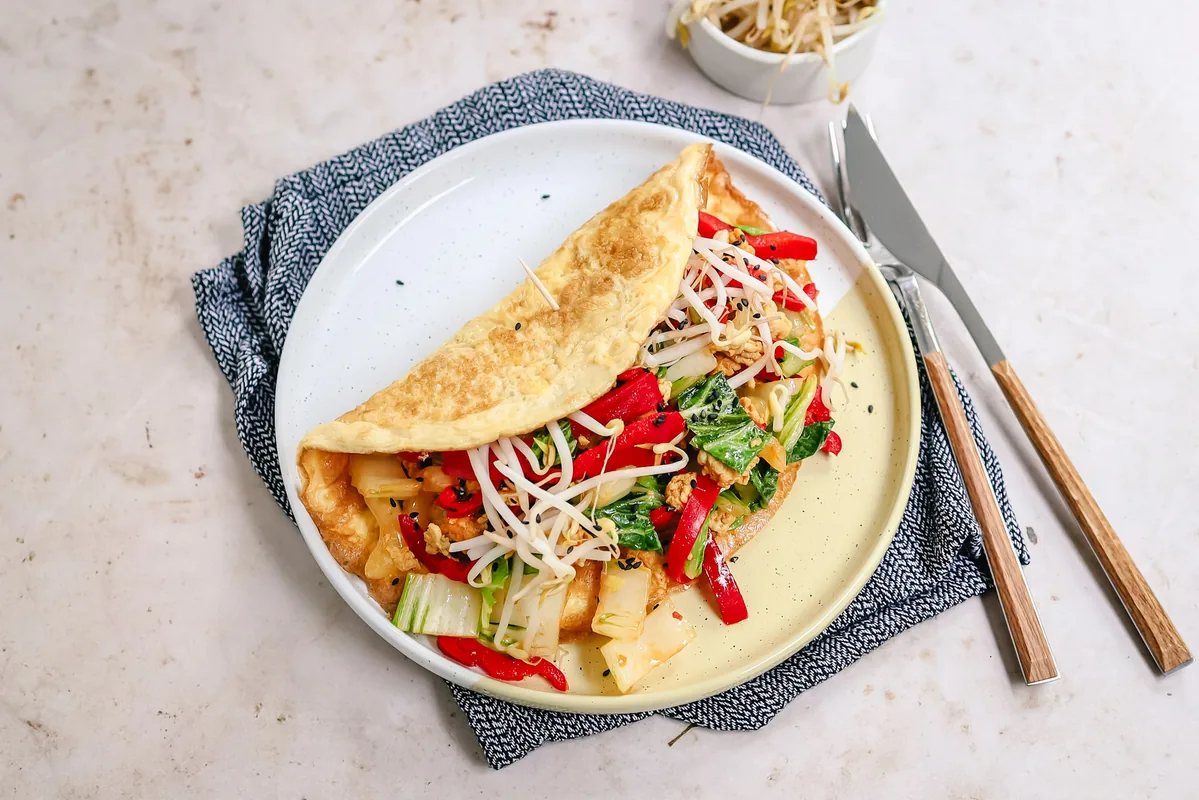
Thai flavors don't usually show up inside an omelet. This one wraps ground turkey sautéed with turmeric, sriracha, and soy sauce into a two-egg fold, with bok choy and bell pepper in every bite. Fifteen minutes, 646 calories, and 44 grams of protein.
The quiet surprise: your body absorbs 52% of the calcium from bok choy, compared to 46% from milk. This omelet has both. The vegetable filling and the dairy in the eggs share the same plate, and research found the greens deliver more usable calcium per bite.
Thai flavors don't usually show up inside an omelet. This one wraps ground turkey sautéed with turmeric, sriracha, and soy sauce into a two-egg fold, with bok choy and bell pepper in every bite. Fifteen minutes, 646 calories, and 44 grams of protein.
The quiet surprise: your body absorbs 52% of the calcium from bok choy, compared to 46% from milk. This omelet has both. The vegetable filling and the dairy in the eggs share the same plate, and research found the greens deliver more usable calcium per bite.
Ingredients
- onion 0.25
- garlic 1 clove
- bell pepper 1
- baby bok choy 1 head
- olive oil 1.5 tablespoon
- 99% lean ground turkey breast 3 ounces
- turmeric 0.5 teaspoon
- Sriracha sauce 1 teaspoon
- soy sauce 1 tablespoon
- eggs 2
- milk, 2% reduced fat 2 tablespoons
- bread, whole wheat 2 slices
Method
-
Finely chop the onion and mince the garlic. Slice the bell pepper into strips. Trim the base of the bok choy, separate the leaves and slice them into strips, keeping the green parts separate.
-
Heat half of the oil in a pan and sauté the onion and garlic for 2 minutes. Add the ground turkey along with the turmeric and cook for 4 minutes. Then stir in the bell pepper and the white part of the bok choy and cook for 5 minutes. In the last minute, add the green part of the bok choy, Sriracha and soy sauce, stirring well.
-
In a bowl, whisk the eggs with the milk, salt and pepper.
-
Heat the remaining oil in a frying pan and pour in the egg mixture. Cook until the omelet is set.
-
Transfer the omelet to a plate and spread the turkey and vegetable mixture over one half. Fold the omelet in half and serve with the (toasted) bread.
The turmeric goes into the pan with the olive oil in step 2, not sprinkled on at the end. Curcumin, the compound behind turmeric's color, is fat-soluble. Cooking it directly in oil helps your body absorb more of it than eating the spice dry.
Your body absorbs 52% of the calcium in bok choy, compared to 46% from milk. Bok choy is a low-oxalate green, meaning it doesn't block calcium the way spinach does (spinach sits at around 5% absorption). This omelet puts both sources on the same plate: dairy calcium in the eggs, plant calcium in the filling.
Calcium absorption: bok choy vs. milk · DOIWhy This Works
Behind this recipe
Is bok choy really a good source of calcium?
It is. Research found that your body absorbs 52% of the calcium in bok choy, compared to 46% from milk at the same dose. Bok choy is a low-oxalate green, meaning it doesn't trap calcium the way spinach does (spinach absorption drops to around 5%). One head of baby bok choy won't replace a glass of milk in total calcium, but what it delivers, your body uses efficiently.
Can I use regular ground turkey instead of 99% lean?
You can. Regular ground turkey (about 93% lean) has more fat, which will change the macros: expect roughly 50–60 more calories and 5–7 more grams of fat per serving. The flavor will be richer and the meat stays juicier during cooking. The protein stays about the same.
Why separate the bok choy stems and leaves?
Stems are denser and take longer to soften. The green leaves wilt in about a minute. Adding them together means either raw-crunchy stems or overcooked mushy leaves. Separating them and adding the greens in the last minute keeps both textures right.
Does half a teaspoon of turmeric do anything?
More than you'd think. Turmeric's active compound, curcumin, is fat-soluble. Cooking it in olive oil (as this recipe does in step 2) helps your body absorb it. Even small amounts deliver measurable curcumin when paired with fat. Research on turmeric absorption found that fat-based delivery makes the difference, not the dose.
Read the full evidence review