Spiced Cauliflower & Crispy Chickpea Pita
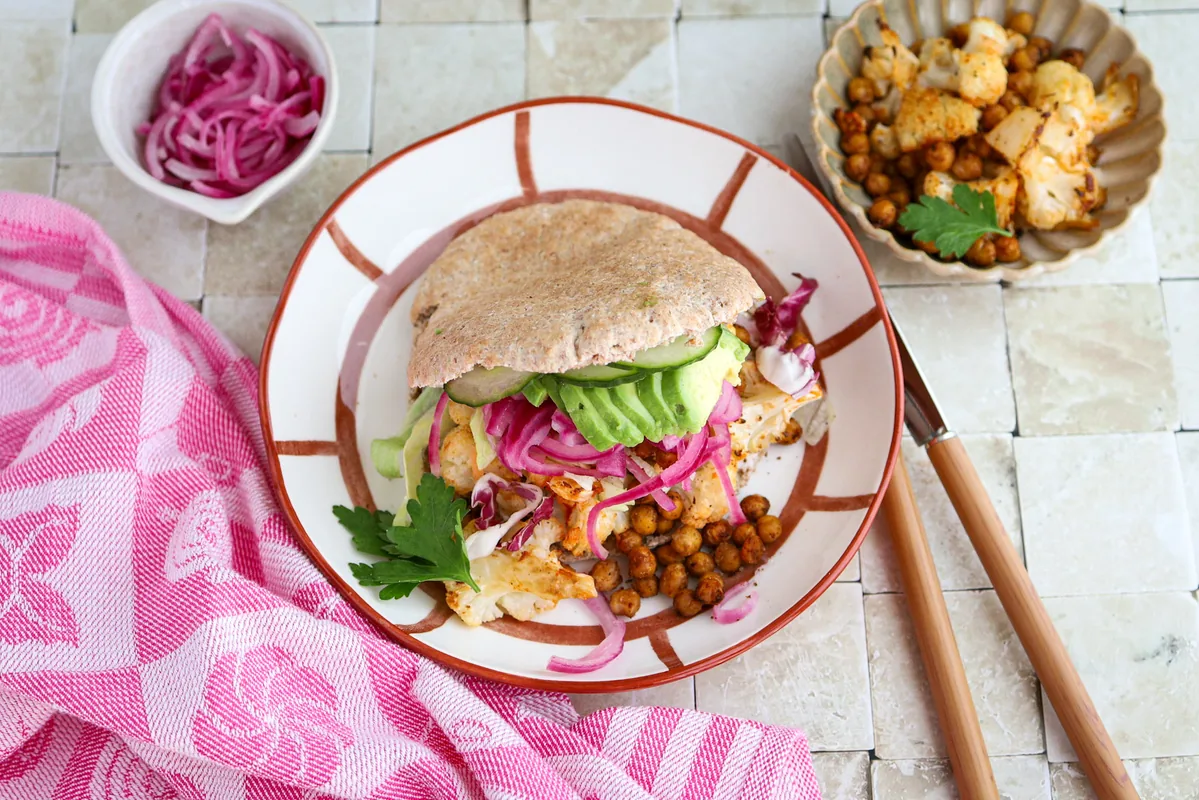
Two baking sheets go into the oven at the same time. One comes out with cumin-paprika chickpeas, golden and splitting at the seams. The other with cauliflower florets, edges blackened under a thin coat of Sriracha.
Everything meets inside a warm whole wheat pita with sliced avocado, raw red onion, cucumber, and a yogurt-lemon sauce that takes thirty seconds to stir together. 22 grams of fiber from four different sources and 658 kcal in a single-serving meal that runs itself while the oven does the work.
Two baking sheets go into the oven at the same time. One comes out with cumin-paprika chickpeas, golden and splitting at the seams. The other with cauliflower florets, edges blackened under a thin coat of Sriracha.
Everything meets inside a warm whole wheat pita with sliced avocado, raw red onion, cucumber, and a yogurt-lemon sauce that takes thirty seconds to stir together. 22 grams of fiber from four different sources and 658 kcal in a single-serving meal that runs itself while the oven does the work.
Ingredients
- chickpeas 3 ounces
- olive oil 1.5 tablespoon
- ground cumin 0.5 teaspoon
- paprika (ground spice) 0.5 teaspoon
- cauliflower florets 4 ounces
- Sriracha sauce 0.5 tablespoon
- pita, whole wheat 1
- red onion 0.25
- cucumber 0.25
- avocado 0.5
- yogurt, nonfat 2 tablespoons
- lemon juice 1 squeeze
Method
-
Preheat the oven to 400°F (200°C).
-
Rinse and drain the chickpeas, then pat them dry with a clean towel. Toss with half of the oil, cumin, paprika, salt and pepper. Spread on a baking sheet and roast for 20 minutes, stirring halfway through, until golden and crispy.
-
Toss the cauliflower florets with the remaining oil, Sriracha, salt and pepper. Spread on a second baking sheet (or push the chickpeas to one side and add the cauliflower) and roast for 20 minutes, until tender and caramelized.
-
Warm the pita in the oven or in a dry skillet.
-
Thinly slice the red onion into half moons. Slice the cucumber and avocado. In a small bowl, mix the yogurt with lemon juice, salt and pepper.
-
Cut the pita open and spread the inside with the yogurt-lemon sauce. Fill with cauliflower, chickpeas, onion, cucumber and avocado. Serve right away.
Roast the cauliflower on a dry baking sheet, not in a covered dish or foil packet. A 2020 study found dry-heat cooking produced 7.9 times more protective compounds from cauliflower compared to raw, because brief heat destroys a competing enzyme while preserving the one that activates beneficial plant compounds. Boiling washes up to 77% of those compounds into the cooking water.
Roasting cauliflower on a dry baking sheet activates a pathway that multiplies its protective compounds. A 2020 study measured 7.9 times more isothiocyanates (the bioactive form your body uses) from dry-heated cauliflower compared to raw. The mechanism: brief heat destroys ESP, a competing enzyme that diverts compounds into inactive waste, while preserving myrosinase, the enzyme that produces the active form. Boiling skips that window entirely and leaches up to 77% of the raw material into the water.
Cauliflower Compounds by Cooking Method · DOIWhy This Works
Behind this recipe
Where does 22 grams of fiber come from in one meal?
Four sources working together. Chickpeas carry the largest share (around 7–8g from 84g), followed by the whole wheat pita, half an avocado, and the cauliflower florets. That covers nearly 80% of the daily recommended intake in a single sitting. A meta-analysis of 62 trials found fiber intake independently associated with fat loss, and this meal delivers most of a day’s target before dinner.
Read the full evidence reviewCan I roast the chickpeas and cauliflower on the same baking sheet?
Yes. The recipe offers this option in Step 3. Push the chickpeas to one side after they have had a few minutes, then add the cauliflower to the open space. The key is leaving room between pieces so moisture can escape. Crowding the sheet traps steam, and steam turns roasting into something closer to steaming. That matters for crunch, and it matters for the cauliflower’s compounds: dry heat preserves what water-based cooking washes away.
Is 658 calories a lot for one meal?
Context matters more than the number. At 658 kcal with 22 grams of fiber and 21 grams of protein, this is a meal built to hold you for hours, not a calorie count that exists in isolation. On a 2,000-calorie day, it sits comfortably alongside two lighter meals. The fiber density is the part worth noticing: nearly 80% of the daily recommendation from a single plate.