Spaghetti Carbonara with Crispy Chicken
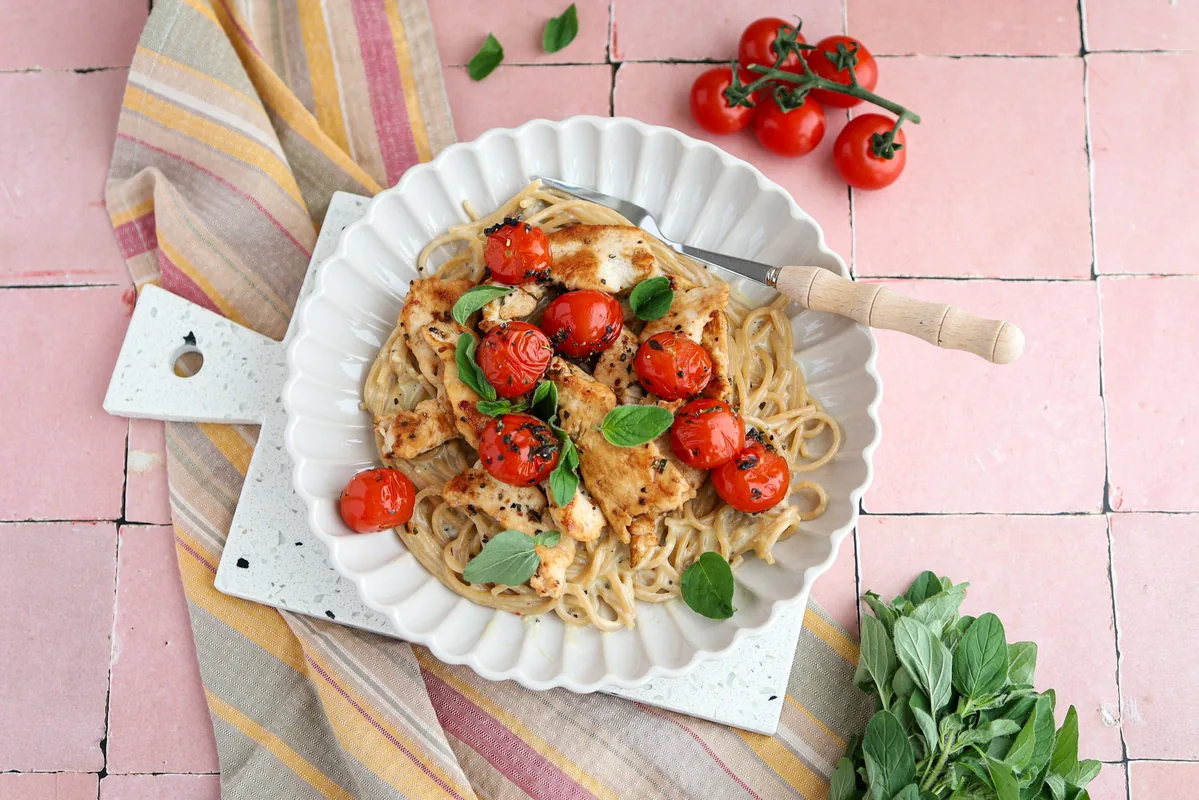
Carbonara without the cured pork. Crispy chicken strips, blistered cherry tomatoes straight from the grill, and a silky egg-cheddar sauce that comes together in the time it takes to drain the spaghetti.
The trick is starchy pasta water whisked into the egg and cheese — it builds the emulsion that keeps the sauce smooth instead of clumpy. 48g of protein, 8g of fiber from whole wheat spaghetti, and the whole thing is on the table in 15 minutes.
Carbonara without the cured pork. Crispy chicken strips, blistered cherry tomatoes straight from the grill, and a silky egg-cheddar sauce that comes together in the time it takes to drain the spaghetti.
The trick is starchy pasta water whisked into the egg and cheese — it builds the emulsion that keeps the sauce smooth instead of clumpy. 48g of protein, 8g of fiber from whole wheat spaghetti, and the whole thing is on the table in 15 minutes.
Ingredients
- spaghetti, whole wheat 3 ounces
- chicken breast 3 ounces
- olive oil 1.5 tablespoon
- cherry tomatoes 10
- oregano, dried 1 teaspoon
- egg 1
- cheddar cheese, shredded 1.5 ounces
Method
-
Preheat the oven to 390°F for the cherry tomatoes.
-
Cook the spaghetti according to the instructions on the package. Reserve ¼ cup of the pasta cooking water.
-
Slice the chicken breast into strips. Sauté the strips over medium to high heat in olive oil for about 8–10 minutes, until golden brown on the outside and fully cooked through.
-
Toss the cherry tomatoes with olive oil, dried oregano, salt and pepper. Grill these in the oven under the grill function for 4–6 minutes, until the skins just start to blister.
-
In a bowl, whisk together the egg, shredded cheddar, a pinch of black pepper and 2 tablespoons of the reserved pasta water until smooth.
-
Drain the spaghetti and return it to the pot. Immediately stir in the egg-cheese mixture.
-
Gently heat the spaghetti with the egg-cheese mixture over low heat, stirring constantly, until the sauce thickens and coats the pasta. Do not let it boil or the egg will scramble.
-
Serve the carbonara topped with the crispy chicken strips and the roasted cherry tomatoes.
Toss the cherry tomatoes generously in olive oil before they go under the grill. Lycopene, the compound behind the red in tomatoes, is fat-soluble. Research found that cooking tomatoes with oil increased lycopene absorption by 82% compared to oil-free methods (Fielding et al., 2005). That oil coating does double duty: better blister, better nutrition.
Why This Works
Behind this recipe
Why use cheddar instead of pecorino or Parmesan?
Traditional carbonara uses pecorino romano, which has a sharper, saltier flavor. Cheddar melts differently — it creates a smoother, more forgiving sauce that is harder to break. Pecorino can turn grainy if the heat is too high. If you swap in pecorino, use less (it is saltier gram for gram) and keep the heat even lower.
Why does the recipe say to reserve pasta water?
Pasta water is full of dissolved starch from the boiling spaghetti. That starch acts as an emulsifier — it holds the fat from the egg and cheese in suspension instead of letting the sauce separate or clump. Two tablespoons is usually enough. Without it, the egg mixture can seize into scrambled chunks when it hits the hot pasta.
Can I use regular spaghetti instead of whole wheat?
Yes. The cooking method is identical. Whole wheat adds 8g of fiber and has a slightly nuttier flavor. Regular spaghetti will be a few grams lower in fiber and slightly higher in simple carbohydrates, but the carbonara technique works the same way.
Is 48g of protein in one meal too much to absorb?
Earlier guidelines suggested 20–30g per meal as a ceiling, but more recent research indicates the body can effectively use higher amounts — the process just takes longer. This meal's 48g spread across chicken, egg, and cheese provides a mix of faster and slower-digesting proteins, which may actually support more sustained muscle protein synthesis.
Read the full evidence review