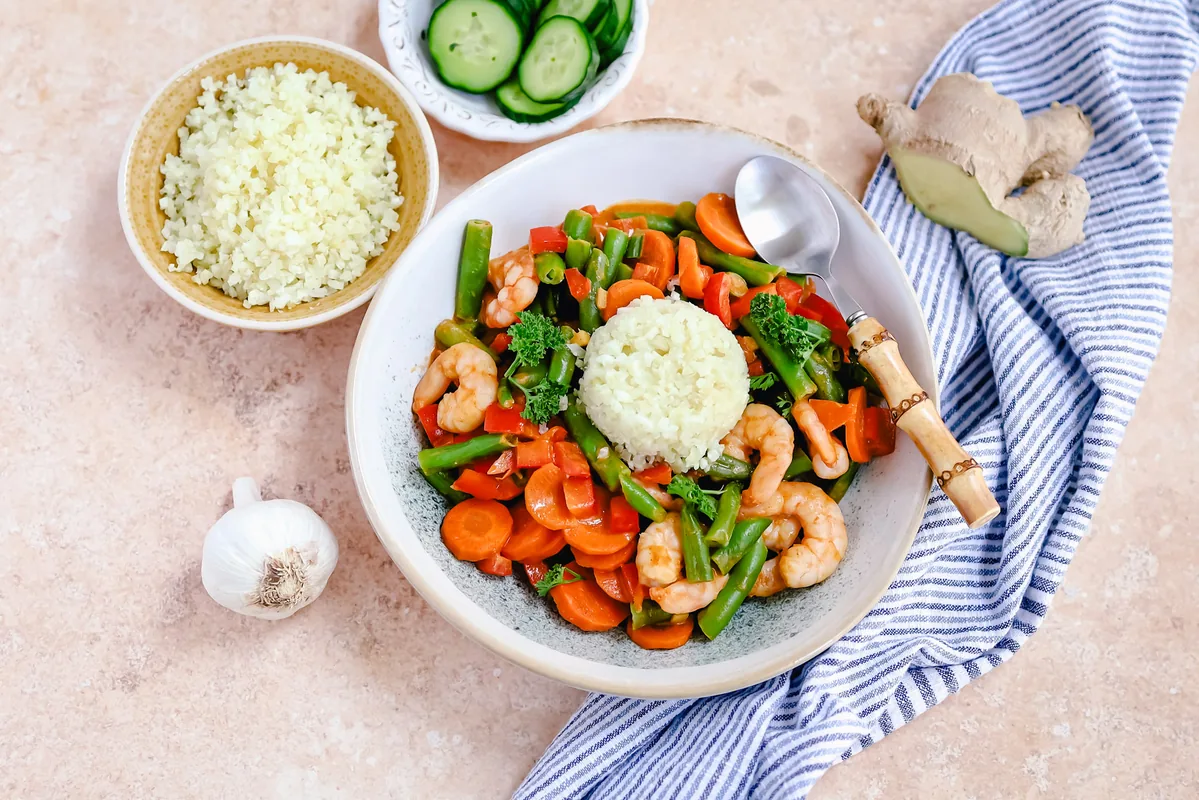
Shrimp Red Curry with Green Beans & Rice
Garlic and ginger hit hot oil, shrimp sear on top, then bell pepper and carrot join the wok. Coconut milk and red curry paste come together as a light sauce, enough to coat everything without burying it. Green beans, boiled separately until they still snap, go in last. Brown rice catches what's left.
705 kcal with 28g protein and 15g fiber. 25 minutes from cold wok to table.
Garlic and ginger hit hot oil, shrimp sear on top, then bell pepper and carrot join the wok. Coconut milk and red curry paste come together as a light sauce, enough to coat everything without burying it. Green beans, boiled separately until they still snap, go in last. Brown rice catches what's left.
705 kcal with 28g protein and 15g fiber. 25 minutes from cold wok to table.
Ingredients
- brown rice 3 ounces
- shrimp (frozen) 3 ounces
- green beans (frozen) 1.25 cup
- garlic 1 clove
- ginger 1 slice
- olive oil 1 tablespoon
- bell pepper 1
- carrot 1
- coconut milk 0.25 cup
- water 0.25 cup
- red curry paste 1 teaspoon
Method
-
Cook the rice according to the instructions on the package.
-
Allow the shrimp to thaw briefly.
-
Put the green beans in a pot with water and boil until al dente, about 10 minutes.
-
In the meantime, finely chop the garlic and ginger. Heat the oil in a wok and fry the garlic, ginger and shrimp for about 5 minutes. Season with pepper and salt.
-
Meanwhile, dice the bell pepper. Slice the carrot.
-
Add the bell pepper and carrot to the wok and fry for about 5 minutes.
-
Add the coconut milk with water and the curry paste to the wok and bring to a boil. Add the cooked green beans and let it simmer for another 1 to 2 minutes until the curry thickens slightly. Season with pepper and salt.
-
Serve the rice with the curry in a deep plate.
Pat the thawed shrimp completely dry before they go into the hot wok. Surface moisture drops the oil temperature and steams the shrimp instead of searing them. That sear locks in texture before the curry sauce goes in.
Why This Works
Behind this recipe
Does stir-frying shrimp for 5 minutes destroy any protein?
No. Cooking protein actually increases the amount your body absorbs. Research on protein digestibility found that cooked protein delivered 90.9% digestibility compared to just 51.3% raw. Heat unfolds the protein structure, giving digestive enzymes better access. The 5 minutes of wok time in this recipe works in your favor.
Do the green beans lose nutrients after 10 minutes of boiling?
Some heat-sensitive vitamins decrease with boiling, but cooking also increases the bioavailability of other nutrients. The 10-minute boil keeps the beans al dente, firm enough to hold their texture in the curry. Steaming preserves more water-soluble vitamins, but with seven other ingredients on the plate, the impact on total nutrition is minimal.
Can I use white rice instead of brown?
Yes. White rice cooks faster and tastes nearly the same in this curry. The difference is fiber: 15g in this meal, and the brown rice is where most of it comes from. With white rice, the calorie and protein count stays close, but the fiber drops sharply.
Why is there water mixed with the coconut milk?
The quarter cup of water stretches the coconut milk into a lighter sauce that coats without overwhelming. Full-fat coconut milk undiluted would mask the curry paste, garlic, and ginger. The 1:1 ratio keeps the richness in the background.