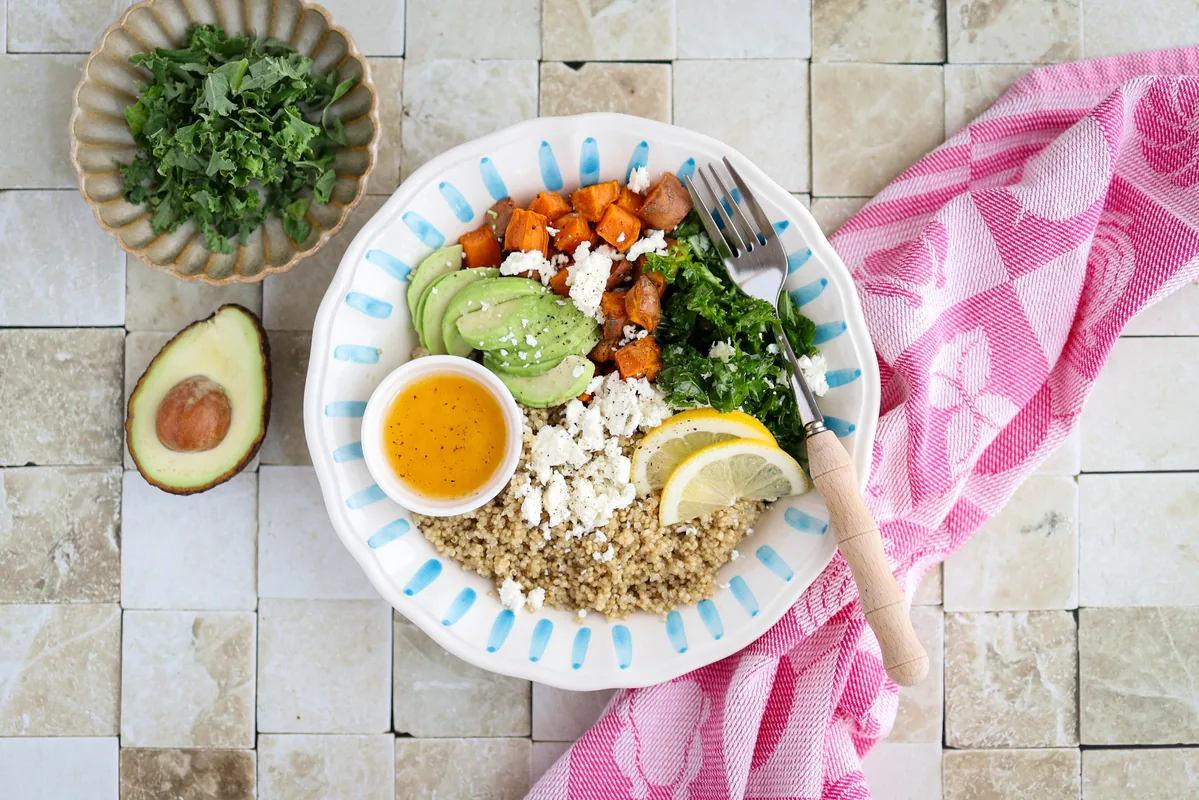
Quinoa Bowl with Kale, Sweet Potato, Avocado & Feta
Forty grams of fat in a kale bowl sounds like a number that does not belong. But every gram here has a job.
The olive oil you toss with the sweet potato cubes before roasting does more than crisp the edges. Research found it made the beta-carotene your body can actually absorb up to 20 times higher than cooking without oil. The avocado adds another layer of fat that carries nutrients through the gut. The lemon-honey dressing ties the bowl together with a third hit of olive oil.
779 calories, 82g carbs, 16g fiber, and 25 minutes from cutting board to table. A full meal that earns its fat content.
Forty grams of fat in a kale bowl sounds like a number that does not belong. But every gram here has a job.
The olive oil you toss with the sweet potato cubes before roasting does more than crisp the edges. Research found it made the beta-carotene your body can actually absorb up to 20 times higher than cooking without oil. The avocado adds another layer of fat that carries nutrients through the gut. The lemon-honey dressing ties the bowl together with a third hit of olive oil.
779 calories, 82g carbs, 16g fiber, and 25 minutes from cutting board to table. A full meal that earns its fat content.
Ingredients
- quinoa 3 ounces
- sweet potato 3.5 ounces
- olive oil 1 tablespoon
- kale (frozen) 2 ounces
- avocado 0.5
- lemon juice 1 squeeze
- honey 1 teaspoon
- feta cheese, crumbled 1 ounce
Method
-
Preheat the oven to 400°F (210°C).
-
Prepare the quinoa according to the package instructions.
-
Cut the sweet potato into small cubes and mix with ⅓ of the oil, salt and pepper. Roast for 20 minutes until tender and golden brown.
-
Massage the kale with ⅓ of the oil and a pinch of salt to soften the texture.
-
Slice the avocado.
-
Mix the remaining oil, lemon juice, honey, salt and pepper for the dressing.
-
Spoon the quinoa into a bowl, add the kale, sweet potato, avocado and feta. Drizzle with the dressing.
Don't skip massaging the kale. Thirty seconds of squeezing with oil and a pinch of salt breaks down the tough cell walls and takes the bitterness out. The leaves should shrink to about half their original volume. For a sharper dressing, stir in half a teaspoon of mustard. A little grated lemon zest over the finished bowl adds a bright, fresh layer.
Cooking orange-fleshed sweet potato with oil can make up to 20 times more beta-carotene available for your body to absorb. The heat disrupts the vegetable's cell walls, and the oil dissolves the freed carotenoids into a form the gut can work with. Step 3 of this recipe, where you toss the cubes in olive oil before roasting, triggers exactly that process.
Food Chemistry, 2009 · DOIWhy This Works
Behind this recipe
Is 40 grams of fat too much for one meal?
It depends on what you eat the rest of the day. At 2,000 calories, general dietary guidelines put daily fat between roughly 44 and 78 grams. This bowl's 40 grams fits inside that range while leaving room for other meals. The fat here comes from olive oil, avocado, and feta. A pooled analysis of over 57,000 people found that total fat intake alone did not predict whether people gained body fat. Calorie balance did. More on that: Does Eating Fat Make You Fat?
Read the full evidence reviewCan I use fresh kale instead of frozen?
Yes. Fresh kale works well here. Remove the thick stems, tear or chop the leaves, then massage with oil and salt the same way. Fresh kale tends to be slightly more bitter than frozen, so the massage step matters even more. Frozen kale has already been blanched, which softens the texture and reduces bitterness before it reaches your bowl.
Does this bowl have enough protein for a full meal?
This bowl delivers 23 grams of protein from quinoa (a complete plant protein with all nine essential amino acids), feta cheese, and a small contribution from the kale. Whether that covers your needs depends on your total daily target and how the rest of your meals are structured. For context, if you eat four meals a day and target 100g total, this bowl handles roughly a quarter of it.
Does the type of oil matter for nutrient absorption?
The research that found the 10-20x beta-carotene increase used cooking oil generally, not a specific type. What matters is that fat is present during cooking. Olive oil works well because it handles roasting temperatures and adds its own flavor to the sweet potato. Avocado oil or a neutral oil like sunflower would also work. The key is coating the sweet potato before it goes in the oven, not which oil you choose.