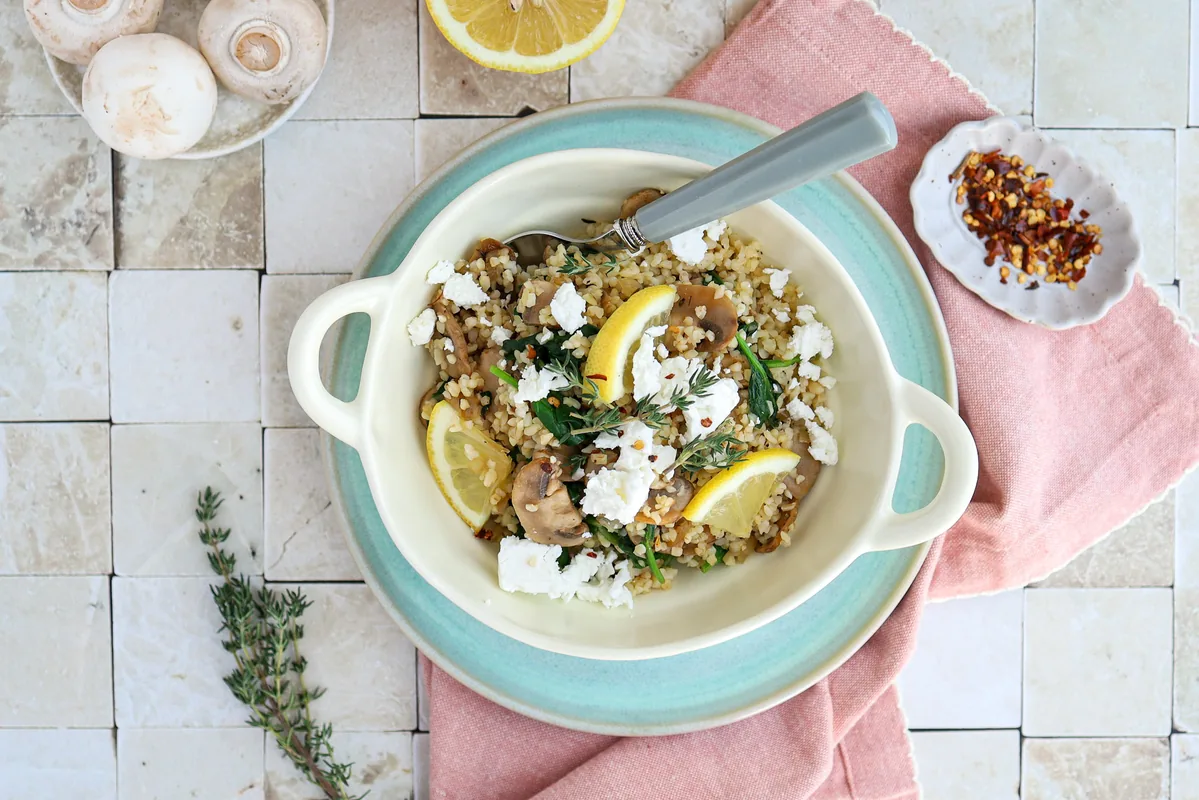
Pumpkin Risotto
Brown rice, frozen pumpkin, garlic, and thyme. One pan, 20 minutes. The pumpkin breaks down during the simmer, turning the broth golden while the rice absorbs it.
The Parmesan goes in after you turn off the heat. That sequence does more than prevent the cheese from clumping. A 2024 study in the European Journal of Nutrition found that six times less beta-carotene reached absorbable form when digested with dairy fat compared to olive oil at the same fat content (Kruger et al.). Beta-carotene is the orange pigment your body converts into vitamin A, and pumpkin is one of the richest sources. The olive oil in this recipe spends 15 minutes pulling it out of the pumpkin. The Parmesan arrives after the work is done.
564 kcal, 19g protein, 24g fat, 6g fiber. A warm risotto that happens to get the oil-and-cheese order right.
Brown rice, frozen pumpkin, garlic, and thyme. One pan, 20 minutes. The pumpkin breaks down during the simmer, turning the broth golden while the rice absorbs it.
The Parmesan goes in after you turn off the heat. That sequence does more than prevent the cheese from clumping. A 2024 study in the European Journal of Nutrition found that six times less beta-carotene reached absorbable form when digested with dairy fat compared to olive oil at the same fat content (Kruger et al.). Beta-carotene is the orange pigment your body converts into vitamin A, and pumpkin is one of the richest sources. The olive oil in this recipe spends 15 minutes pulling it out of the pumpkin. The Parmesan arrives after the work is done.
564 kcal, 19g protein, 24g fat, 6g fiber. A warm risotto that happens to get the oil-and-cheese order right.
Ingredients
- onion 0.25
- garlic 1 clove
- olive oil 1 tablespoon
- pumpkin (frozen) 8 ounces
- thyme, dried 1.5 teaspoon
- brown rice 3 ounces
- water 10 fluid ounces
- vegetable bouillon 1 cube
- Parmesan cheese 1 ounce
Method
-
Chop the onion. Press the garlic clove.
-
Heat the oil in a pan and sauté the onion and garlic for 3 minutes. Add the pumpkin pieces, thyme and rice and cook for another minute. Pour the water into the pan along with the bouillon cube. Bring to a boil and let it simmer on low heat for about 15 minutes. Stir regularly.
-
Turn off the heat and stir the cheese into the pumpkin risotto. Season with some pepper.
Sauté the pumpkin in olive oil for the full simmer, not butter. Research found six times less beta-carotene reached absorbable form with dairy fat versus olive oil at the same fat content. The olive oil phase is where beta-carotene gets incorporated into structures your gut can absorb. Butter's proteins bind the bile salts needed for that process.
The issue is not dairy fat alone. Casein proteins in dairy bind bile salts your gut needs to form absorption structures. Dairy proteins coagulate during digestion, trapping beta-carotene inside clumps. Medium-chain fatty acids in dairy form larger particles that lock beta-carotene away instead of releasing it. This recipe adds Parmesan off-heat as a finishing ingredient, so the dairy arrives after the olive oil has already done the extraction.
European Journal of Nutrition, 2024 · DOIWhy This Works
Behind this recipe
Can I use butter instead of olive oil?
You can, but it changes what happens to the beta-carotene in the pumpkin. A 2024 study found six times less beta-carotene reached absorbable form with dairy fat compared to olive oil at the same fat content. Butter introduces proteins and fatty acids that interfere with the absorption process. The olive oil in this recipe spends 15 minutes pulling beta-carotene into a form your body can use. Butter would run that entire process through a dairy matrix.
Can I use fresh pumpkin instead of frozen?
Yes. Cut it into small cubes, roughly the same size as the frozen pieces. Fresh pumpkin may need a few extra minutes of simmering to break down fully. The frozen variety works well here because it softens faster and integrates into the risotto texture during the 15-minute simmer.
Why add the Parmesan off-heat?
Two reasons. Parmesan melts more smoothly when stirred into hot food without direct heat, becoming creamy instead of stringy. And the timing keeps the dairy away from the extraction phase. The olive oil spends 15 minutes alongside the pumpkin while beta-carotene is being released from the cell walls. Adding Parmesan after means the dairy arrives when the absorption work is already done.
Is 19g of protein enough for a dinner?
That depends on your total daily intake and what else you eat alongside it. 19g is about 13.5% of this meal's calories from protein, coming from a combination of the brown rice, Parmesan, and smaller contributions from the pumpkin. If you want more, adding grilled chicken or a side of cottage cheese would increase the protein without changing the recipe's base.