Pasta Salad with Peach, Corn & Feta
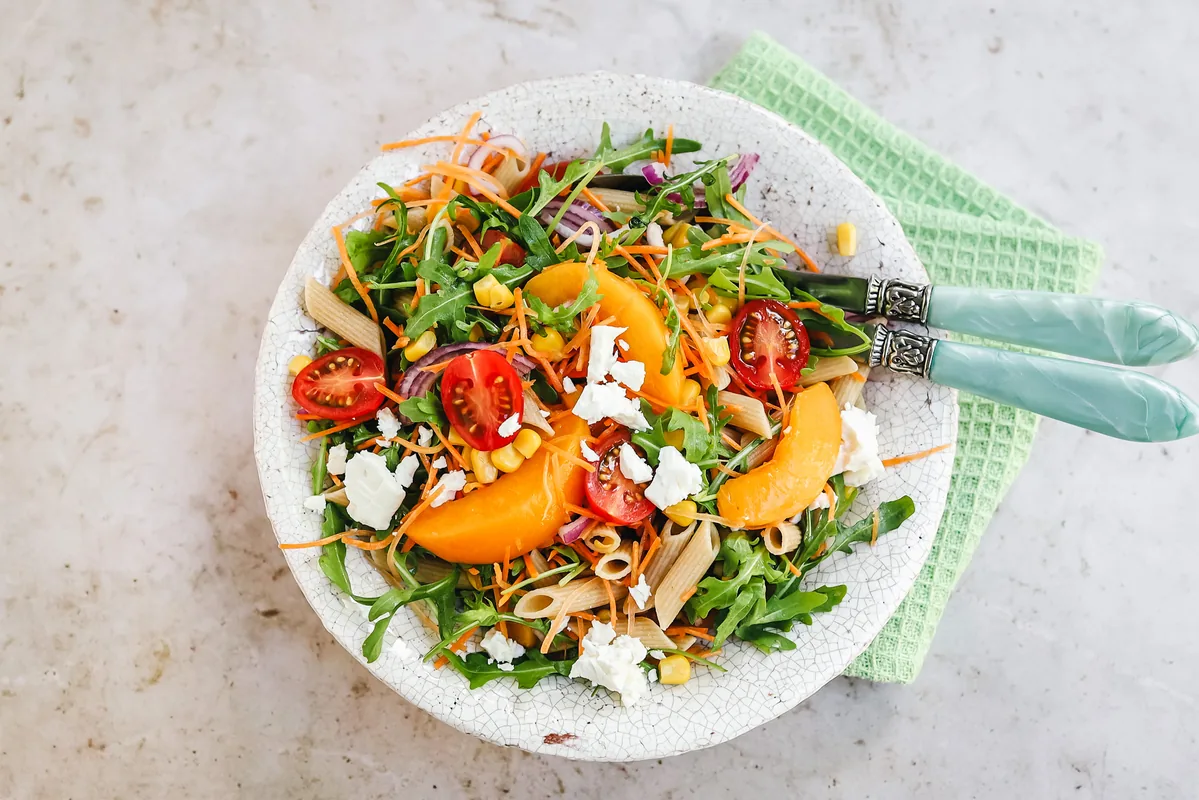
Thawed peach slices in a savory pasta salad. The sweetness lands differently than you expect. It cuts through the salt of the feta, meets the peppery arugula head-on, and sits next to halved cherry tomatoes like it was always supposed to be there.
Whole wheat penne, cold-rinsed and drained. Shredded carrot, corn, thin rings of red onion, and a handful of arugula, all tossed with olive oil and finished with crumbled feta. 699 kcal with 24 grams of protein, 81 grams of carbs, and 12 grams of fiber. One pot of boiling water, fifteen minutes, done.
Thawed peach slices in a savory pasta salad. The sweetness lands differently than you expect. It cuts through the salt of the feta, meets the peppery arugula head-on, and sits next to halved cherry tomatoes like it was always supposed to be there.
Whole wheat penne, cold-rinsed and drained. Shredded carrot, corn, thin rings of red onion, and a handful of arugula, all tossed with olive oil and finished with crumbled feta. 699 kcal with 24 grams of protein, 81 grams of carbs, and 12 grams of fiber. One pot of boiling water, fifteen minutes, done.
Ingredients
- sliced peaches (frozen) 3 ounces
- penne, whole wheat 3 ounces
- corn 2 ounces
- cherry tomatoes 8
- red onion 0.25
- carrot, shredded 2 ounces
- arugula 1 handful
- olive oil 1.5 tablespoon
- feta cheese, crumbled 1.5 ounces
Method
-
Thaw the sliced peaches.
-
Cook the penne according to the instructions on the package, rinse with cold water, drain in a colander and add to a large bowl.
-
Rinse the corn in a colander with cold water, drain.
-
Halve the cherry tomatoes. Slice the onion into thin half rings.
-
Add the tomatoes, onion, corn, carrots and arugula to the bowl with the pasta. Drizzle the salad with the oil. Toss together and season with pepper and salt.
-
Serve the pasta salad on a plate. Spread the feta over the salad.
Drizzle the olive oil directly over the vegetables before tossing in Step 5, not after plating. The raw carrot, cherry tomatoes, and arugula in this salad are packed with carotenoids, but research found that raw vegetables eaten without dietary fat produced negligible carotenoid absorption. The olive oil clears the fat threshold that makes those pigments accessible to your body.
The feta in Step 6 sits directly on the cherry tomatoes. Research found that calcium from dairy reduced lycopene absorption by up to 83% at high supplemental doses. The 42 grams of feta here carry far less calcium than the amounts tested, so the interference is mild. The olive oil in the same bowl partially compensates by helping lycopene transfer into the micelles your intestines absorb.
Why This Works
Behind this recipe
Can I use fresh peaches instead of frozen?
Yes. Fresh ripe peaches work well. Slice them thin so they distribute evenly through the salad. The recipe calls for frozen because they are available year-round and retain most of their polyphenol and carotenoid content during freezing. Frozen peaches also hold their shape better when tossed with pasta and dressing.
Does rinsing pasta with cold water change anything besides texture?
It does. When cooked starch cools, the amylose chains re-crystallize into a form called resistant starch. This retrograded starch resists digestion in the small intestine and passes to the colon, where gut bacteria ferment it into short-chain fatty acids. A crossover trial found that chilling a pasta-and-olive-oil meal significantly reduced the glycemic response compared to the same meal served hot. The cold rinse in Step 2 triggers that structural change.
Read the full evidence reviewWhy does the recipe use olive oil instead of a vinaigrette or dressing?
Beyond flavor, olive oil provides the dietary fat needed for carotenoid absorption from the raw vegetables in this salad. Research showed that raw vegetable salads eaten with fat-free dressing produced nearly zero carotenoid absorption. The fat threshold for meaningful uptake is about 6 grams. The olive oil in this recipe provides roughly 20 grams of fat, well above that threshold, and its monounsaturated fat profile is particularly effective at enhancing carotenoid bioavailability.
Read the full evidence review