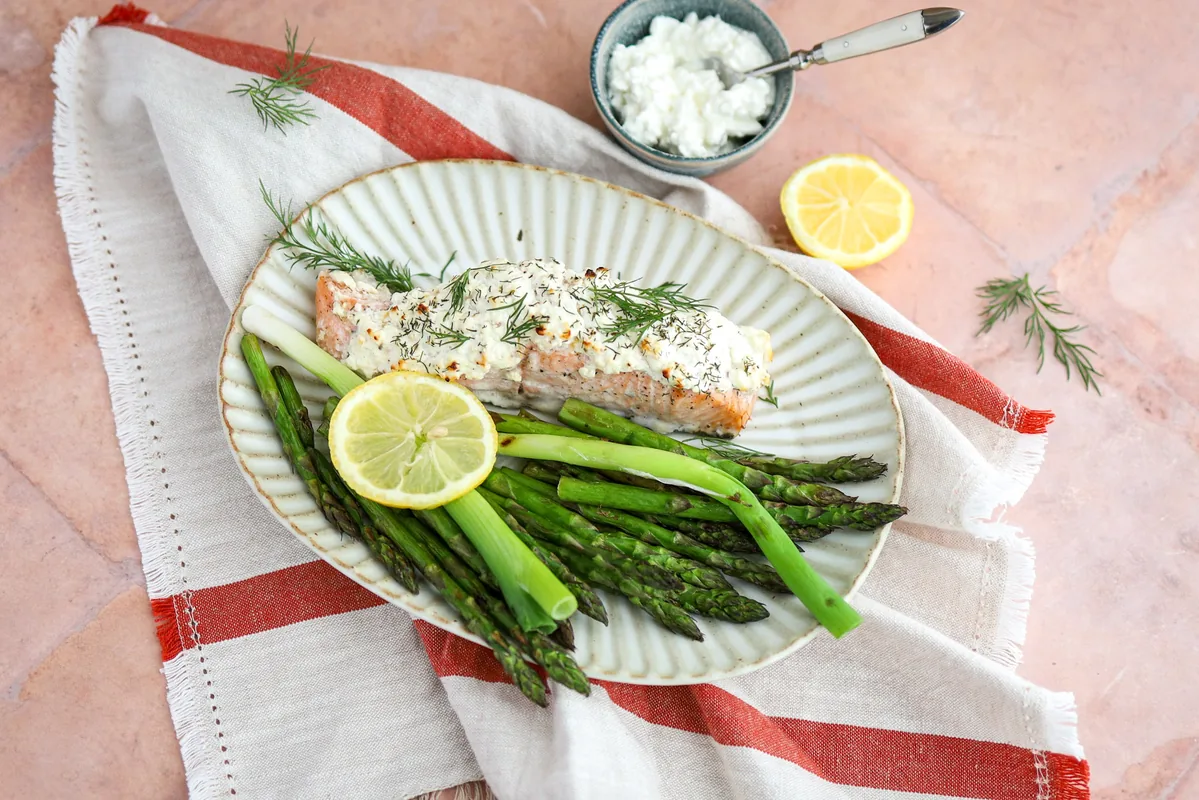
Oven-Baked Salmon with Asparagus
Cottage cheese on salmon sounds wrong until you pull it out of the oven — golden on top, tender underneath, the two proteins fused into something better than either one alone.
The asparagus and scallions get their time in a grill pan. Charred, al dente, finished with lemon. One plate, 41 grams of protein, 558 calories, and 25 minutes of actual work.
Cottage cheese on salmon sounds wrong until you pull it out of the oven — golden on top, tender underneath, the two proteins fused into something better than either one alone.
The asparagus and scallions get their time in a grill pan. Charred, al dente, finished with lemon. One plate, 41 grams of protein, 558 calories, and 25 minutes of actual work.
Ingredients
- salmon fillet 1
- cottage cheese, 4% milkfat 3 ounces
- lemon juice 3 squeezes
- scallions 2
- asparagus (frozen) 0.5 pound
- olive oil 1.5 tablespoon
Method
-
Preheat the oven to 390 °F (200°C).
-
Let the salmon thaw for a while.
-
Mix the cottage cheese with some salt and freshly ground pepper in a bowl.
-
Season the salmon fillet with salt, pepper and some lemon juice. Place it in a shallow baking dish. Spread the cottage cheese over it. Place the dish in the oven and bake the salmon for 20-25 minutes until cooked through and the cottage cheese is lightly colored.
-
Trim the ends and the ugly green tops off the scallions.
-
Brush the asparagus and scallions lightly with oil and lay them next to each other in a hot grill pan. Roast the asparagus and scallions for 8-10 minutes until they are al dente and have nice brown stripes. Turn them regularly and move the asparagus and scallions that are done to a plate.
-
Drizzle them with the rest of the lemon juice and optionally some pepper and salt and keep them warm under aluminum foil. Continue roasting the remaining asparagus and scallions until they are also al dente.
-
Serve the salmon with cottage cheese on a warm plate and place the asparagus and scallions alongside.
Get the grill pan smoking hot before the asparagus goes in. Frozen spears release more moisture than fresh ones, and a screaming-hot pan evaporates it fast enough to get those brown char marks instead of steamed, limp stalks.
Behind this recipe
Can I use fresh asparagus instead of frozen?
Yes. Fresh asparagus grills faster — reduce the time by two to three minutes and watch for the char marks. Frozen works here because it is blanched before freezing, so the cell walls have already softened. Either way, get the grill pan very hot before the spears go in.
Why spread cottage cheese on the salmon before baking?
The cottage cheese acts as a protein-rich crust that holds its shape in the oven. It browns on top while trapping moisture underneath, keeping the salmon from drying out the way it does when baked uncovered. The result is a tender fillet with a lightly golden topping.
Is 41 grams of protein in one meal more than my body can use?
The old 30-gram ceiling was always an oversimplification. Studies examining how much protein your body actually uses in a single sitting found the real threshold sits well above that number, especially from whole-food sources like fish and dairy. Forty-one grams from salmon and cottage cheese is well within the range researchers have tested.
Read the full evidence review