One-Pot Lemon Pasta with Asparagus & Peas
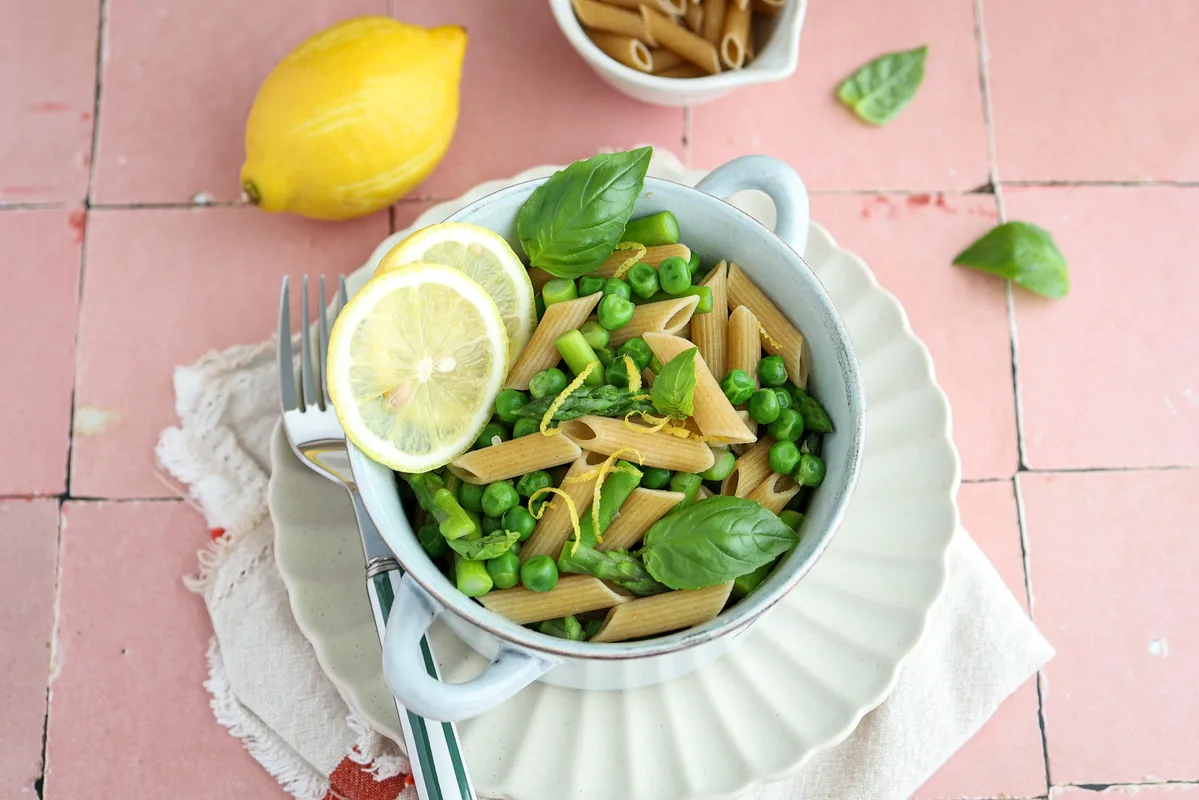
Whole wheat penne, frozen asparagus, and garden peas simmer together in one pot until the pasta drinks up every drop of broth. Add a squeeze of lemon and a drizzle of olive oil, and lunch is done in 15 minutes.
The combination delivers 16g of fiber and 21g of protein from plants alone. No dairy, no meat, no fuss. Because the pasta absorbs the cooking liquid instead of draining it, the flavors concentrate and nothing goes to waste.
Whole wheat penne, frozen asparagus, and garden peas simmer together in one pot until the pasta drinks up every drop of broth. Add a squeeze of lemon and a drizzle of olive oil, and lunch is done in 15 minutes.
The combination delivers 16g of fiber and 21g of protein from plants alone. No dairy, no meat, no fuss. Because the pasta absorbs the cooking liquid instead of draining it, the flavors concentrate and nothing goes to waste.
Ingredients
- asparagus (frozen) 5 ounces
- penne, whole wheat 3 ounces
- vegetable bouillon 1 cube
- water 1.5 cup
- garden peas (frozen) 5 ounces
- lemon juice 1 squeeze
- olive oil 1 tablespoon
Method
-
Cut the asparagus into pieces.
-
Place the penne, bouillon cube, and water in a pot and bring to a boil over medium heat.
-
Once the water is boiling, add the asparagus and peas. Lower the heat and let it simmer, stirring occasionally, until the pasta is cooked and most of the liquid is absorbed, about 10–12 minutes. Check occasionally if the pasta is cooked and add a bit of extra water if it gets too dry.
-
Add lemon juice and oil. Season with salt and pepper to taste. Serve immediately.
Keep the heat at a steady simmer, not a hard boil. One-pot pasta needs the starch to thicken the liquid into a glossy coating around each piece of penne. Too much heat evaporates the water before the pasta finishes cooking, and you end up with dry noodles instead of a creamy, broth-glazed bowl.
Why This Works
Behind this recipe
Can I use fresh asparagus instead of frozen?
Yes. Trim the woody ends and cut the spears into 2–3 cm pieces. Fresh asparagus cooks faster than frozen, so add it about 2–3 minutes into the simmer rather than at the start. Total cooking time stays the same.
Does freezing vegetables destroy their nutrients?
Research suggests the opposite. Vegetables that are flash-frozen shortly after harvest retain most of their vitamins, and in some cases contain more nutrients than fresh produce that spent days in transit and on store shelves. Both the asparagus and peas in this recipe were frozen at peak ripeness.
Where does all the fiber come from?
Three sources. The whole wheat penne contributes the largest share, followed by the garden peas and the asparagus. Together they deliver 16g of fiber per serving. Research has explored fiber's connection to satiety and energy balance, with pooled trial data suggesting it plays a meaningful role in how the body manages fat storage.