Oatmeal Breakfast with Grapes, Raisins & Honey
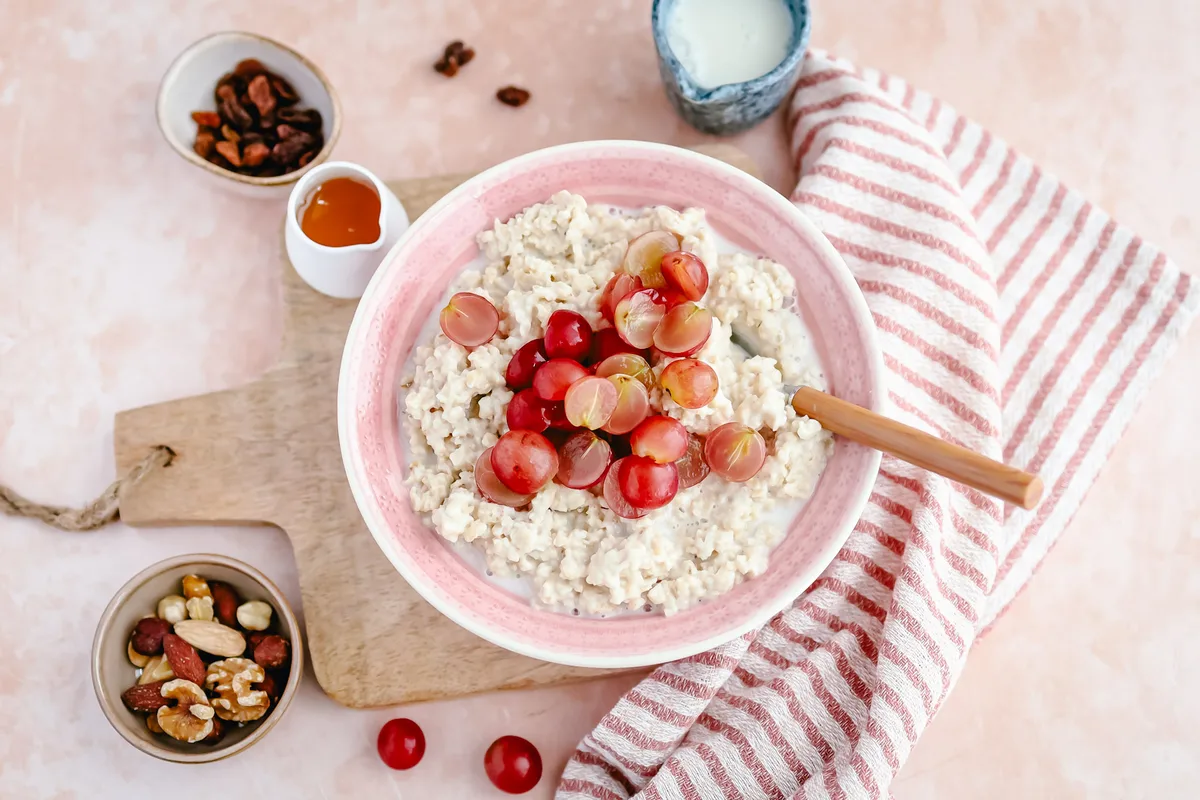
Five ingredients, one saucepan, and ten minutes between you and a warm bowl of oats simmered in milk with halved grapes scattered on top.
The oats cook directly in the milk rather than water, which means they absorb the milk's sugars and proteins while they soften. That gives you a porridge that holds together instead of going watery at the bottom. 504 calories, 90g of carbs, and 7g of fiber from the oat beta-glucan and raisins combined.
The grapes go on fresh and halved so each bite pops against the warm oats. The raisins bring chewy sweetness and a concentrated hit of the same fruit in dried form. Honey drizzled on last, no heat, full flavor.
Five ingredients, one saucepan, and ten minutes between you and a warm bowl of oats simmered in milk with halved grapes scattered on top.
The oats cook directly in the milk rather than water, which means they absorb the milk's sugars and proteins while they soften. That gives you a porridge that holds together instead of going watery at the bottom. 504 calories, 90g of carbs, and 7g of fiber from the oat beta-glucan and raisins combined.
The grapes go on fresh and halved so each bite pops against the warm oats. The raisins bring chewy sweetness and a concentrated hit of the same fruit in dried form. Honey drizzled on last, no heat, full flavor.
Ingredients
- oatmeal 0.5 cup
- milk, 2% reduced fat 1 cup
- grapes 10
- raisins 1 ounce
- honey 1 tablespoon
Method
-
In a small saucepan, combine the oats and milk and cook for 5-7 minutes, stirring occasionally.
-
Cut the grapes in half.
-
Transfer the oatmeal into a wide bowl and place the halved grapes and raisins on top. Drizzle with honey.
Simmer the oats in milk from the very first minute rather than cooking in water and adding milk afterward. The oats soak up the milk proteins and sugars while they soften, producing a noticeably creamier and thicker porridge than the water-first method.
Why This Works
Behind this recipe
Can I use instant oats instead of rolled oats?
Yes, though the result is noticeably different. Rolled oats absorb the milk gradually during the 5-7 minute simmer and develop a creamy, cohesive porridge that holds its shape in the bowl. Instant oats break down faster and produce a thinner, softer result. If you use instant oats, reduce the cooking time to 2-3 minutes and use slightly less milk.
Why does this recipe use both grapes and raisins?
Grapes and raisins are the same fruit in two forms, and they do completely different things in the bowl. Fresh grapes add a cool, juicy pop that contrasts with the warm oats. Raisins bring concentrated sweetness and a chewy texture that blends into the porridge. Together they create a textural range you wouldn't get from either one alone. One thing worth knowing: the tannins that give raisins their dark color also grab onto the non-heme iron and limit absorption. Raisins still deliver fiber and natural energy, but they're not the iron source their reputation suggests.
Read the full evidence reviewIs 7g of fiber a meaningful amount?
It's roughly a quarter of the 25-30g daily fiber target most nutrition research references. The fiber here comes from two different types: oat beta-glucan, which is soluble and forms a gel during digestion, and raisin fiber, which is mostly insoluble and adds bulk. Research on fiber and fat loss suggests that higher fiber intake independently associates with greater fat loss during a caloric deficit, and getting a chunk of that target at breakfast means less catching up to do later in the day.
Read the full evidence reviewCan I swap the 2% milk for plant-based milk?
Yes. The porridge will still cook the same way. Soy milk is the closest match for protein content (around 7-8g per cup vs dairy's 8g). Almond milk drops the calories significantly but also drops the protein to around 1g per cup. Oat milk adds more carbs. Whichever you choose, the total macros will shift, so adjust based on what matters most to your meal plan.