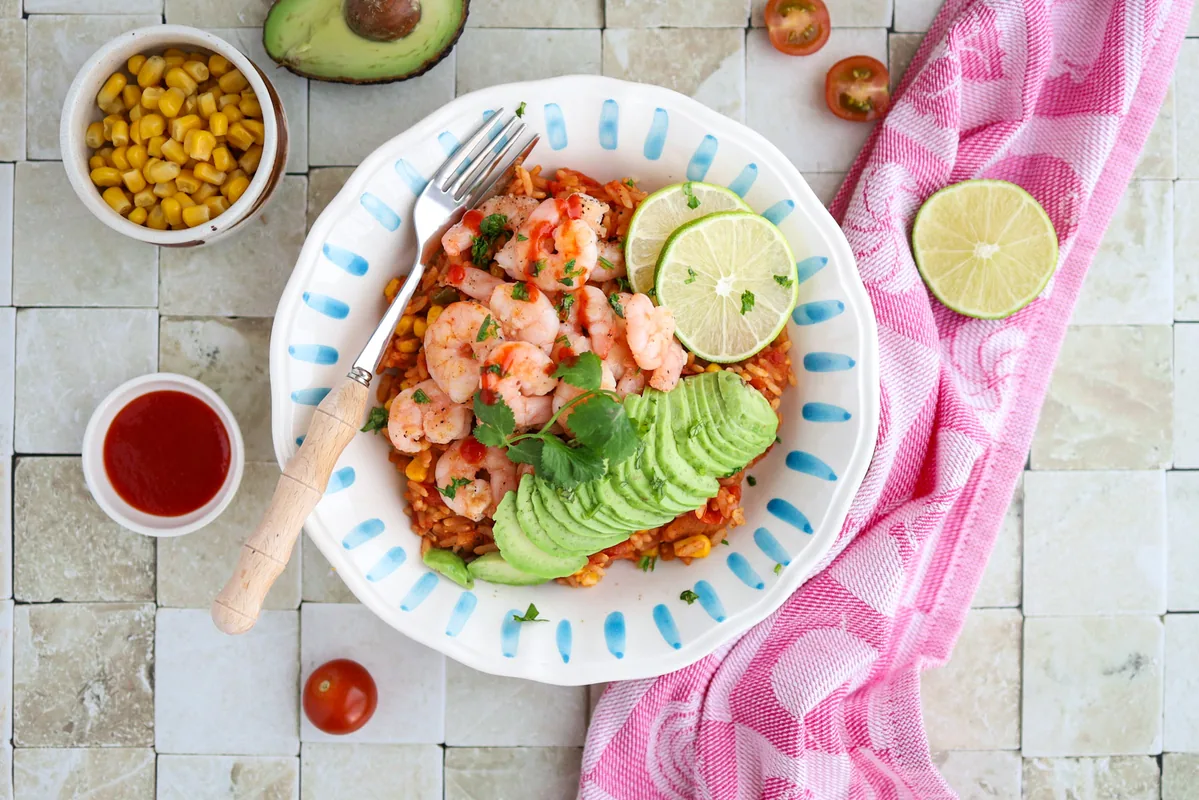
Mexican Rice Bowl with Shrimp, Avocado & Salsa
30g protein and 15g fiber from a single plate that takes 15 minutes. Sriracha-lime shrimp, salsa-soaked brown rice, sautéed cherry tomatoes, sweet corn, and half an avocado.
The salsa and avocado here do more than taste good together. When researchers tested that specific pairing in a crossover trial, lycopene absorption jumped 4.4-fold compared to salsa eaten alone. That is not just a seasoning choice. It is a nutrient-delivery upgrade built into the recipe.
30g protein and 15g fiber from a single plate that takes 15 minutes. Sriracha-lime shrimp, salsa-soaked brown rice, sautéed cherry tomatoes, sweet corn, and half an avocado.
The salsa and avocado here do more than taste good together. When researchers tested that specific pairing in a crossover trial, lycopene absorption jumped 4.4-fold compared to salsa eaten alone. That is not just a seasoning choice. It is a nutrient-delivery upgrade built into the recipe.
Ingredients
- shrimp (frozen) 3 ounces
- brown rice 3 ounces
- garlic 1 clove
- cherry tomatoes 8 pieces
- corn 4 ounces
- avocado 0.5
- olive oil 1.5 tablespoon
- Sriracha sauce 0.5 tablespoon
- lime juice 1 squeeze
- salsa 3 fluid ounces
Method
-
Take the shrimp out of the freezer and let them thaw on a plate.
-
Cook the rice according to the package instructions.
-
Crush the garlic. Halve the cherry tomatoes. Rinse the corn in a sieve and let it drain. Slice the avocado.
-
Heat half of the oil in a frying pan and cook the garlic for about 1 minute.
-
Add the shrimp and Sriracha and cook the shrimp for 2-3 minutes per side until they are pink and cooked through. Add the lime juice while cooking. Season with salt and pepper, remove the shrimp from the pan and set aside.
-
Heat the remaining oil in the same pan and cook the cherry tomatoes and corn for 3-4 minutes until the tomatoes become soft.
-
Add the salsa, stir well and let it simmer for 1-2 minutes. Add the rice and mix everything well.
-
Serve the rice with the shrimp on top and garnish with avocado.
Start the rice before anything else. It takes the longest and everything else fits into its cook time. The shrimp need 2-3 minutes per side and turn rubbery within seconds of overcooking, so pull them the moment they go fully pink.
Lycopene is fat-soluble, which means your body needs fat present in the same meal to absorb it efficiently. The avocado provides that fat directly alongside the salsa. The olive oil does the same for the cherry tomatoes when they cook together in step six. Two separate fat sources meeting two separate tomato sources in the same bowl, each unlocking absorption the other cannot.
Unlu et al., 2005 — Journal of Nutrition · DOIBehind this recipe
Can I use fresh shrimp instead of frozen?
Yes. Fresh shrimp cook slightly faster, roughly 1-2 minutes per side instead of 2-3. Watch for the color change to fully pink and pull them immediately. Overcooked shrimp go rubbery regardless of whether they started frozen or fresh.
Is 30g of protein enough for one meal?
The idea that your body can only use 30 grams of protein per meal is one of the most widely repeated claims in fitness nutrition. Pooled research does not support a hard ceiling at that number. The body processes protein across a much wider range than the popular myth suggests, and spreading protein across meals matters more than hitting a specific cap per sitting.
Read the full evidence reviewWhy does avocado help your body absorb more from the salsa?
Lycopene and beta-carotene are fat-soluble. They need dietary fat present in the same meal to be absorbed efficiently. Avocado provides monounsaturated fat in direct contact with the carotenoids in salsa. A crossover trial found this specific pairing multiplied lycopene absorption 4.4-fold and beta-carotene 2.6-fold compared to salsa eaten without the added fat.
Does the fiber in this recipe actually help with fat loss?
This bowl delivers 15 grams of fiber from brown rice, corn, avocado, and salsa, close to half the daily recommended intake in one meal. A pooled analysis of 62 trials found that fiber independently contributed to fat loss outcomes, with higher-fiber diets consistently outperforming matched lower-fiber diets.
Read the full evidence review