Lentil Rendang with Green Beans & Rice
You add turmeric to the spice paste for flavor and color. What you probably do not know: a 2019 study found that turmeric powder consumed in a fat-containing meal delivers 44 times more curcumin to the bloodstream than curcumin taken on its own. This rendang sautées that turmeric in olive oil, then simmers it in coconut milk. Two fat carriers, applied consecutively, with heat.
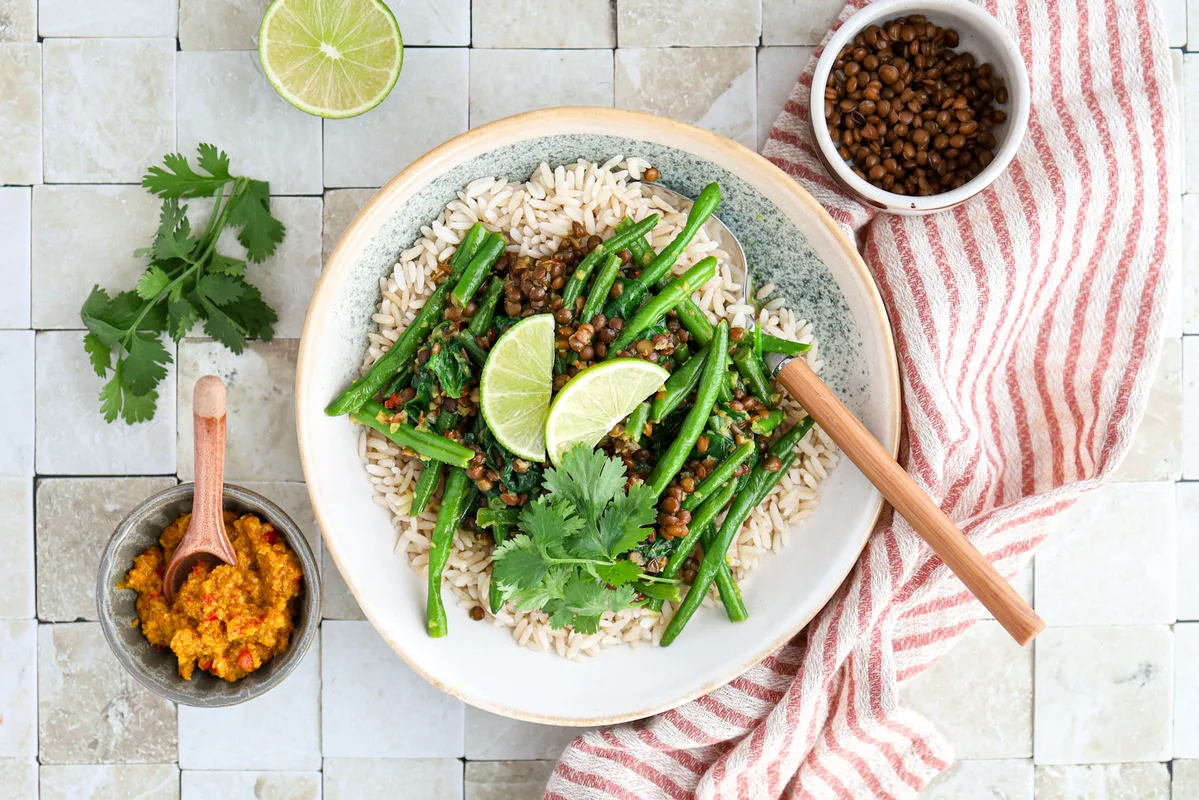
The rest of the bowl: canned lentils for 22g of plant protein, frozen green beans simmered until tender, spinach wilted in at the end, brown rice on the side. 776 kcal, 18g fiber, entirely plant-based, ready in 20 minutes.
You add turmeric to the spice paste for flavor and color. What you probably do not know: a 2019 study found that turmeric powder consumed in a fat-containing meal delivers 44 times more curcumin to the bloodstream than curcumin taken on its own. This rendang sautées that turmeric in olive oil, then simmers it in coconut milk. Two fat carriers, applied consecutively, with heat.
The rest of the bowl: canned lentils for 22g of plant protein, frozen green beans simmered until tender, spinach wilted in at the end, brown rice on the side. 776 kcal, 18g fiber, entirely plant-based, ready in 20 minutes.
Ingredients
- brown rice 3 ounces
- lentils, canned 5 ounces
- garlic 1 clove
- ginger 1 slice
- onion 0.5
- chili pepper 0.5
- scallion 1
- turmeric 1 teaspoon
- ground cumin 1 teaspoon
- cinnamon 1 pinch
- honey 1 teaspoon
- olive oil 1 tablespoon
- coconut milk 3 fluid ounces
- green beans (frozen) 5 ounces
- soy sauce 1.5 tablespoon
- spinach 1 handful
Method
-
Cook the rice according to the package instructions and set aside.
-
Rinse the lentils and drain well. Press the garlic, grate the ginger, finely chop the onion and chili pepper, and slice the scallion into rings.
-
Make the spice paste by grinding the garlic, ginger, onion, chili pepper, turmeric, ground cumin, cinnamon, and honey in a small food processor or with a mortar and pestle until smooth. Add a splash of water if needed.
-
Heat the oil in a large pan over medium heat and sauté the spice paste for 3–5 minutes. Add the coconut milk, green beans, and soy sauce, then stir well. Let the green beans simmer for 5–7 minutes with the lid on the pan.
-
Add the lentils and spinach and stir until the spinach begins to wilt. If necessary, add a splash of water to achieve the desired sauce consistency and let it simmer for another 3 minutes.
-
Season the rendang with salt and pepper, serve with rice, and garnish with the scallion rings.
Add a squeeze of lime juice just before plating. It brightens the coconut milk and sharpens the spice paste. Fresh coriander on top finishes it off.
In a 2019 trial comparing different forms of turmeric, powder delivered nearly twice the curcumin to the bloodstream as fresh turmeric root. Grinding disrupts the cell walls and frees the curcumin particles for digestion. Fresh root keeps them locked inside. This recipe uses powdered turmeric, the form that performed best.
Nasef et al. 2019 · DOIWhy This Works
Behind this recipe
Can I use fresh turmeric instead of powder?
You can, but the research points to powder being the better choice here. In the same 2019 trial, turmeric powder delivered nearly twice the curcumin to the bloodstream as fresh turmeric root in the same fat-containing meal. Grinding disrupts the cell walls and frees the curcumin particles. The recipe calls for 1 teaspoon of powder, which is approximately 2 grams.
Is 22g of protein enough for muscle building?
That comes down to your full day of eating. Research has shown that plant protein produces the same muscle gains as animal protein when total daily protein is sufficient, around 1.6 g/kg of body weight. At 22g per serving, this meal contributes meaningfully to that daily target. The lentils and brown rice together provide complementary amino acids.
Read the full evidence reviewCan I use white rice instead of brown?
Absolutely. The rendang works with any rice. Brown rice adds extra fiber (part of the 18g total), but the swap changes the side dish, not the curry. The lentils and green beans carry most of the fiber either way.
What does the coconut milk do besides add flavor?
It acts as a fat carrier. Curcumin, the active compound in turmeric, is fat-soluble, meaning it needs fat to be absorbed. Research found that turmeric powder eaten in a fat-containing meal delivered 44 times more curcumin to the bloodstream than curcumin consumed alone. The olive oil in the sauté step and the coconut milk in the simmer step both provide that fat.