Hasselback Sweet Potato with Asparagus & Spinach
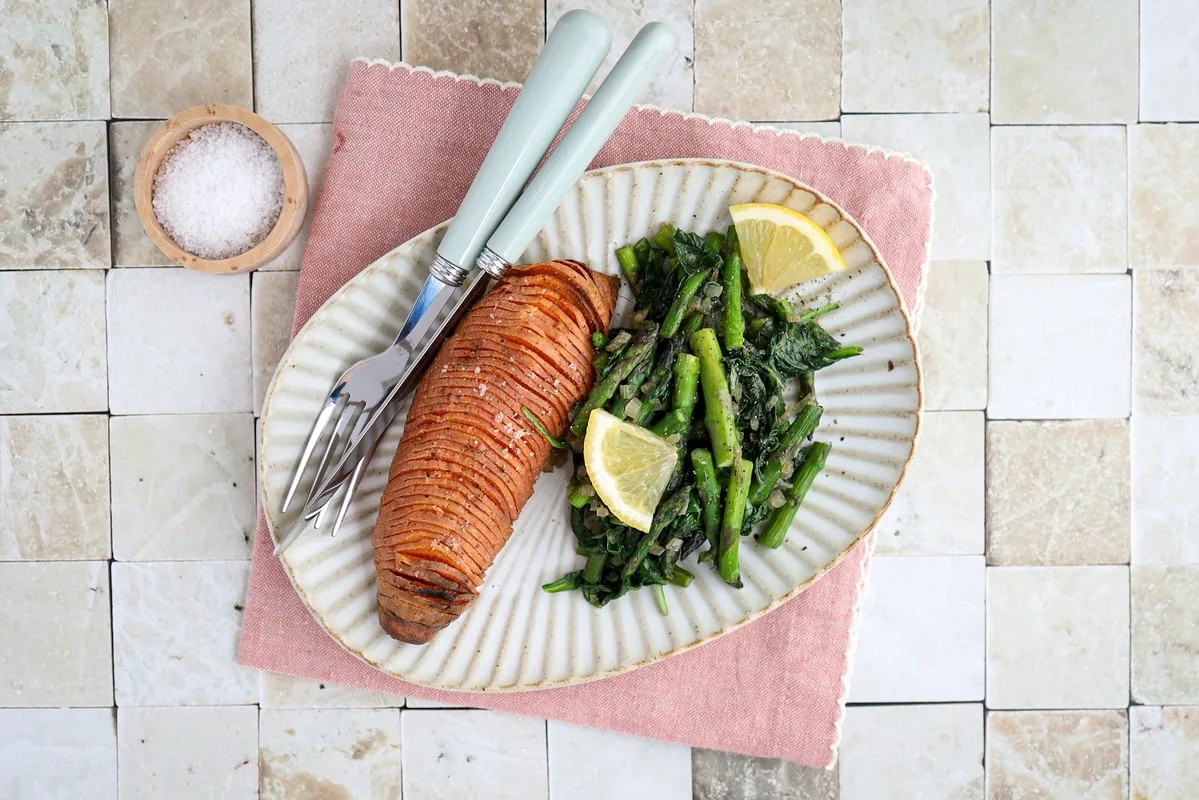
Most sweet potato recipes call for cubes, wedges, or a full mash. This one asks you to slice almost all the way through, fan it open, and let olive oil run into every cut.
That is the hasselback technique. It looks impressive on the plate, but the slicing does something useful: it creates dozens of surfaces where oil meets the orange flesh. Research found that processing sweet potato with oil delivered 10 to 20 times more beta-carotene to the body than the same potato without fat. The hasselback cut gives oil more flesh to reach than any other preparation.
Beside it, asparagus and spinach sautéed with garlic and finished with balsamic vinegar. 447 calories, 12 grams of fiber, fully plant-based, thirty minutes.
Most sweet potato recipes call for cubes, wedges, or a full mash. This one asks you to slice almost all the way through, fan it open, and let olive oil run into every cut.
That is the hasselback technique. It looks impressive on the plate, but the slicing does something useful: it creates dozens of surfaces where oil meets the orange flesh. Research found that processing sweet potato with oil delivered 10 to 20 times more beta-carotene to the body than the same potato without fat. The hasselback cut gives oil more flesh to reach than any other preparation.
Beside it, asparagus and spinach sautéed with garlic and finished with balsamic vinegar. 447 calories, 12 grams of fiber, fully plant-based, thirty minutes.
Ingredients
- sweet potato 0.5 pound
- olive oil 1.5 tablespoon
- thyme, dried 0.5 teaspoon
- onion 0.25
- garlic 1 clove
- asparagus (frozen) 6 ounces
- spinach 4 ounces
- balsamic vinegar 1 teaspoon
Method
-
Preheat the oven to 450°F (230°C).
-
Wash the sweet potato and boil it whole in a pot of water for 15 minutes.
-
Let it cool slightly, then slice it thinly about three-quarters of the way through, making sure not to cut all the way to the bottom so it stays intact. Gently fan out the slices.
-
Place the sweet potato on a parchment-lined baking sheet. Drizzle with half the oil and sprinkle with thyme. Season with salt and pepper. Bake for another 10–15 minutes, until tender and the edges are crispy.
-
Finely chop the onion and mince the garlic. Heat the remaining oil in a large skillet over medium heat. Add the onion and garlic and sauté until soft and fragrant.
-
Cut the asparagus into 1½-inch pieces and add them to the pan. Cook for 5–7 minutes, until just tender.
-
Add the spinach and stir until wilted. Season with salt, pepper, and a splash of balsamic vinegar.
-
Remove the sweet potato from the oven and place it on a plate. Serve with the asparagus and spinach on the side.
In Step 4, push the olive oil into the cuts, not just over the top. Each slice creates a pocket where fat meets the orange flesh. Research found that processing sweet potato with oil delivered 10 to 20 times more beta-carotene to the body. The hasselback slices give oil more surface to reach than a whole-roasted or cubed sweet potato.
Sweet potato’s orange color comes from beta-carotene, a pigment locked inside plant cell walls. Boiling breaks those walls open. Baking with olive oil then coats the exposed pigment in fat, which is how your body absorbs it. Without that fat step, most of the beta-carotene passes through unused.
Bengtsson et al. (2009) · J. Agric. Food Chem. · DOIWhy This Works
Behind this recipe
Can I use fresh asparagus instead of frozen?
Yes. Fresh asparagus cooks faster, so reduce the pan time in Step 6 to 3 to 4 minutes instead of 5 to 7. Cut the spears to the same length (about 1½ inches) so they cook evenly.
Why does the recipe boil the sweet potato before baking?
Pre-boiling softens the interior so the hasselback slices fan open without snapping. It also gives you two textures in the finished dish: a creamy center from the boil and crispy edges from the high-heat bake. Without the boil, a raw sweet potato is too firm to slice thinly and would need much longer in the oven.
What does hasselback mean?
Hasselback is a Swedish technique from the 1940s, named after the Hasselbacken restaurant in Stockholm. You slice almost all the way through, creating thin connected layers. During baking, the tops crisp while the base stays intact and creamy. The technique was originally used for regular potatoes but works with sweet potato the same way.
Can I add protein to this meal?
The meal delivers 9 grams of protein from sweet potato, asparagus, and spinach combined. Common additions alongside plant-based dinners include grilled chicken, baked tofu, a fried egg, or crumbled feta. None of them would change the base recipe.