Falafel Bowl with Baby Potatoes & Eggplant
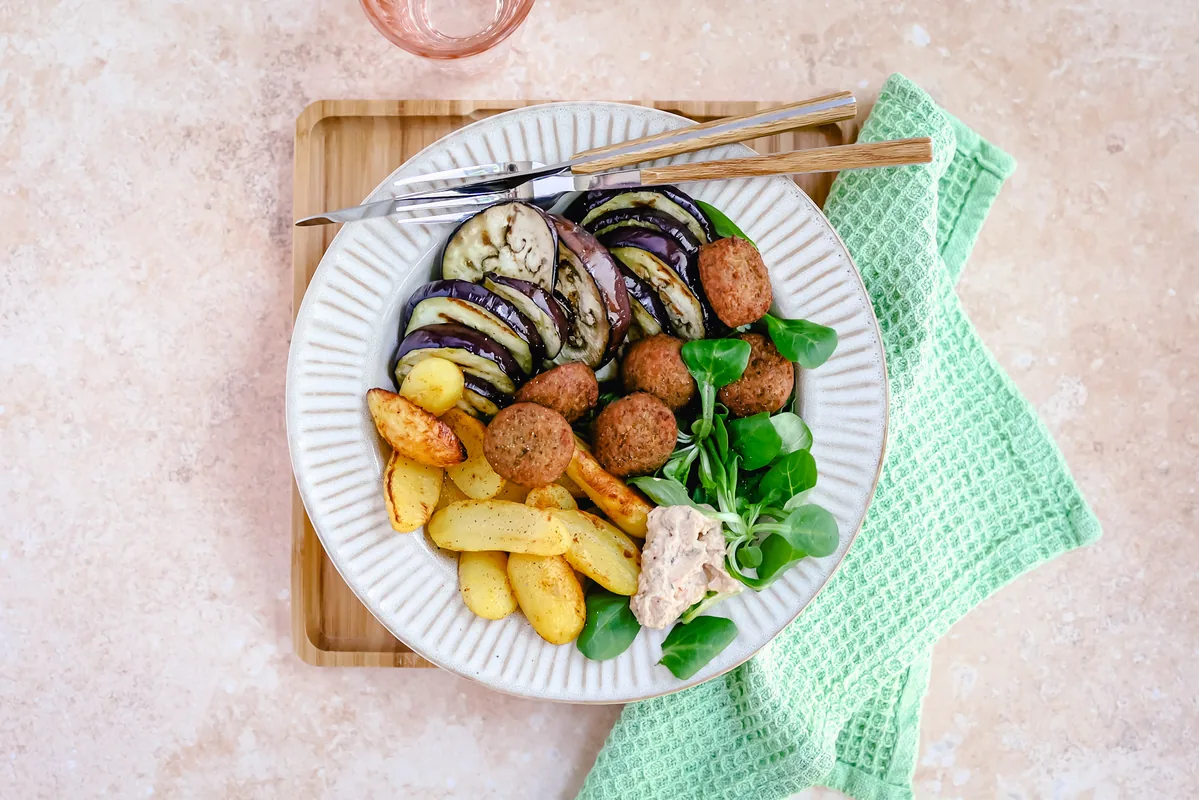
Baby potatoes halved and rolled in cumin and paprika, then roasted at 390°F until the cut sides go dark and crispy. Eight falafel balls join them on the tray for the last eight minutes. Eggplant slices hit a hot griddle pan in the meantime — two minutes a side, just long enough for char marks and a center that gives under a fork.
Pile everything over mixed greens, add hummus, and the bowl is done. 20 minutes from cold oven to plate, with 16 grams of fiber spread across potatoes, eggplant, falafel, and hummus.
Baby potatoes halved and rolled in cumin and paprika, then roasted at 390°F until the cut sides go dark and crispy. Eight falafel balls join them on the tray for the last eight minutes. Eggplant slices hit a hot griddle pan in the meantime — two minutes a side, just long enough for char marks and a center that gives under a fork.
Pile everything over mixed greens, add hummus, and the bowl is done. 20 minutes from cold oven to plate, with 16 grams of fiber spread across potatoes, eggplant, falafel, and hummus.
Ingredients
- baby potatoes 227 g
- olive oil 23 ml
- ground cumin 2 g
- paprika 2 g
- falafel 8
- eggplant 1
- mixed salad 30 g
- hummus 40 g
Method
-
Preheat the oven to 390°F (200°C).
-
Halve the baby potatoes. Mix them in a bowl with half of the oil, the cumin, paprika, and some salt and pepper. Spread them cut-side down on a baking tray lined with parchment paper. Bake for 17 minutes until golden brown and crispy.
-
Place the falafel balls on the baking tray for the last 8 minutes and bake until golden brown.
-
Slice the eggplant. Brush the slices with the remaining oil and season with salt and pepper. Heat a griddle pan and grill the eggplant slices for 2 minutes on each side.
-
Spread the lettuce on a platter and add the baby potatoes, eggplant, and falafel. Serve with hummus.
This bowl pairs well with a quick dressing: mix 2 tablespoons of yogurt with a squeeze of lemon juice, a small clove of garlic (grated), a drizzle of honey, and a dab of mustard. Spoon it over the eggplant and potatoes right before eating.
Falafel and hummus share a starting ingredient — chickpeas — but your blood sugar tells a different story. Hummus came in at a glycemic index of 15 in a controlled feeding study, while whole cooked chickpeas scored 36. The tahini blended into hummus slows gastric emptying, spreading carbohydrate absorption over a longer window.
Why This Works
Behind this recipe
Can I use store-bought falafel for this recipe?
Yes. Frozen or refrigerated falafel from the store works well here. Place them straight on the baking tray and follow the same timing: 8 minutes at 390°F. Check the package for any adjustments, but most store-bought falafel bakes in about the same window.
Why is the fat content so high in this bowl?
The fat splits across olive oil for roasting and grilling (23 ml), the falafel (chickpea batter absorbs oil during production), and the hummus (tahini is ground sesame, rich in unsaturated fat). Those three push the meal to 51 grams of fat, mostly monounsaturated and polyunsaturated from plant sources.
Is hummus better for blood sugar than plain chickpeas?
Researchers measured the glycemic index of hummus at 15, compared to 36 for whole cooked chickpeas. The fat from tahini and olive oil in hummus slows gastric emptying, which delays carbohydrate absorption. The glucose response after eating hummus was four times lower than after eating white bread with the same available carbohydrate.