Curry Chicken with Bell Pepper & Rice
The spinach goes in last. That single decision changes what your body does with the iron on this plate.
Bell pepper strips and garlic spend ten minutes simmering in a light curry sauce before the spinach arrives. By then, the bell pepper’s 130 milligrams of vitamin C and the garlic’s sulfur compounds have dissolved into the liquid. The spinach wilts into a prepared environment where two separate iron-absorption enhancers are already active.
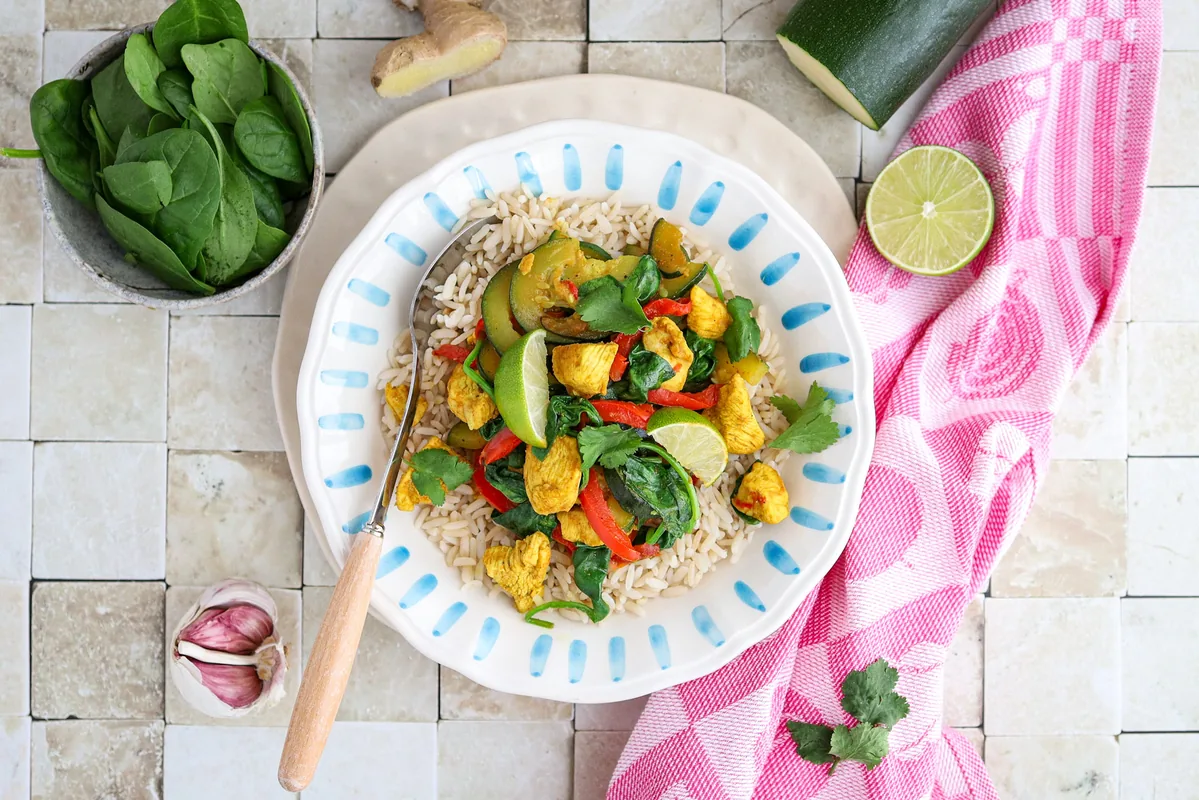
Before that, the build is quick: chicken browned in olive oil, ginger and curry powder bloomed for a minute, zucchini and bell pepper softened, everything simmered with raisins in a bouillon broth. 644 calories, 31 grams of protein, and 8 grams of fiber from twelve ingredients in twenty minutes.
The spinach goes in last. That single decision changes what your body does with the iron on this plate.
Bell pepper strips and garlic spend ten minutes simmering in a light curry sauce before the spinach arrives. By then, the bell pepper’s 130 milligrams of vitamin C and the garlic’s sulfur compounds have dissolved into the liquid. The spinach wilts into a prepared environment where two separate iron-absorption enhancers are already active.
Before that, the build is quick: chicken browned in olive oil, ginger and curry powder bloomed for a minute, zucchini and bell pepper softened, everything simmered with raisins in a bouillon broth. 644 calories, 31 grams of protein, and 8 grams of fiber from twelve ingredients in twenty minutes.
Ingredients
- brown rice 3 ounces
- chicken breast 3 ounces
- zucchini 0.5 piece
- bell pepper 1 piece
- garlic 1 clove
- ginger 1 slice
- olive oil 1 tablespoon
- curry powder 1 teaspoon
- vegetable bouillon 0.5 cube
- water 3.5 fluid ounce
- raisins 0.5 ounce
- spinach 1 handful
Method
-
Cook the rice according to the instructions on the package.
-
Cut the chicken breast into cubes. Slice the zucchini into half rounds and cut the bell pepper into strips. Crush the garlic clove and grate the ginger.
-
Heat the oil in a pan and brown the chicken on all sides. Add the ginger, garlic and curry powder and cook for 1 minute.
-
Add the zucchini and bell pepper and cook for a few minutes until the vegetables soften slightly.
-
Add the bouillon cube and water, then add the raisins. Let it simmer for about 10 minutes. If needed, add a dash more water.
-
Add the spinach just before the end and stir briefly until the spinach starts to wilt. Season with salt and pepper.
-
Serve the curry chicken with the rice.
Add the spinach in step 6, not earlier. The bell pepper’s ~130mg of vitamin C needs time to dissolve into the sauce. A 299-person trial found that roughly 50mg of vitamin C per meal produced the strongest non-heme iron absorption enhancement, especially in high-phytate meals. Spinach is high-phytate. The cooking order turns the sauce into an absorption enhancer before the iron source ever arrives.
One bell pepper delivers roughly 130 milligrams of vitamin C, about 2.6 times the dose researchers identified as optimal for non-heme iron absorption. The enhancement was strongest in meals with high phytate content — which is exactly what spinach brings to this plate. The vitamin C converts ferric iron (the form your intestine ignores) into ferrous iron (the form it actively absorbs), right at the moment of digestion.
Hallberg et al., 1986 — Vitamin C & Iron Absorption · DOIBehind this recipe
Does the vitamin C in bell pepper survive ten minutes of simmering?
Vitamin C is heat-sensitive, but it does not vanish instantly. Simmering in liquid at moderate heat for ten minutes reduces it, but a substantial portion remains — especially because it dissolves into the sauce rather than evaporating. The bell pepper starts with roughly 130mg of vitamin C, well above the ~50mg a 299-person trial identified as the optimum dose for iron absorption. Even with some cooking loss, the sauce retains more than enough to enhance the spinach’s iron. For a deeper look at how cooking affects vegetable nutrients, see this breakdown of what heat actually does.
Read the full evidence reviewDoes browning and simmering the chicken reduce the 31 grams of protein?
No study behind this answer tested chicken. The one the linked Short rests on measured egg protein: cooked in a microwave, it was 91% digestible against 51% raw, and its authors note that food processing has raised protein digestibility in some cases and lowered it in others. The 31 grams listed in this recipe’s macros account for cooked chicken, not raw. See what cooking actually does to your protein for the full picture.
Read the full evidence reviewDoes curry powder need black pepper to activate the turmeric in it?
The famous 2,000% bioavailability boost from piperine came from a specific study using concentrated curcumin capsules, not turmeric in food. In a curry like this one, the turmeric in curry powder is already cooked in olive oil. Fat is a delivery mechanism for curcumin on its own. Adding black pepper is fine, but the oil is already doing meaningful work. The full story behind turmeric’s numbers.
Read the full evidence reviewCan I use white rice instead of brown rice?
Yes. White rice cooks faster and tastes milder. The tradeoff is fiber: brown rice keeps its bran layer, which contributes to this recipe’s 8 grams of fiber. Swapping to white rice drops that number. The protein and calorie count barely change.