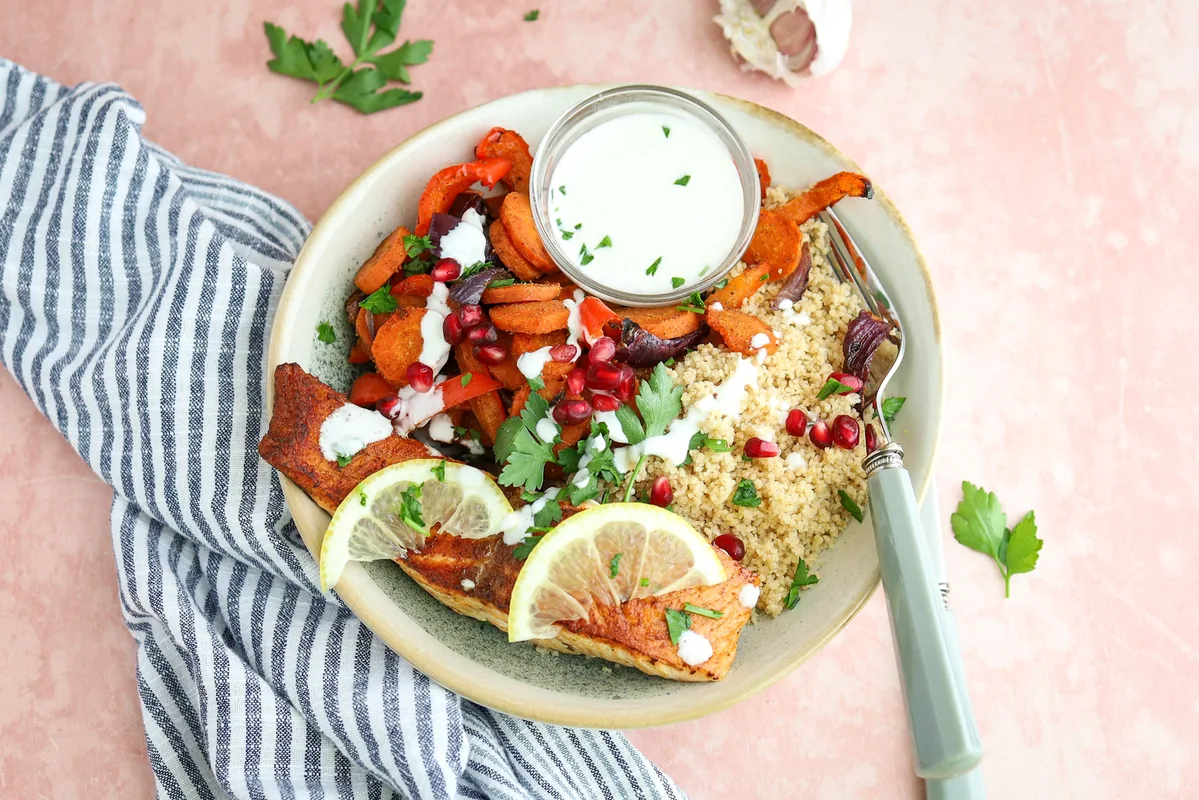
Couscous with roasted vegetables, salmon & feta dressing
Half the honey goes into the spice rub on the vegetables. The other half gets blended cold into the feta dressing. Two jobs for the same jar. One dose caramelizes under cumin and cinnamon at 200°C, the other stays smooth and tangy next to garlic and yogurt.
Carrots, bell pepper, and red onion roast until the edges go dark and sweet while couscous steams and salmon picks up a crust of nutmeg in the pan. Research on baking carrots at this temperature found nearly 9 times more carotenoid availability compared to raw. And the olive oil coating helps your body actually absorb them.
882 kcal, 51g of protein, and the whole thing takes 20 minutes.
Half the honey goes into the spice rub on the vegetables. The other half gets blended cold into the feta dressing. Two jobs for the same jar. One dose caramelizes under cumin and cinnamon at 200°C, the other stays smooth and tangy next to garlic and yogurt.
Carrots, bell pepper, and red onion roast until the edges go dark and sweet while couscous steams and salmon picks up a crust of nutmeg in the pan. Research on baking carrots at this temperature found nearly 9 times more carotenoid availability compared to raw. And the olive oil coating helps your body actually absorb them.
882 kcal, 51g of protein, and the whole thing takes 20 minutes.
Ingredients
- salmon fillet 1
- carrot 1
- bell pepper 1
- red onion 0.25
- olive oil 15 ml
- ground cumin 2 g
- paprika (ground spice) 1 g
- cinnamon 1 g
- honey 13 g
- couscous 84 g
- nutmeg 1 g
- garlic 5 g
- feta cheese, crumbled 42 g
- yogurt, nonfat 30 ml
- lemon juice 5 ml
- water 15 ml
Method
-
Remove the salmon from the freezer and let it thaw on a plate.
-
Preheat the oven to 390°F (200°C).
-
Peel the carrot and cut it into slices. Cut the bell pepper into strips and the onion into wedges.
-
Line a baking sheet with parchment paper and spread the carrot, bell pepper and onion over it.
-
In a small bowl, mix half of the oil with cumin, paprika powder, cinnamon, some salt and pepper and half of the honey. Drizzle the dressing over the vegetables and toss to coat. Place the baking sheet in the oven and roast the vegetables for 18 minutes in the middle of the oven.
-
Prepare the couscous according to the instructions on the package.
-
Coat the salmon on both sides with the remaining oil, nutmeg and some salt and pepper.
-
Heat a frying pan and cook the salmon for about 8 minutes until cooked through and golden brown.
-
Press the garlic clove. Put it in a small food processor or blender with the feta, yogurt, lemon juice, water and the rest of the honey, and blend until smooth.
-
Serve the couscous, roasted vegetables and salmon in a deep plate and drizzle with the feta dressing.
Roast the vegetables for the full 18 minutes at 200°C. Pulling them early costs more than crunch. A 2024 study showed that baking carrots at around 200°C increases carotenoid availability by nearly 9 times compared to raw. The heat ruptures the cellular matrix that keeps those compounds trapped, and the olive oil provides a fat source for your body to absorb them.
The study measured a 8.91-fold increase in total carotenoid bioaccessibility from baking at 210°C for 20 minutes versus raw. This recipe roasts at 200°C for 18 minutes, close to those conditions. The olive oil coating matters because carotenoids require dietary fat for absorption. Consumed alone, even freed carotenoids pass through with limited uptake.
Carotenoid bioaccessibility in baked vs raw carrots · DOIBehind this recipe
Does roasting the vegetables destroy their nutrients?
The opposite, for carrots. Research found that baking carrots at around 200°C increases carotenoid availability by nearly 9 times compared to raw. The heat ruptures the internal structure that normally keeps those compounds trapped. The olive oil coating ensures your body has a fat carrier to absorb them.
Read the full evidence reviewCan I use a different fish instead of salmon?
Any firm fish fillet works. cod, sea bass, or trout. The cooking time stays around 8 minutes total. Salmon brings omega-3 fatty acids that leaner white fish don't match, but the recipe holds up with any protein that can take a hot pan.
Why does the recipe split the honey between two steps?
Half the honey coats the vegetables with the spice blend before roasting. it caramelizes at 200°C and helps the cumin-paprika-cinnamon crust stick and brown. The other half goes into the cold feta dressing, where it balances the tang of yogurt and lemon. Same ingredient, two temperatures, two different roles.