Chickpea vegetable stew with couscous
Plant iron has a reputation problem — your body absorbs less of it than you’d expect. This stew quietly stacks two fixes into one bowl.
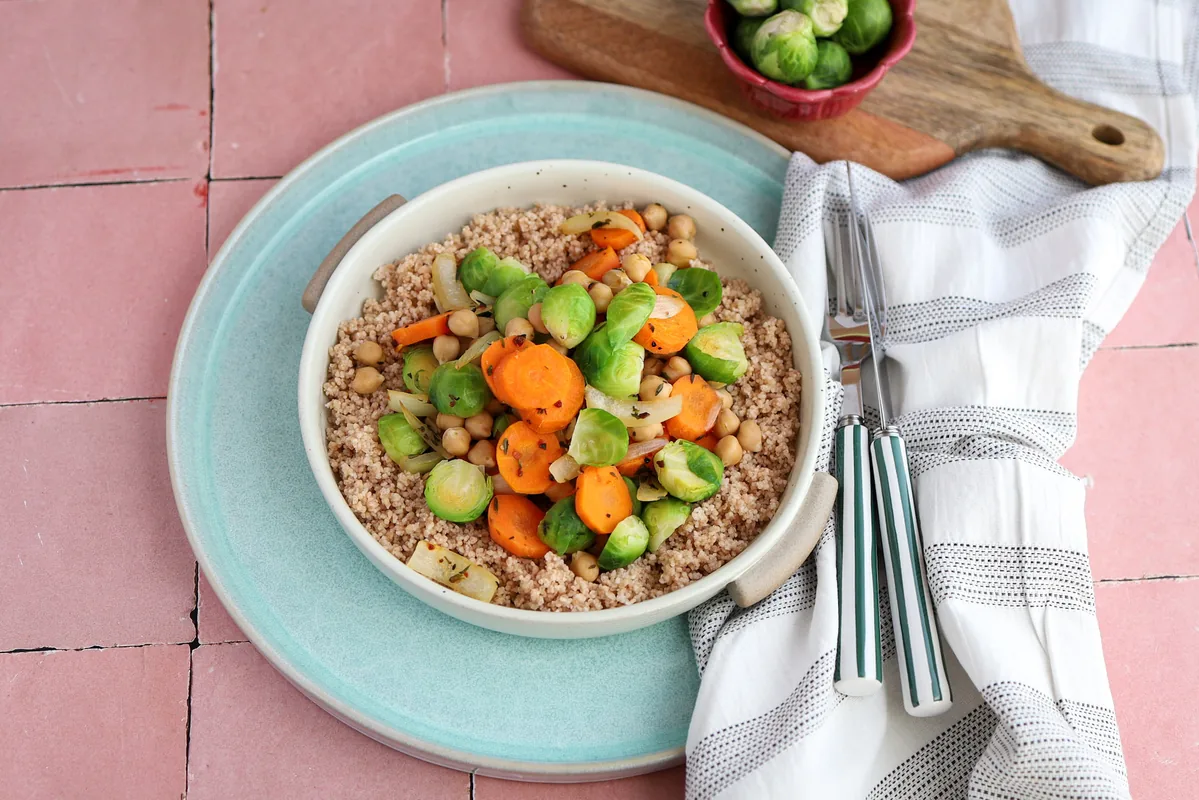
Chickpeas, Brussels sprouts, and carrots stewed with thyme and spooned over couscous. 546 kcal, 21 grams of fiber, and 23 grams of plant protein in 20 minutes. The onion sautéed before the chickpeas go in releases sulfur compounds that research by Gautam and colleagues found boost iron bioaccessibility from pulses by up to 73%. The Brussels sprouts add vitamin C — a second, independent pathway that helps your gut absorb even more. Two enhancers, one bowl, zero planning required.
Plant iron has a reputation problem — your body absorbs less of it than you’d expect. This stew quietly stacks two fixes into one bowl.
Chickpeas, Brussels sprouts, and carrots stewed with thyme and spooned over couscous. 546 kcal, 21 grams of fiber, and 23 grams of plant protein in 20 minutes. The onion sautéed before the chickpeas go in releases sulfur compounds that research by Gautam and colleagues found boost iron bioaccessibility from pulses by up to 73%. The Brussels sprouts add vitamin C — a second, independent pathway that helps your gut absorb even more. Two enhancers, one bowl, zero planning required.
Ingredients
- Brussels sprouts (frozen) 5 ounces
- couscous 3 ounces
- onion 0.5
- carrot 1
- olive oil 0.5 tablespoon
- thyme dried 1 teaspoon
- chickpeas 4.5 ounces
Method
-
Cook the Brussels sprouts according to the package.
-
Cook the couscous according to the package and set aside.
-
Cut the onion into half rings and the carrot into thin slices.
-
Heat the olive oil in a pan and fry the onion for 2 minutes. Then add the carrot and fry for another 3 minutes.
-
Add the chickpeas, Brussels sprouts, thyme and 50 ml of water. Stew for 5 minutes. Serve with the couscous.
Squeeze half a lemon over the stew just before serving. The acid brightens the earthy chickpea-thyme base and pairs naturally with fresh cilantro on top.
Non-heme iron from chickpeas is notoriously hard for your body to absorb — phytates in the legume bind to the iron and lock it away. This recipe fights back on two fronts: onion sulfur compounds form soluble bonds with the iron that outcompete the phytates, while Brussels sprouts deliver vitamin C, which converts iron into a form your gut grabs more easily.
Gautam et al., 2010 — Journal of Agricultural and Food Chemistry · DOIBehind this recipe
Can I use fresh Brussels sprouts instead of frozen?
Absolutely. Fresh Brussels sprouts work well — halve them so they cook evenly in the 5-minute stew time. One difference worth knowing: frozen Brussels sprouts were blanched before freezing, which destroys the myrosinase enzyme needed for sulforaphane production. Fresh sprouts retain that enzyme. For this recipe’s iron-absorption benefit, both fresh and frozen deliver vitamin C, so either option works.
Is 23 grams of protein enough for a main meal?
For a fully plant-based dinner, 23 grams is solid. Chickpeas and couscous together provide complementary amino acid profiles — legumes are rich in lysine while grains supply methionine. Research on vegan protein and muscle building suggests plant protein supports muscle just as well as animal protein when total daily intake is sufficient.
Read the full evidence reviewWhy does the recipe sauté the onion before adding the chickpeas?
Flavor is the obvious reason, but there’s a second one. Heating onion in oil activates sulfur compounds that research by Gautam and colleagues found increase iron bioaccessibility from pulses by up to 73%. The compounds form soluble bonds with the iron in chickpeas, preventing phytates from locking it away. Getting the onion hot first means those sulfur compounds are already active when the chickpeas go in.