Cauliflower Soup with Bacon
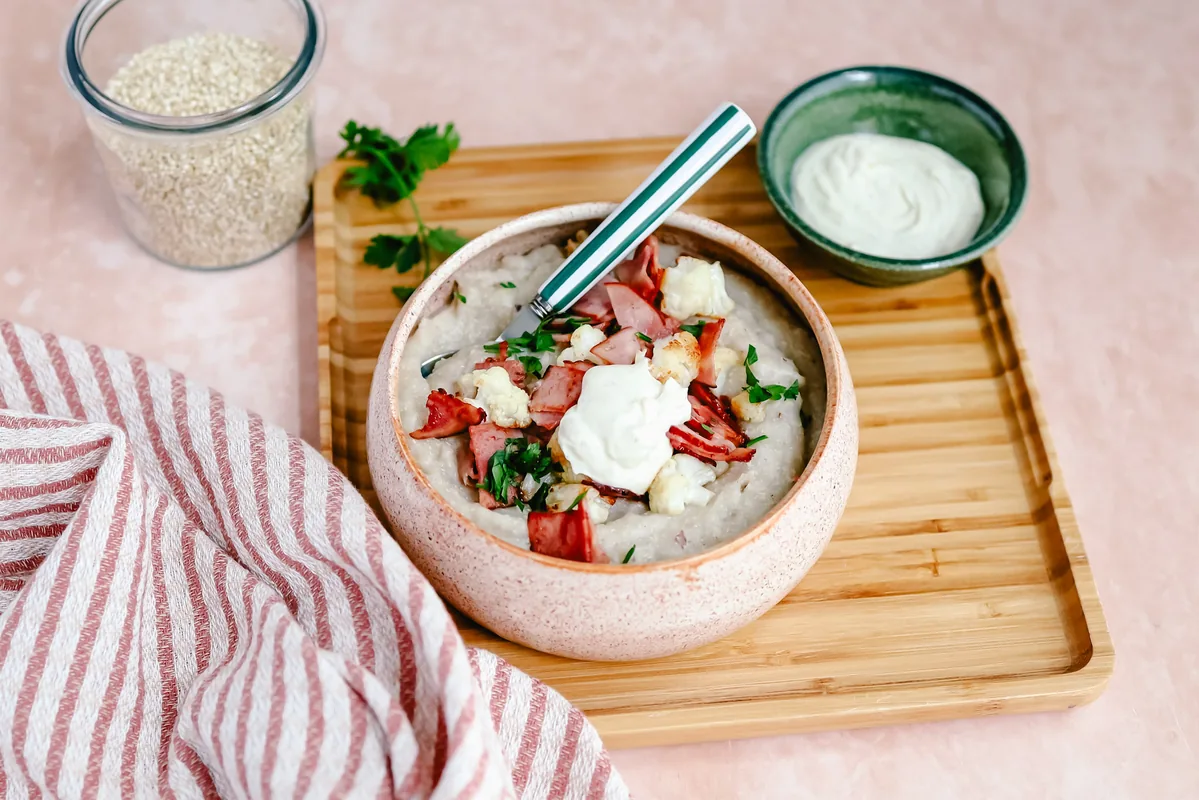
A thick, savory bowl built on 427 grams of cauliflower, crispy bacon, and quinoa for body. The base simmers for ten minutes, gets mashed into a creamy, bound soup, and finishes with a cold yogurt-mustard drizzle.
Here is the part most cauliflower recipes miss. When you boil cauliflower, up to 61% of its glucosinolates leach into the cooking water. Steaming keeps more inside the florets, roasting even more. But soup flips the equation. That cooking water IS the meal. What other preparations pour down the drain, you drink.
566 kcal, 31 grams of protein, and 14 grams of fiber in a single bowl. Twenty minutes, one pan, a potato masher, and you are done.
A thick, savory bowl built on 427 grams of cauliflower, crispy bacon, and quinoa for body. The base simmers for ten minutes, gets mashed into a creamy, bound soup, and finishes with a cold yogurt-mustard drizzle.
Here is the part most cauliflower recipes miss. When you boil cauliflower, up to 61% of its glucosinolates leach into the cooking water. Steaming keeps more inside the florets, roasting even more. But soup flips the equation. That cooking water IS the meal. What other preparations pour down the drain, you drink.
566 kcal, 31 grams of protein, and 14 grams of fiber in a single bowl. Twenty minutes, one pan, a potato masher, and you are done.
Ingredients
- cauliflower florets 4 cups
- onion 0.25
- garlic 1 clove
- olive oil 0.5 tablespoon
- bacon 4 slices
- vegetable bouillon 1 cube
- water 2 cups
- quinoa 2 ounces
- yogurt, nonfat 2 tablespoons
- yellow mustard 2 teaspoons
Method
-
Divide a handful of cauliflower florets into small pieces.
-
Chop the onion and garlic.
-
Heat ⅓ of the olive oil and fry the smallest cauliflower florets and the bacon for 3 minutes until brown and crispy. Set the bacon mixture aside.
-
Heat ⅓ of the olive oil in a frying pan and fry the onion and garlic. Add the cauliflower florets and cook for 1 minute.
-
Add the vegetable broth, water and quinoa. Let the soup simmer for 10-12 minutes with the lid on the pan. Meanwhile mix the yogurt with 1 teaspoon of mustard. Mash the soup with a potato masher to a bound mixture. Taste and adjust to your liking with mustard, salt and black pepper.
-
Serve the soup, topped with the bacon mixture and the yogurt. Drizzle with the rest of the olive oil.
Don’t steam the cauliflower separately. Simmering it directly in the broth transfers up to 55% of its glucosinolates into the liquid. In most cooking, that is a loss. In soup, that is the point.
The leaching effect goes beyond glucosinolates. The same study found that boiling cauliflower transfers 27–46% of its total phenols, vitamin C, and antioxidant capacity into the cooking water. In a standard preparation, all of that goes down the drain. In this soup, it stays on your spoon.
Volden et al. 2009 — LWT Food Science and Technology · DOIBehind this recipe
Does boiling cauliflower destroy its nutrients?
Partly, but not the way most people think. Research across five cauliflower varieties found that boiling for 10 minutes reduces glucosinolates in the florets by 46–61%. But the compounds are not destroyed. They leach into the cooking water, where total recovery approached 100%. In soup, you consume that water. In a stir-fry or roast, the compounds stay in the vegetable. In boiled vegetables where you drain the water, they go down the drain. Soup is one of the few preparations that captures everything.
Can I blend this soup instead of mashing it?
Yes, but the texture will change significantly. Mashing with a potato masher leaves some chunk, giving you a rustic, bound soup with visible cauliflower pieces. Blending produces a smooth, velvety puree. Both work. The crispy bacon topping adds crunch either way, but it contrasts more dramatically against a smooth base.
Why is there quinoa in a soup?
Quinoa does two things here. It absorbs broth as it cooks, thickening the soup naturally without cream or flour. And it contributes to the 31g of protein and 14g of fiber per serving. You will not taste it as a distinct grain after mashing. It dissolves into the body of the soup.