Sweet Potato Mash with Salmon & Roasted Sprouts
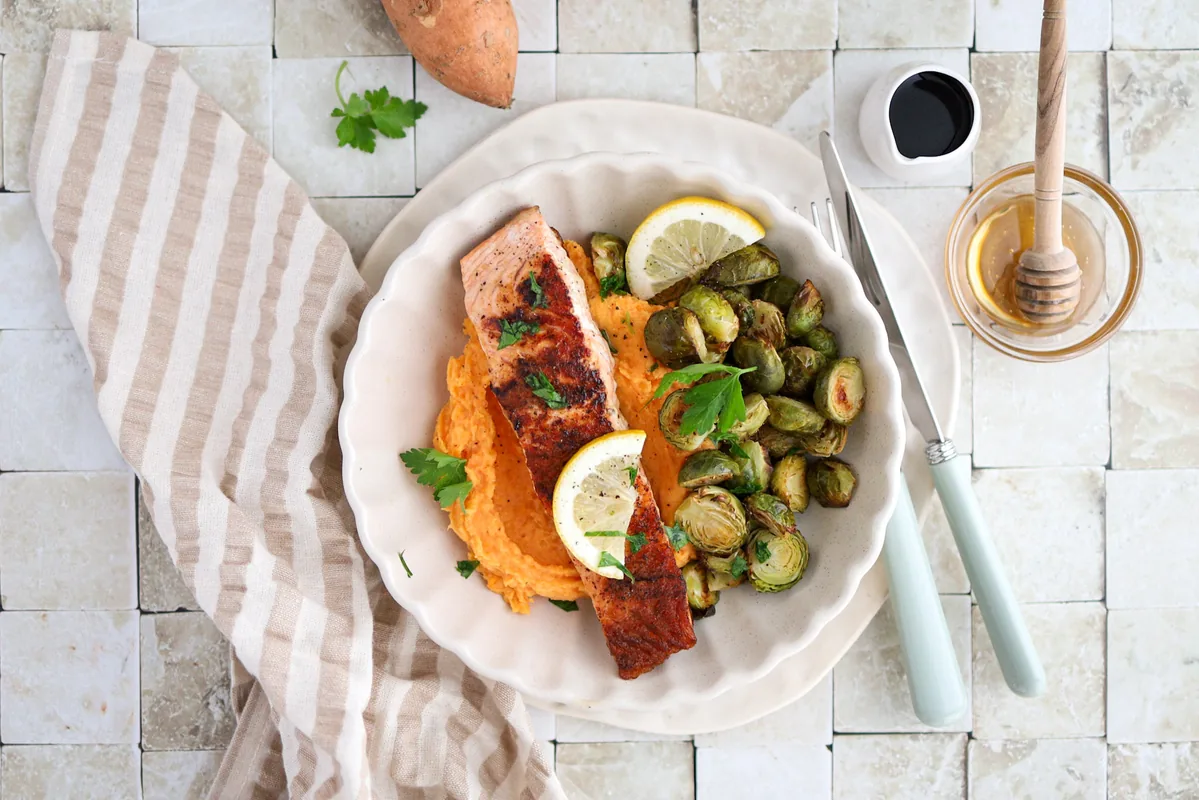
Sweet potato mash with nutmeg, caramelized Brussels sprouts in a balsamic-honey glaze, and a crispy-skinned salmon fillet. Comfort food territory — except the macros quietly earn their place.
38g protein from the salmon. 16g fiber split between the sprouts and the sweet potato. 37g fat, almost entirely from olive oil and the fish itself. Everything runs in parallel — sprouts roast while the potato boils and the salmon grills — so this is 25 minutes from cold kitchen to plated dinner.
Sweet potato mash with nutmeg, caramelized Brussels sprouts in a balsamic-honey glaze, and a crispy-skinned salmon fillet. Comfort food territory — except the macros quietly earn their place.
38g protein from the salmon. 16g fiber split between the sprouts and the sweet potato. 37g fat, almost entirely from olive oil and the fish itself. Everything runs in parallel — sprouts roast while the potato boils and the salmon grills — so this is 25 minutes from cold kitchen to plated dinner.
Ingredients
- salmon fillet 1
- Brussels sprouts (frozen) 7 ounces
- olive oil 1.5 tablespoon
- balsamic vinegar 1 tablespoon
- honey 1 teaspoon
- sweet potato 0.5 pound
- yogurt, nonfat 1 tablespoon
- nutmeg 1 pinch
- lemon juice 1 squeeze
Method
-
Preheat the oven to 400°F (200°C).
-
Remove the salmon from the freezer and let it thaw on a plate.
-
Cut the sprouts in half and toss them with half of the oil, balsamic vinegar, honey, salt and pepper. Roast for 20–25 minutes, until golden brown, stirring halfway through.
-
Cut the sweet potato into small cubes and cook for 10–15 minutes in salted water until tender. Drain and mash.
-
Add the yogurt, salt, pepper and nutmeg and mix until creamy.
-
Brush the salmon with the remaining oil, season with salt, pepper and lemon juice. Grill the salmon for 3–4 minutes on each side until cooked through and lightly crispy.
-
Serve the salmon with the sweet potato mash and sprouts.
Running behind? Skip the boiling and toss the sweet potato cubes onto the baking sheet with the Brussels sprouts — same oven, same temperature, done when the edges brown. You trade the smooth purée for a chunkier smash, but the flavor stays. If the mash needs more depth, a pinch of smoked paprika or garlic powder goes a long way.
Behind this recipe
Isn't 37g of fat a lot for one meal?
It sounds like a lot until you look at where it comes from. This meal gets its fat from salmon (omega-3 fatty acids) and olive oil (monounsaturated fat). Research comparing diets with different fat percentages consistently finds that total calorie balance predicts weight outcomes, not the ratio from fat. At 726 kcal, this dinner fits standard daily targets.
Read the full evidence reviewCan I use fresh Brussels sprouts instead of frozen?
Yes. Fresh sprouts roast differently — crispier edges with a firmer center, while frozen sprouts release more moisture and caramelize faster. If using fresh, extend the roast time by 3 to 5 minutes and quarter any large ones so they cook evenly. The balsamic-honey glaze works the same either way.
Is 38g of protein from one salmon fillet too much for my body to use?
The idea that your body stops using protein after 30 grams per meal is one of the most persistent myths in fitness. Research on per-meal protein utilization found that the body continues processing protein well beyond that number. The ceiling is much higher than most people assume — if it exists at all.
Read the full evidence reviewShould I take fish oil supplements if I already eat salmon?
Research on supplemental fish oil and muscle building found zero measurable benefit for muscle growth. The omega-3 in a capsule and the omega-3 in this salmon fillet are chemically identical — but this dinner also delivers 38g protein alongside them. The evidence suggests the supplement adds nothing the food is not already providing.
Read the full evidence review