‘BLT’ Salad
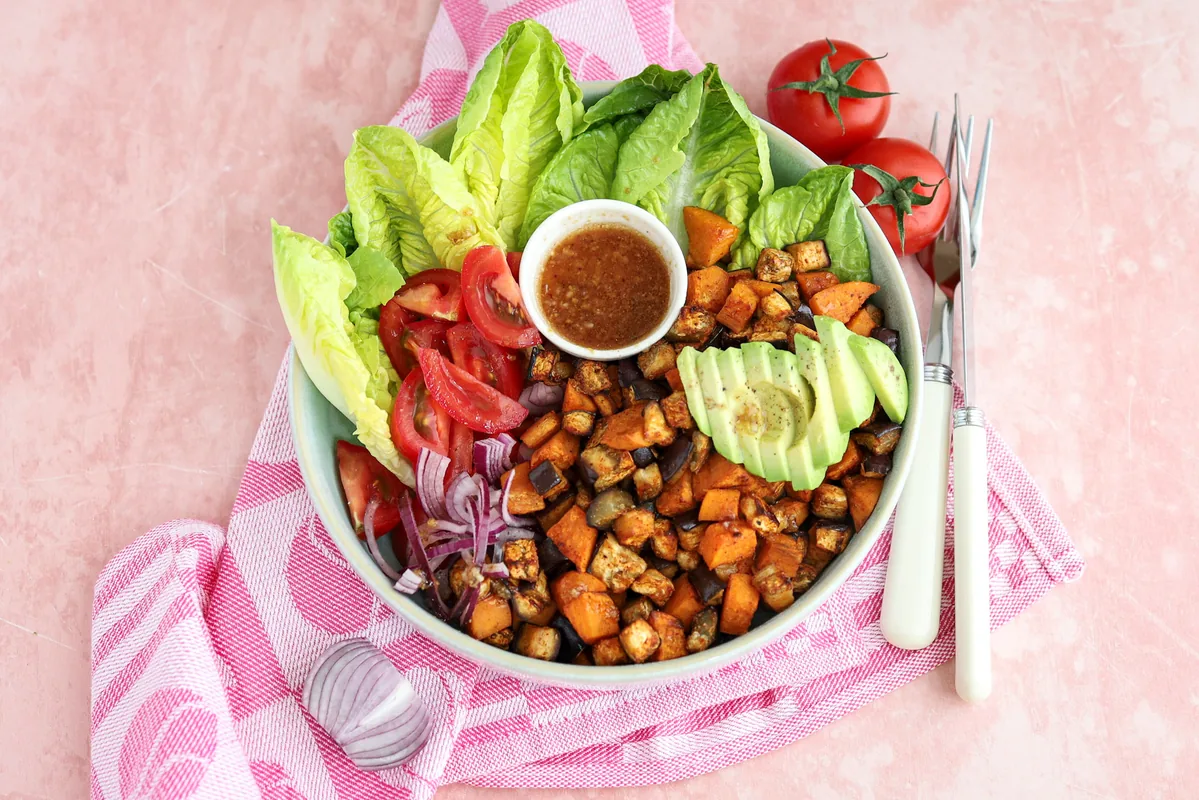
The ‘BLT’ without the bacon or the bread. Sweet potato and eggplant, cubed and roasted in a sticky soy-honey glaze until the edges caramelize, then piled over shredded iceberg with fresh tomato wedges, sliced avocado, and thin rings of red onion. A balsamic-mustard dressing with raw garlic pulls it all together.
25 minutes, one baking sheet, and 831 kcal of plant-based fuel. 22 grams of fiber from the sweet potato and eggplant, with enough fat from olive oil and avocado to carry you well past lunch.
The ‘BLT’ without the bacon or the bread. Sweet potato and eggplant, cubed and roasted in a sticky soy-honey glaze until the edges caramelize, then piled over shredded iceberg with fresh tomato wedges, sliced avocado, and thin rings of red onion. A balsamic-mustard dressing with raw garlic pulls it all together.
25 minutes, one baking sheet, and 831 kcal of plant-based fuel. 22 grams of fiber from the sweet potato and eggplant, with enough fat from olive oil and avocado to carry you well past lunch.
Ingredients
- sweet potato 0.5 lb
- eggplant 1
- olive oil 2 tbsp
- paprika 1.5 tsp
- soy sauce 1.5 tbsp
- honey 2 tbsp
- tomatoes 2
- avocado 0.5
- red onion 0.25
- garlic 1 clove
- balsamic vinegar 2 tsp
- yellow mustard 1 tsp
- iceberg lettuce, shredded 1 handful
Method
-
Preheat the oven to 390°F (200°C).
-
Peel the sweet potato. Cut the sweet potato and eggplant into cubes. Mix with half the olive oil, paprika, soy sauce, and half the honey. Season with salt and pepper.
-
Spread on a parchment-lined baking sheet. Bake for 20 minutes.
-
Cut the tomatoes into wedges. Slice the avocado widthwise. Cut the red onion into thin half-rings. Press the garlic.
-
Make the dressing: whisk together the remaining olive oil, honey, balsamic vinegar, mustard, pressed garlic, salt, and pepper.
-
Assemble the bowl: start with the shredded lettuce, top with the roasted vegetables, tomato wedges, avocado slices, and red onion. Drizzle with the dressing.
Toss the sweet potato cubes until every surface has a thin coat of olive oil before spreading them on the baking sheet. A 2009 food chemistry study found that baking sweet potato with cooking oil increased beta-carotene availability by 10 to 20 times compared to baking without oil. The fat gives your body something to dissolve the beta-carotene into during digestion.
Baking the eggplant at 200°C does more than build texture. A Food Chemistry study measured phenolic bioaccessibility across cooking methods and found baked eggplant scored 45% compared to 22% for fried. When you fry eggplant, its phenolic compounds leach into the frying oil you discard. Baking keeps them in the flesh.
Phenolic Bioaccessibility in Cooked Eggplant · DOIWhy This Works
Behind this recipe
Can I fry the eggplant instead of baking it?
You can, but baking has a measured advantage. A 2020 Food Chemistry study found baked eggplant had 45% phenolic bioaccessibility compared to 22% for fried. When eggplant is fried, its phenolic compounds leach into the frying oil that gets discarded. Baking avoids that loss. If you prefer the texture of fried eggplant, a quick pan-sear with minimal oil is a middle ground.
Why is the protein so low in this recipe?
This is a fully plant-based salad. The 12 grams of protein come from sweet potato, eggplant, and avocado, none of which are concentrated protein sources. Not every meal needs to hit a high protein target. If you want more, a handful of chickpeas or some crumbled feta would add protein without changing the character of the salad.
Does the balsamic vinegar do anything besides add flavor?
Research has found that acetic acid, the main compound in vinegar, slows how quickly your body breaks down starchy foods. One study reported a roughly 45% reduction in glycemic response when vinegar was consumed with a starchy meal. This bowl pairs balsamic vinegar dressing directly with 227 grams of roasted sweet potato, one of the starchier vegetables in any kitchen.