Beef Chow Mein
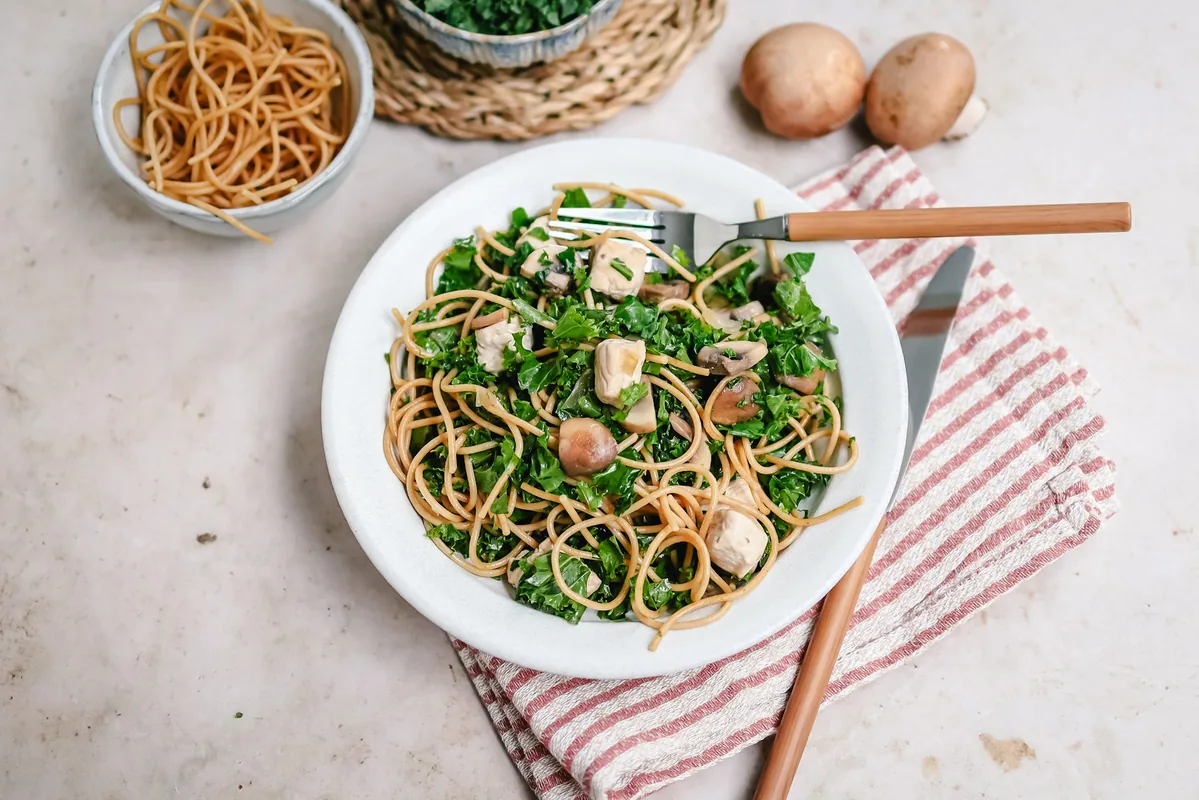
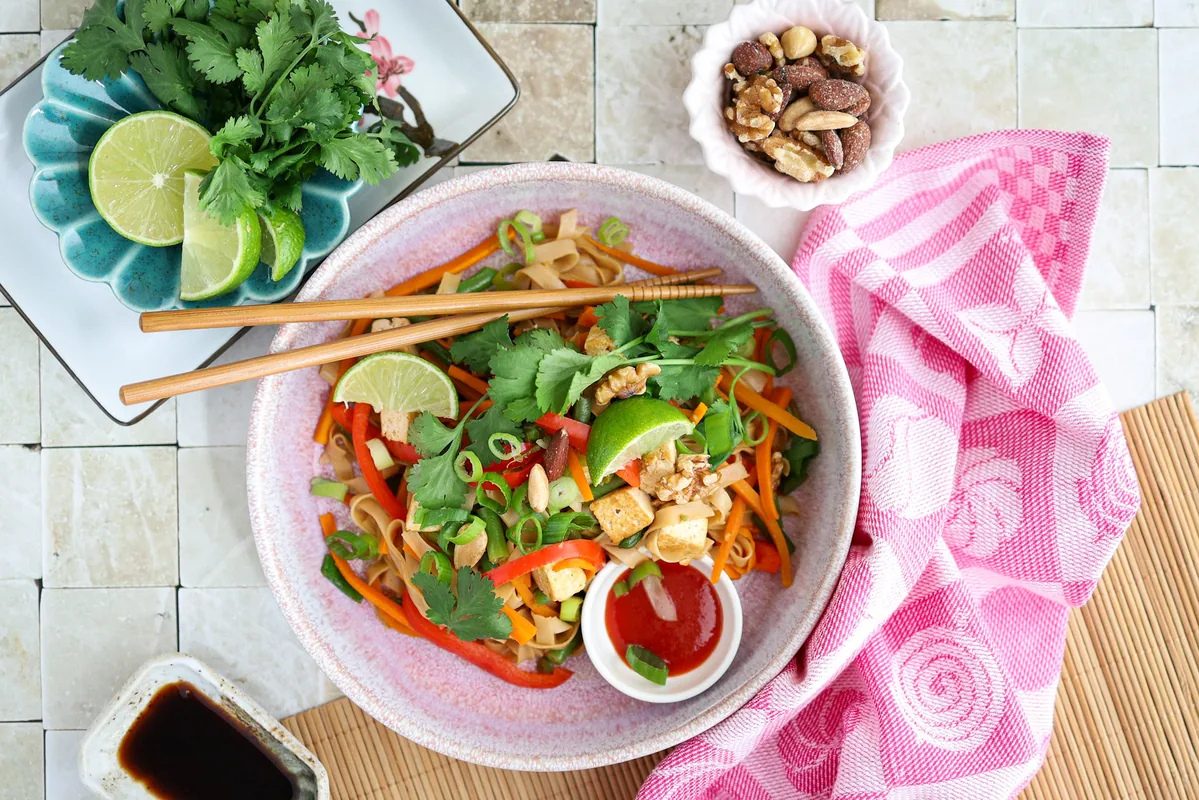
Beef strips marinated in soy sauce and garlic, tossed in a hot wok with cabbage, bell pepper, and carrot, then mixed with whole wheat noodles. Fifteen minutes from counter to plate. 647 kcal and 33g protein in one bowl.
The soy sauce pulls double duty here. Beyond flavor, a controlled clinical trial found that traditionally fermented soy sauce added to a grain-based meal more than tripled iron absorption — from 3.5% to 11.4%. This recipe layers that effect with beef (heme iron) and bell pepper (vitamin C), turning a weeknight stir-fry into a quiet iron-delivery system.
Beef strips marinated in soy sauce and garlic, tossed in a hot wok with cabbage, bell pepper, and carrot, then mixed with whole wheat noodles. Fifteen minutes from counter to plate. 647 kcal and 33g protein in one bowl.
The soy sauce pulls double duty here. Beyond flavor, a controlled clinical trial found that traditionally fermented soy sauce added to a grain-based meal more than tripled iron absorption — from 3.5% to 11.4%. This recipe layers that effect with beef (heme iron) and bell pepper (vitamin C), turning a weeknight stir-fry into a quiet iron-delivery system.
Ingredients
- garlic 1 clove
- soy sauce 1 tablespoon
- olive oil 1 tablespoon
- teriyaki sauce 0.5 tablespoon
- beef strips 3 ounces
- onion 0.5
- carrot 1
- bell pepper 1
- noodles, whole wheat 3 ounces
- cabbage, shredded 4 ounces
Method
-
Bring a large pot of water to a boil.
-
Press the garlic. In a bowl, combine half of the soy sauce, oil, teriyaki sauce and garlic. Add the beef strips to the marinade and mix well.
-
Finely chop the onion and slice the carrot into thin slices. Cut the bell pepper into strips.
-
Add the noodles to the pot of boiling water and cook them according to the instructions on the package.
-
Fry the beef strips on high heat in a wok until they turn brown in about 3-4 minutes. Add the carrot and onion and sauté for 3 minutes. Then add the bell pepper and cabbage and continue heating for another 3 minutes until they are tender yet still crisp.
-
Drain the noodles and add them to the wok. Mix everything well together and season with the rest of the soy sauce.
-
Serve the chow mein in a deep plate.
Sriracha in the marinade turns the heat up without adding a separate sauce. A squeeze of lime at the end cuts through the soy and brings the vegetables forward.
Fermentation transforms soy's relationship with iron. Unfermented soy (like soy flour or tofu) actually inhibits iron absorption. But during traditional brewing, the proteins break down and new polysaccharide compounds form that keep iron soluble and absorbable. The same trial found that soy sauce could not overcome soy flour's inhibition when both were present — the effect only works when soy sauce is the soy source in the meal.
Soy Sauce & Iron AbsorptionWhy This Works
Behind this recipe
Why does soy sauce increase iron absorption?
Traditionally brewed soy sauce contains fermentation products — polysaccharide compounds — that stabilize iron in a form your gut can absorb. A controlled clinical trial measured this directly: iron absorption from a grain meal jumped from 3.5% to 11.4% with soy sauce added. Unfermented soy (tofu, soy flour) does the opposite — it inhibits iron. The fermentation is what flips the effect.
Is 33g of protein enough in one sitting?
Research on per-meal protein utilization found that the body can use significantly more than the old 20-30g ceiling that circulated for years. At 33g, this meal falls well within the range where muscle protein synthesis is fully active.
Read the full evidence reviewCan I use regular noodles instead of whole wheat?
Yes — the cooking process stays the same. Boil per package instructions, then toss in the wok. Whole wheat noodles add 10g of fiber and serve as a non-heme iron source that pairs with the soy sauce's absorption-boosting properties, but any noodle works for the dish itself.
Does stir-frying the cabbage change its nutritional value?
In a good direction. Research found that stir-frying cruciferous vegetables increases isothiocyanate yield by 7.9 times compared to boiling. The high heat and short cooking time — this recipe calls for 3 minutes to 'tender yet still crisp' — preserves the enzyme that drives this conversion.