Banana Sandwich with Peanut Butter & Dark Chocolate
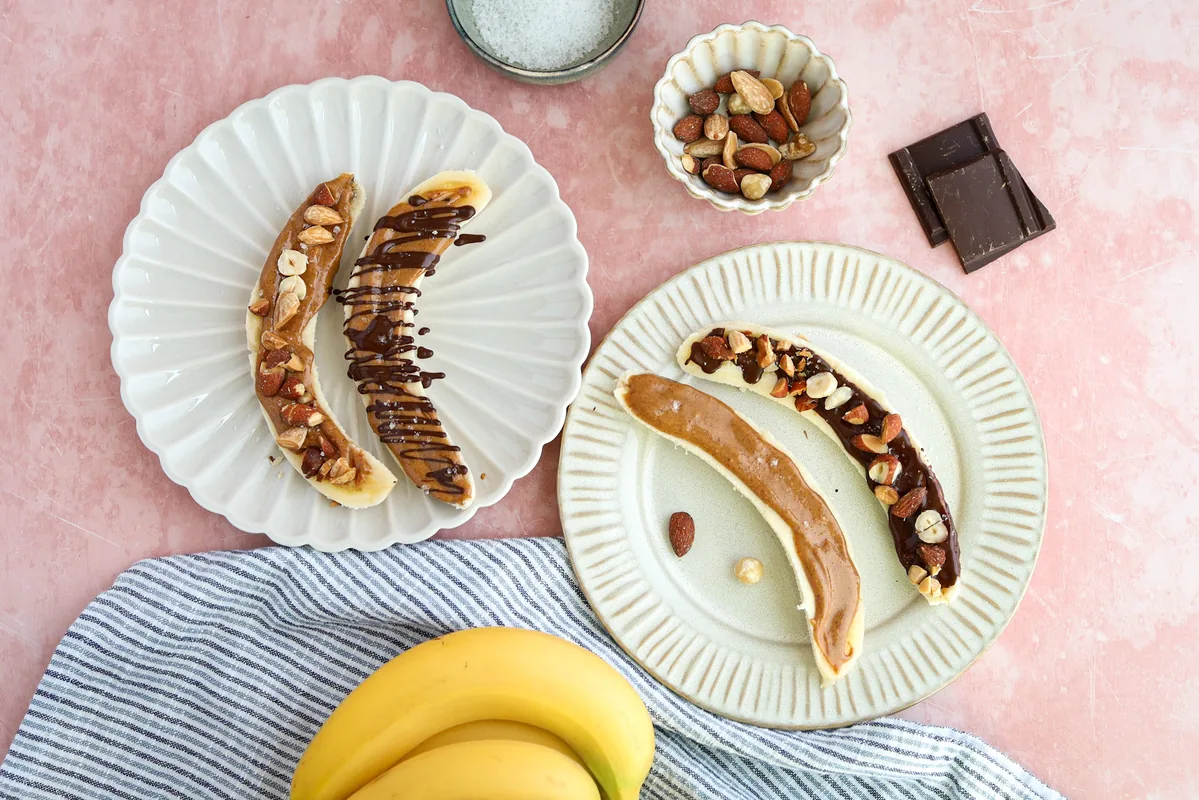
Banana sliced lengthwise, one half spread with peanut butter, the other waiting. Warm dark chocolate drizzled across, chopped nuts scattered on top, a pinch of sea salt to pull everything sharp. Five minutes from counter to first bite.
At 49 grams of fat per serving, this is not pretending to be light. Most of it comes from peanut butter and mixed nuts, both rich in monounsaturated fats. A controlled-feeding trial published in the Journal of the American Heart Association found that eating dark chocolate and nuts together reduced small, dense LDL particles — the type most strongly linked to artery damage — by more than double what either food managed on its own. Neither chocolate nor nuts could do it solo. Only the combination.
Banana sliced lengthwise, one half spread with peanut butter, the other waiting. Warm dark chocolate drizzled across, chopped nuts scattered on top, a pinch of sea salt to pull everything sharp. Five minutes from counter to first bite.
At 49 grams of fat per serving, this is not pretending to be light. Most of it comes from peanut butter and mixed nuts, both rich in monounsaturated fats. A controlled-feeding trial published in the Journal of the American Heart Association found that eating dark chocolate and nuts together reduced small, dense LDL particles — the type most strongly linked to artery damage — by more than double what either food managed on its own. Neither chocolate nor nuts could do it solo. Only the combination.
Ingredients
- dark chocolate (70%+ cocoa) 42 g
- mixed nuts (unsalted) 28 g
- banana 1
- peanut butter 30 g
Method
-
Melt the dark chocolate in a small bowl (microwave in 20-second intervals or use a bain-marie).
-
Roughly chop the mixed nuts.
-
Slice the banana lengthwise to create two halves.
-
Spread peanut butter on one banana half, drizzle with melted dark chocolate, sprinkle with chopped nuts and a pinch of sea salt, and place the other banana half on top.
Use dark chocolate labeled 70% cocoa or higher. Lower percentages swap cocoa solids for sugar, which dilutes the flavanols that give dark chocolate its bitterness and its research profile. If sugar is the first ingredient on the label, keep looking.
A 2017 controlled-feeding trial tested dark chocolate and almonds separately and together for four weeks. Almonds alone lowered total cholesterol. Chocolate alone moved almost nothing. But participants who ate both together reduced small, dense LDL particles — the type recognized as particularly risky because they burrow into artery walls more easily — significantly more than the control diet. The researchers attributed the combined effect to cocoa flavanols working alongside the monounsaturated fats in nuts. One caveat: the trial used almonds specifically, not mixed nuts or peanut butter. The fat profile is similar, but the exact result was measured with almonds.
Kris-Etherton 2017 — Randomized Controlled Trial, n=31 · DOIBehind this recipe
Is 49 grams of fat in one snack too much?
Fat quantity in a single meal does not determine whether you gain body fat. Total calorie balance across the day does. A Cochrane review of 37 randomized controlled trials covering more than 57,000 participants found that reducing total fat intake had no meaningful effect on body weight. At 707 kcal, this snack fits within most meal plans as long as you account for it in your daily total. The fat is not the issue. The total is.
Read the full evidence reviewDoes the type of dark chocolate matter?
Yes. The research used chocolate with high cocoa content, providing 273 milligrams of proanthocyanidins (a type of plant compound concentrated in cocoa) from the chocolate and cocoa combined. Look for bars labeled 70% cocoa or higher. Lower percentages replace cocoa solids with sugar, reducing the flavanol content that contributed to the findings in the trial.
Can I use a different nut or nut butter?
The trial used almonds specifically. This recipe uses mixed nuts and peanut butter, which is a different combination. The proposed mechanism involves monounsaturated fats from nuts working alongside cocoa flavanols, and both almonds and peanuts are rich in monounsaturated fat. That said, the measured result came from almonds. Almond butter would be the closest swap to what was actually tested.
How does a 707-calorie snack fit into a weight loss plan?
Calories determine fat loss, not the macronutrient split of any single meal. A 707 kcal snack takes up a meaningful share of a typical deficit budget, roughly a third of a 2,000 kcal daily target. That is manageable when the rest of your meals account for it. Some people treat a serving this size as a post-workout meal rather than a mid-afternoon snack, which shifts the framing.
Read the full evidence review