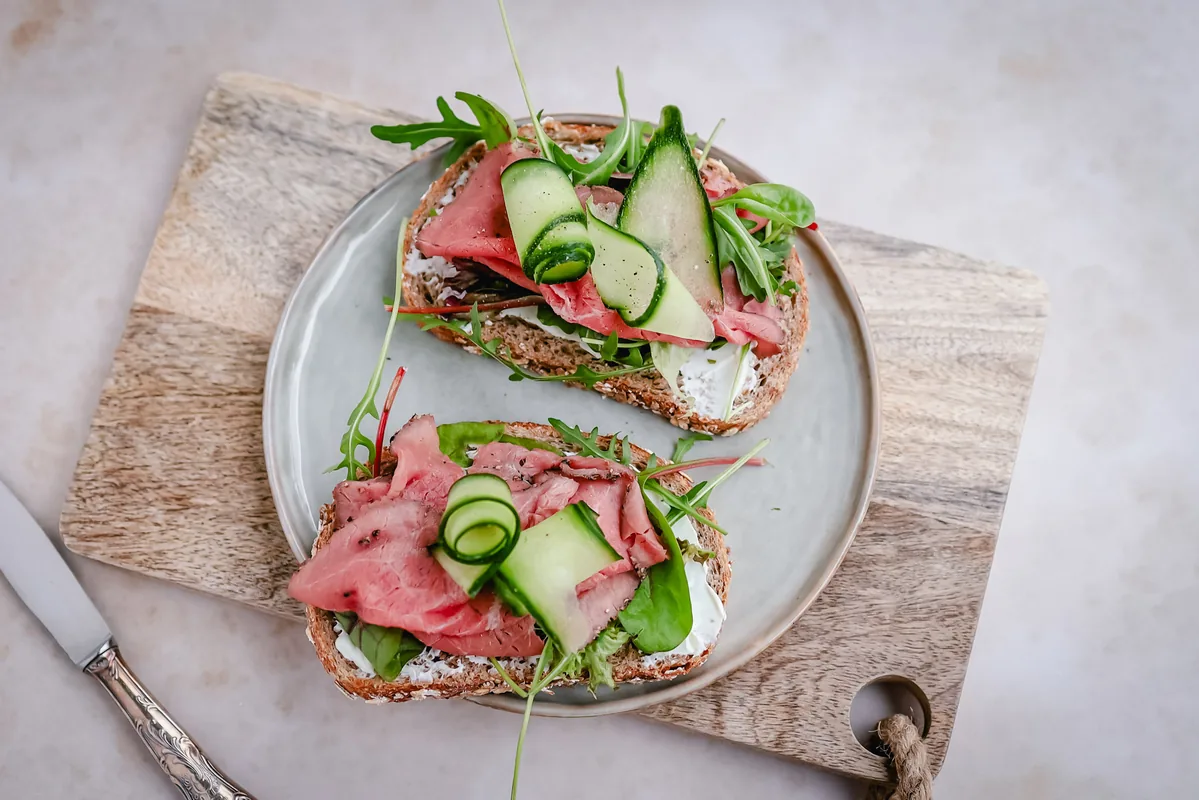
Tuna Sandwich
Yogurt stands in for mayo. Capers stand in for pickles. Five minutes from colander to plate, no stove required.
This tuna sandwich delivers 47 grams of protein at 329 calories with just 2 grams of fat, one of the leanest protein-to-calorie ratios in the recipe library. The real surprise is the ingredient most people treat as a garnish. Capers are the single richest common food source of quercetin, the most consumed dietary flavonoid worldwide. Two tablespoons deliver roughly 35 milligrams, more per gram than red onion, kale, or broccoli.
Yogurt stands in for mayo. Capers stand in for pickles. Five minutes from colander to plate, no stove required.
This tuna sandwich delivers 47 grams of protein at 329 calories with just 2 grams of fat, one of the leanest protein-to-calorie ratios in the recipe library. The real surprise is the ingredient most people treat as a garnish. Capers are the single richest common food source of quercetin, the most consumed dietary flavonoid worldwide. Two tablespoons deliver roughly 35 milligrams, more per gram than red onion, kale, or broccoli.
Ingredients
- tuna, in water 5 oz
- capers 2 tbsp
- yogurt, nonfat 2 fl oz
- bread, whole wheat 2 slices
Method
-
Drain the tuna in a colander and flake it into pieces.
-
In a bowl, mix the tuna with capers, yogurt, salt and pepper to taste.
-
Spread the tuna salad over the bread.
Press the drained tuna firmly against the colander with a fork before mixing. Excess water thins the yogurt base and turns the bread soggy within minutes.
Capers rank first in the USDA flavonoid database for quercetin content among common foods at roughly 173 milligrams per 100 grams. Red onion, often cited as a top dietary source, delivers about 20 milligrams per 100 grams. The two tablespoons in this sandwich outperform a full serving of most vegetables on this single flavonoid.
Quercetin content: USDA flavonoid database · DOIBehind this recipe
Is canned tuna safe to eat regularly?
Tuna contains a compound called selenoneine that binds directly to methylmercury and reduces its harmful effects. 98% of the organic selenium in tuna muscle exists as selenoneine, which functions as a built-in defense against the mercury compound the body absorbs. Mercury levels vary across fish species and across individual cans. The research adds nuance to the blanket warning but does not eliminate it.
Why capers instead of pickles or relish?
Beyond the salty, briny flavor they bring, capers rank as the single richest common food source of quercetin in the USDA flavonoid database. Two tablespoons deliver roughly 35 milligrams of quercetin, the most consumed dietary flavonoid worldwide. Pickles and relish bring acidity and crunch but nothing close to this flavonoid density.
Can I use Greek yogurt instead of nonfat yogurt?
Greek yogurt works well and adds a thicker, tangier base. The macros shift slightly: full-fat Greek yogurt adds roughly 3 to 5 grams of fat per serving, moving the total from 2g closer to 5 to 7g. The protein count stays similar or increases slightly. Nonfat plain yogurt keeps the sandwich at its leanest.