Tomato-Eggplant Orzo with Tuna
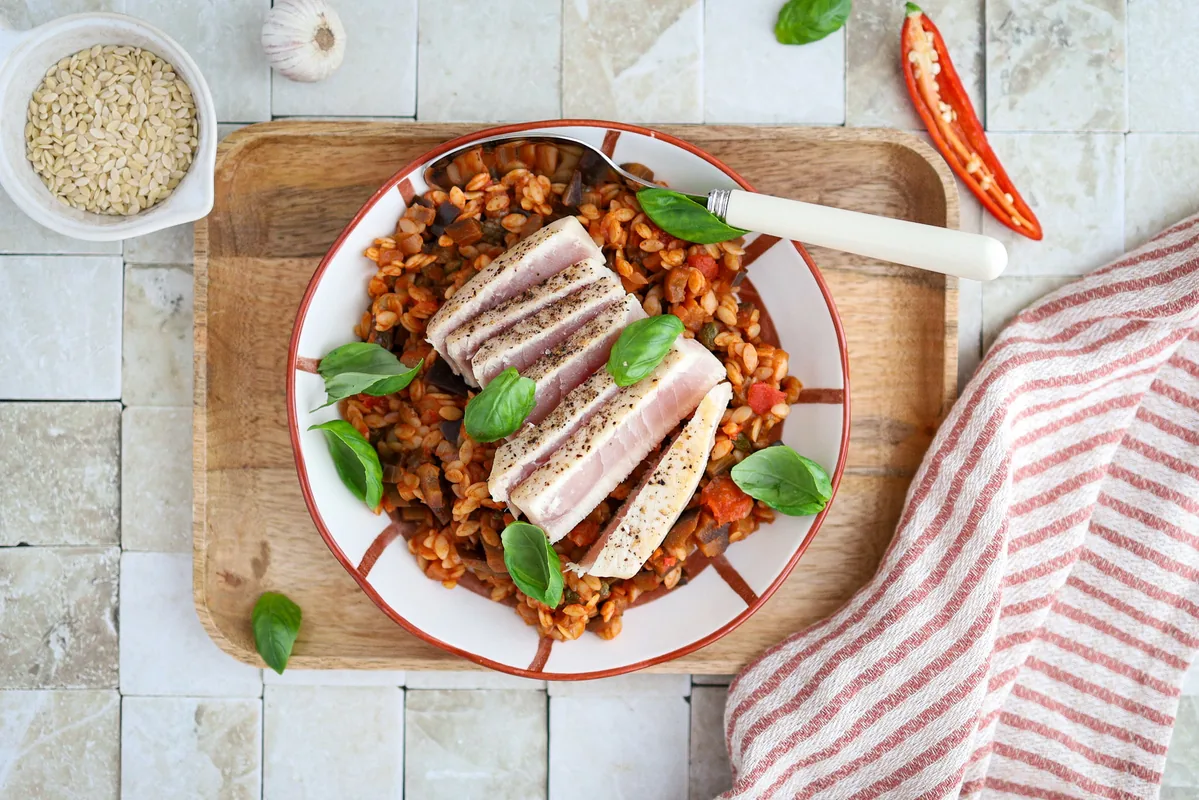
46g of protein in a 20-minute Mediterranean dinner that looks like it came from a restaurant kitchen. Seared tuna steak, sliced and laid over orzo in a rich eggplant-tomato sauce with capers and a chili kick.
The sauce does more than taste good. Tomato paste and diced tomatoes cooked together in olive oil create a concentrated lycopene load, and research shows that fat-soluble lycopene absorbs dramatically better when eaten with oil. The onion and garlic sautéed into the mix add one more layer: allium compounds can help convert lycopene into forms the body picks up more easily.
Then there’s the tuna steak. 98% of the organic selenium in tuna muscle is a compound called selenoneine, which researchers found directly reduces methylmercury toxicity. Searing preserves it. The fish everyone worries about carries its own protection.
46g of protein in a 20-minute Mediterranean dinner that looks like it came from a restaurant kitchen. Seared tuna steak, sliced and laid over orzo in a rich eggplant-tomato sauce with capers and a chili kick.
The sauce does more than taste good. Tomato paste and diced tomatoes cooked together in olive oil create a concentrated lycopene load, and research shows that fat-soluble lycopene absorbs dramatically better when eaten with oil. The onion and garlic sautéed into the mix add one more layer: allium compounds can help convert lycopene into forms the body picks up more easily.
Then there’s the tuna steak. 98% of the organic selenium in tuna muscle is a compound called selenoneine, which researchers found directly reduces methylmercury toxicity. Searing preserves it. The fish everyone worries about carries its own protection.
Ingredients
- orzo 3 ounces
- eggplant 1
- onion 0.25
- garlic 1 clove
- chili pepper 0.5
- olive oil 1.5 tablespoon
- tomato paste 1 tablespoon
- diced tomatoes 6 ounces
- water 3 fluid ounces
- vegetable bouillon 0.5 cube
- capers 1 tablespoon
- tuna steak 1
Method
-
Cook the orzo according to the package instructions until al dente. Drain and set aside.
-
Cut the eggplant into cubes and finely chop the onion, garlic, and chili pepper.
-
Heat half of the oil in a pan over medium heat. Add the eggplant and sauté for 5–7 minutes until golden brown and soft.
-
Add the onion, garlic, and chili pepper, and cook for another 2–3 minutes until the onion is soft.
-
Stir in the tomato paste and cook for 1 more minute. Add the diced tomatoes, water, bouillon cube, and capers. Let the sauce simmer for 5–10 minutes, until slightly thickened.
-
Season the tuna with salt and pepper. Heat the remaining oil in a skillet. Sear the tuna over high heat for about 2–3 minutes per side, depending on your preferred doneness. Remove from the heat and slice.
-
Stir the orzo into the sauce and heat through for 1 minute.
-
Spoon the orzo onto a deep plate and top with the sliced tuna.
Stir the tomato paste into the oil and let it cook for the full minute before adding liquid. Tomato paste contains roughly 2.5 times the lycopene concentration of fresh tomatoes, and research shows that heating lycopene in fat converts it into forms the body absorbs more readily.
Tuna muscle stores nearly all of its selenium as selenoneine, a compound that research identified as a direct reducer of methylmercury accumulation. It accounts for 98% of the organic selenium in tuna tissue. Searing the steak (Step 6) preserves selenoneine better than slow-cooking or canning would.
Selenoneine in Tuna · DOIWhy This Works
Behind this recipe
Is tuna steak safe to eat with mercury concerns?
Research found that 98% of the organic selenium in tuna muscle is selenoneine, a compound that directly reduces methylmercury accumulation in the body. Tuna is one of the few fish where the selenium content naturally counterbalances mercury exposure. That said, the primary source is a 2010 discovery paper identifying the mechanism in laboratory models, not a large-scale human clinical trial. The molecular pathway is established, but human dose-response data at the meal level is still limited.
Can I use canned tuna instead of a tuna steak?
You can, but you lose some of what makes this recipe nutritionally interesting. Canned tuna goes through extended heat processing that may reduce selenoneine content compared to a fresh steak seared for 2–3 minutes per side. The texture changes too. Canned tuna breaks apart in the sauce rather than sitting as sliced steak on top. If substituting, drain the can well and stir it directly into the finished sauce.
Does cooking tomatoes in oil really improve nutrient absorption?
Yes. Research shows that lycopene absorbs significantly better when consumed with dietary fat. This recipe stacks the effect three ways: concentrated tomato paste (roughly 2.5 times the lycopene of fresh tomatoes), diced tomatoes for volume, and olive oil as the fat matrix. Simmering all three together for 5–10 minutes maximizes what the body can actually use.
Read the full evidence reviewIs 46g of protein too much for one meal?
No. The old idea that the body can only use 20–30g of protein per sitting has been challenged by research showing muscle protein synthesis responds well beyond that range. At 46g, this meal delivers a serious protein dose from a whole-food source. The body uses it. It just takes longer to digest than a smaller serving would.
Read the full evidence review