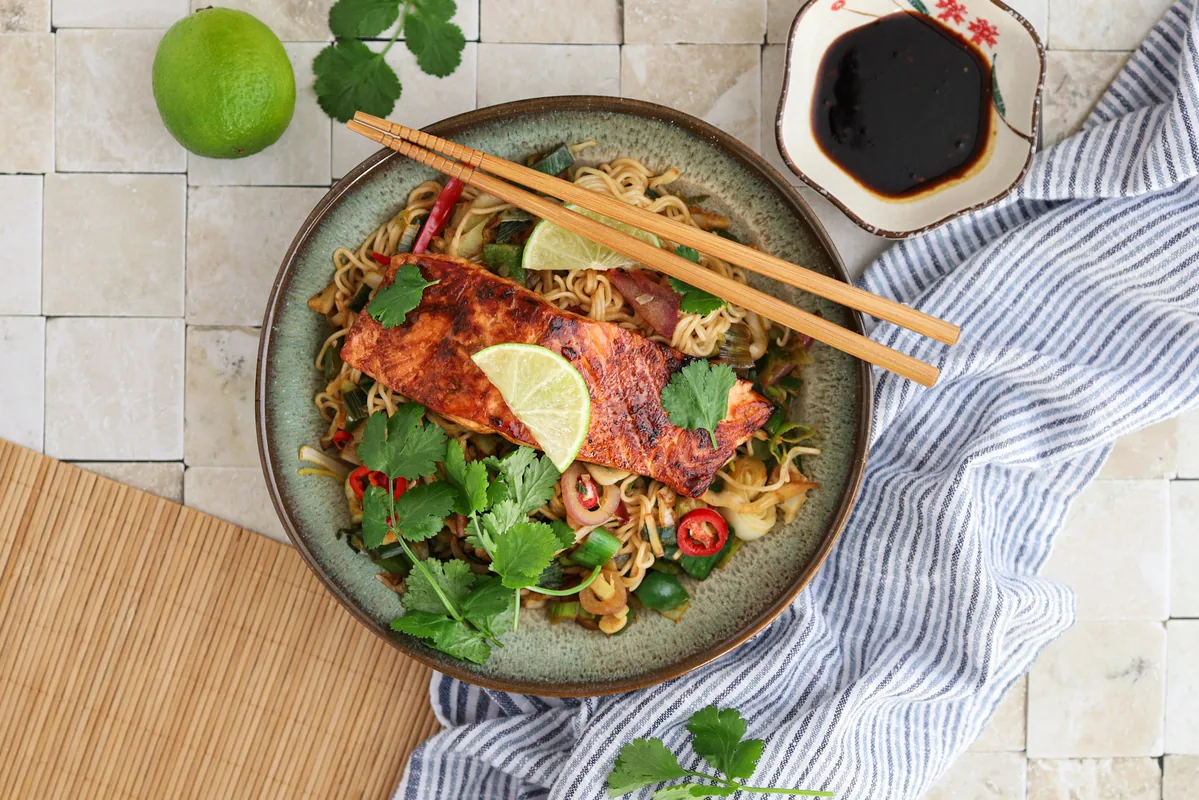
Sweet Chili Noodles with Marinated Salmon
The marinade does the work before the pan does. Soy sauce, sweet chili, grated ginger, honey, and a squeeze of lime go into a bowl, and the salmon sits in that mixture while you boil the noodles. By the time the fillet hits hot oil, the surface is already loaded with flavor that caramelizes on contact.
Pan-searing takes 3 to 4 minutes per side at medium heat. Spooning leftover marinade over the salmon as it cooks builds a sticky glaze that turns golden brown without burning. The remaining garlic, chili sauce, and soy sauce go into the same pan with the vegetables, so nothing is wasted.
Whole wheat noodles tossed through the stir-fried vegetables pick up the residual sauce. One plate: 850 kcal, 45g protein, 84g carbs, 11g fiber. Twenty-five minutes, one pan after the pot.
The marinade does the work before the pan does. Soy sauce, sweet chili, grated ginger, honey, and a squeeze of lime go into a bowl, and the salmon sits in that mixture while you boil the noodles. By the time the fillet hits hot oil, the surface is already loaded with flavor that caramelizes on contact.
Pan-searing takes 3 to 4 minutes per side at medium heat. Spooning leftover marinade over the salmon as it cooks builds a sticky glaze that turns golden brown without burning. The remaining garlic, chili sauce, and soy sauce go into the same pan with the vegetables, so nothing is wasted.
Whole wheat noodles tossed through the stir-fried vegetables pick up the residual sauce. One plate: 850 kcal, 45g protein, 84g carbs, 11g fiber. Twenty-five minutes, one pan after the pot.
Ingredients
- salmon fillet 1
- garlic 1 clove
- ginger 1 slice
- soy sauce 15 ml
- chili sauce 15 ml
- honey 1 tsp
- lime juice 5 ml
- noodles, whole wheat 84 g
- olive oil 23 ml
- mixed vegetables, Asian style 252 g
Method
-
Remove the salmon from the freezer and let it thaw on a plate.
-
Mince the garlic and grate the ginger.
-
In a bowl, mix half of the soy sauce, half of the sweet chili sauce, half of the garlic, the honey, ginger, and lime juice. Place the salmon in the marinade.
-
Cook the noodles according to the package instructions. Drain and set aside.
-
Heat half of the oil in a large skillet over medium heat. Remove the salmon from the marinade and cook for 3–4 minutes per side, until golden brown and cooked through. Spoon some of the remaining marinade over the salmon as it cooks. Remove from the pan and set aside.
-
In the same pan, heat the remaining oil. Add the rest of the garlic and sauté for about 1 minute.
-
Add the stir-fry vegetables and cook for 4–5 minutes, until tender but still crisp.
-
Stir in the remaining sweet chili sauce and soy sauce. Let it simmer for 1–2 minutes.
-
Add the noodles, toss to combine and mix well with the vegetables and sauce.
-
Plate the noodle and veggie mix, and top with the salmon.
Keep the marinade from step 3 and spoon it directly over the salmon while it sears. The sugars in the honey hit the hot pan and caramelize into a glaze that sticks to the surface. If you pour too much at once, the pan temperature drops and the fish steams instead of searing. Go one spoonful at a time, letting each round reduce before adding the next.
Behind this recipe
Is 45g of protein from one meal actually useful, or does your body waste the excess?
Your body uses it. A common claim says you can only absorb 20 to 30 grams per meal, but that number comes from studies measuring the peak rate of muscle protein synthesis, not total protein utilization. Research on per-meal protein limits found that higher single-meal doses still contribute to whole-body protein balance. The 45g in this plate, split between salmon and whole wheat noodles, falls well inside what your body can put to work.
Can I use frozen salmon straight from the freezer?
It needs to thaw first. A frozen fillet won't absorb the marinade and will steam instead of sear, which means no caramelized glaze. Thawing on a plate takes roughly 30 minutes at room temperature, or you can move it to the fridge the night before. If you're short on time, seal the fillet in a zip-lock bag and submerge it in cold water for 15 minutes.
Why whole wheat noodles instead of regular?
Fiber. This meal delivers 11 grams, and the whole wheat noodles contribute a meaningful share of that. When researchers pooled 62 clinical trials, fiber showed up as an independent predictor of fat loss. Regular noodles would cut the fiber and leave this plate with little beyond the carb load.
Read the full evidence reviewDoes cooking salmon destroy the omega-3?
Pan-searing at medium heat preserves most of the EPA and DHA. High-heat methods like deep-frying or prolonged grilling degrade more, but a 3 to 4 minute sear per side keeps exposure short enough that the fatty acid profile stays largely intact. If you're eating salmon for the omega-3, this cooking method is a reasonable choice. For more context on what omega-3 from whole fish does and doesn't do for muscle, see what 6 randomized trials found.
Read the full evidence review