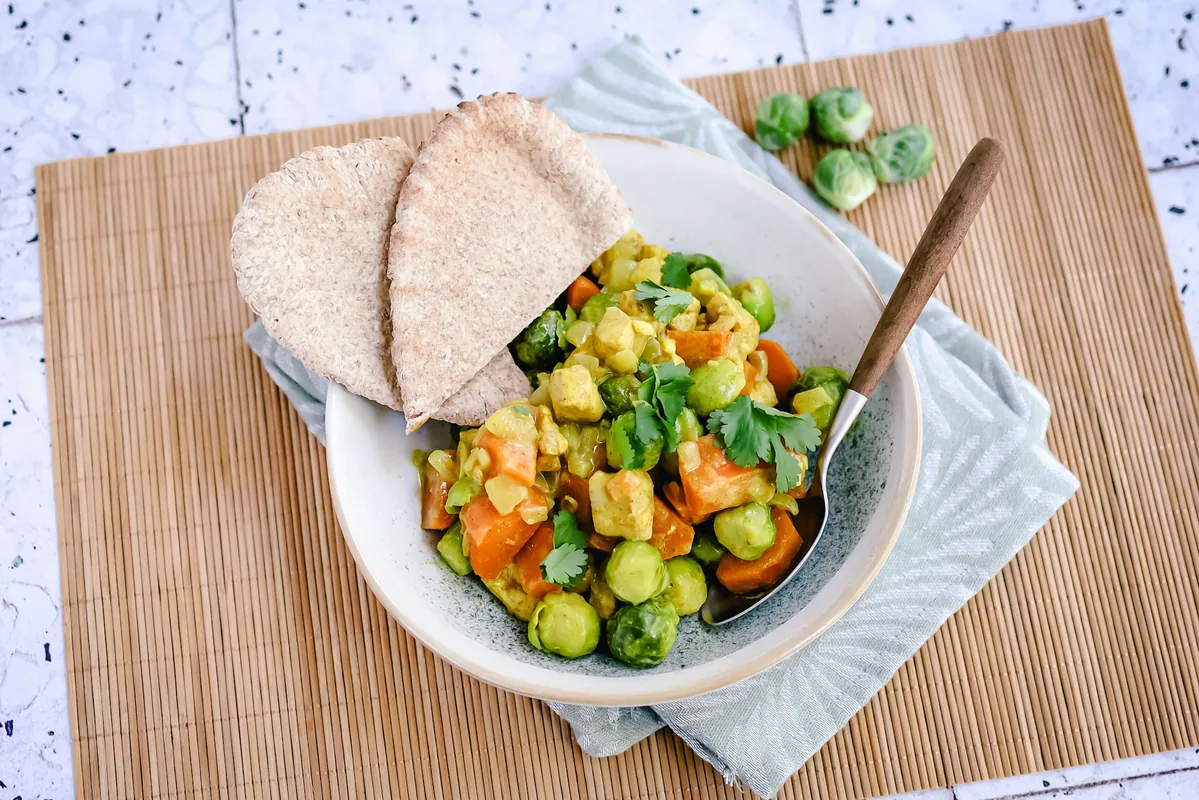
Spicy sweet potato curry with Brussels sprouts & chicken
Brussels sprouts in a curry might raise an eyebrow, but simmer them in coconut milk alongside sweet potato cubes and a four-spice blend and the skepticism disappears in about 14 minutes. One pan, everything built on a sauté base of chicken, turmeric, cumin, and cinnamon.
The sweet potato is the quiet star here. At 227g, it is the biggest ingredient in the pan, and research found that cooking it in oil increases the beta-carotene your body absorbs by 10 to 20 times. This curry sautés it in olive oil first, then simmers it in coconut milk — a dual-fat medium that turns every bite into a delivery system. With 36g protein, 88g carbs, and 23g fiber from three different sources, this is a complete meal that fits in your weeknight rotation.
Brussels sprouts in a curry might raise an eyebrow, but simmer them in coconut milk alongside sweet potato cubes and a four-spice blend and the skepticism disappears in about 14 minutes. One pan, everything built on a sauté base of chicken, turmeric, cumin, and cinnamon.
The sweet potato is the quiet star here. At 227g, it is the biggest ingredient in the pan, and research found that cooking it in oil increases the beta-carotene your body absorbs by 10 to 20 times. This curry sautés it in olive oil first, then simmers it in coconut milk — a dual-fat medium that turns every bite into a delivery system. With 36g protein, 88g carbs, and 23g fiber from three different sources, this is a complete meal that fits in your weeknight rotation.
Ingredients
- onion 0.5
- garlic clove 1 clove
- sweet potato 0.5 pound
- chicken breast 3 ounces
- olive oil 1 tablespoon
- curry powder 1 tsp
- turmeric 0.5 teaspoon
- ground cumin 1 pinch
- cinnamon 1 pinch
- Brussels sprouts (frozen) 1.5 cup
- coconut milk 1.5 fluid ounce
- water 0.5 cup
- pita, whole wheat 1
Method
-
Finely chop the onion and crush the garlic clove. Peel the sweet potato and cut it into cubes. Dice the chicken breast.
-
Heat the oil in a wok pan. Sauté the onion and garlic for 2 minutes. Then add the chicken breast along with the curry powder, turmeric, cumin and cinnamon. Cook for 4 minutes.
-
Add the sweet potato, Brussels sprouts, coconut milk and water to the pan. Bring to a boil and let it simmer over low heat, covered, for about 14 minutes until everything is tender. Add a dash more water, if needed.
-
Meanwhile, prepare the pita bread according to the package instructions.
-
Serve the curry with the pita, season with salt and pepper according to taste.
Do not skip the sauté step or add everything at once. Cooking the chicken with the spices in oil for those first four minutes builds the flavor base and coats the turmeric in fat, which research links to significantly better curcumin absorption.
Sweet potato is one of the richest food sources of beta-carotene, but your body absorbs very little of it when prepared without fat. Research from Bengtsson et al. (2009) found that cooking sweet potato with just 2.5% oil increased bioaccessibility from roughly 1% to 11–22% — a 10 to 20 times improvement. This recipe sautés the sweet potato in olive oil first, then simmers it in coconut milk, giving it continuous fat contact for over 14 minutes.
Bengtsson et al., 2009 · DOIBehind this recipe
Can I use fresh Brussels sprouts instead of frozen?
Yes, but add 3–4 minutes to the simmer time. Fresh sprouts are denser and need longer to soften in the broth. Cut them in half so they cook evenly. Frozen sprouts work well here because they are blanched before freezing, which means they break down faster during the 14-minute simmer.
Why is there so little coconut milk in this recipe?
The 45ml is intentional. It adds richness and serves as a second fat source alongside the olive oil, which matters for nutrient absorption, without turning this into a heavy cream-based curry. The water does the volume work, and the sweet potato breaks down slightly during cooking, thickening the broth naturally.
Is 36g of protein enough for a post-workout meal?
Research on per-meal protein utilization suggests that 20–40g of high-quality protein per meal effectively stimulates muscle protein synthesis. This meal delivers 36g total, with the chicken breast as the primary source. The 88g of carbs and post-exercise glycogen context make it a solid recovery option.
Read the full evidence reviewWhere does the 23g of fiber come from?
Three sources: sweet potato contributes soluble fiber, Brussels sprouts contribute insoluble fiber, and the whole wheat pita adds more. Research links higher fiber intake to accelerated fat loss independent of calorie reduction. This single meal delivers 77% of the commonly recommended 30g daily target.
Read the full evidence review