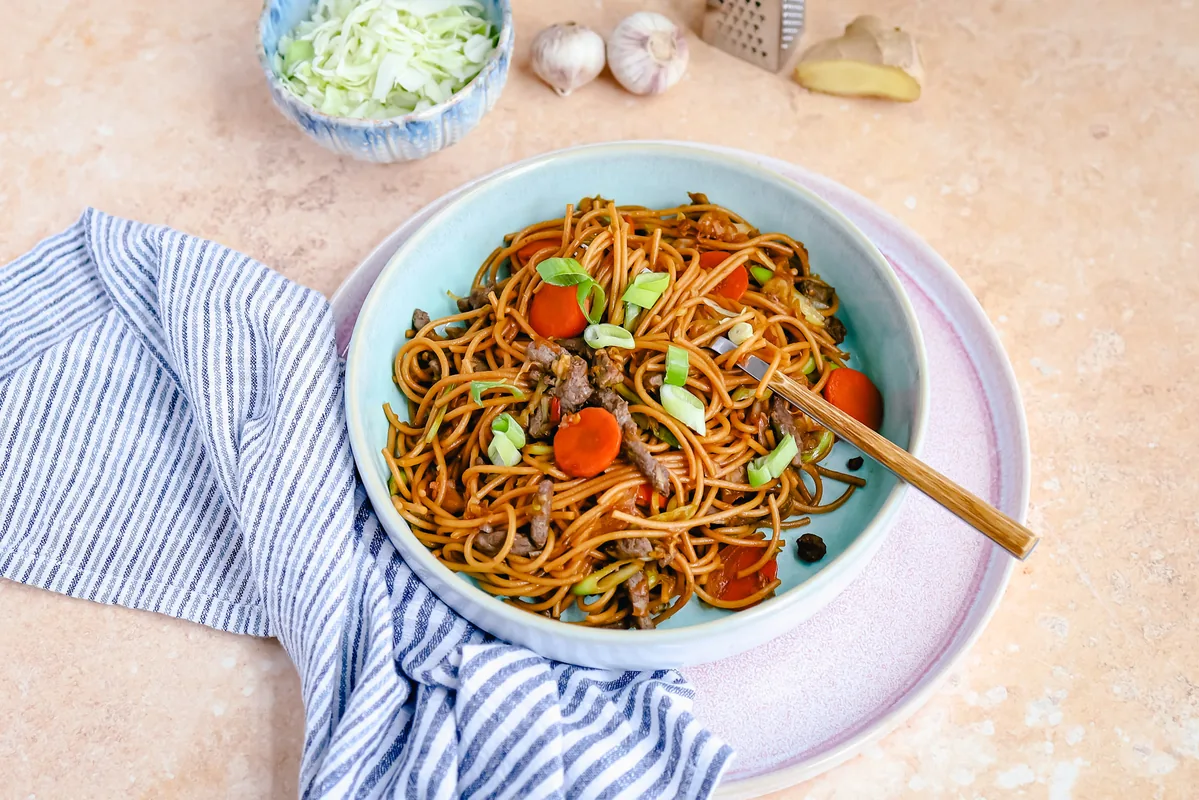
Fried Noodles with Beef Strips
Whole wheat spaghetti in a wok doesn’t follow the script. But the noodles pick up char from the hot oil, the beef strips get four minutes of screaming heat before anything else touches the pan, and 207 grams of shredded cabbage turns a solo dinner into something that barely fits a deep plate.
Ginger and garlic go in first. Then teriyaki and Sriracha build a sweet-heat glaze that coats everything in the last sixty seconds. Fifteen minutes, start to finish.
709 kcal, 35g protein, 15g fiber on one plate.
Whole wheat spaghetti in a wok doesn’t follow the script. But the noodles pick up char from the hot oil, the beef strips get four minutes of screaming heat before anything else touches the pan, and 207 grams of shredded cabbage turns a solo dinner into something that barely fits a deep plate.
Ginger and garlic go in first. Then teriyaki and Sriracha build a sweet-heat glaze that coats everything in the last sixty seconds. Fifteen minutes, start to finish.
709 kcal, 35g protein, 15g fiber on one plate.
Ingredients
- spaghetti, whole wheat 3 ounces
- ginger 1 slice
- garlic 1 clove
- scallion 1
- carrot 1
- olive oil 1.5 tablespoon
- beef strips 3 ounces
- cabbage, shredded 1.25 cup
- teriyaki sauce 1.5 tablespoon
- Sriracha sauce 1 teaspoon
Method
-
Cook the spaghetti according to the package instructions.
-
Grate the ginger. Finely chop the garlic clove. Slice the scallion into rings and the carrot into thin slices.
-
Heat half of the oil in a wok pan. Add the beef strips and cook them over high heat for 4 minutes until cooked through. Remove the strips from the pan and set aside in a bowl.
-
Heat the other half of the oil in the wok pan. Sauté the garlic and ginger for a minute. Add the carrot and cabbage to the pan and stir-fry for 6 minutes until crisp-tender. Stir in the teriyaki sauce, Sriracha and beef strips and heat for another minute.
-
Stir the drained spaghetti into the vegetables. Toss everything together well and season with salt and pepper.
-
Serve the fried noodles in a (deep) plate.
Let the cabbage sit against the hot wok for thirty seconds between tosses. The caramelized edges come from contact, not from constant stirring. Six minutes of patient tossing gives you crisp-tender with charred spots. Serve fresh cucumber alongside for a cold crunch against the hot noodles.
Stir-frying cruciferous vegetables like cabbage produces 7.9 times more protective compounds than leaving them raw. Boiling cuts those same compounds by up to 99%. The mechanism: dry heat destroys a competing enzyme while preserving the one that produces the beneficial compounds. This recipe’s wok method with 207 grams of shredded cabbage is the approach that performed best in the research.
Wang et al. (2020) · DOIBehind this recipe
Can I use regular spaghetti instead of whole wheat?
The recipe works with any spaghetti. Whole wheat gives you more fiber (this plate hits 15 grams total), but the wok technique works the same with regular pasta. If you swap, expect slightly different macros: fewer grams of fiber, marginally more refined carbs.
Why sear the beef before the vegetables?
Two reasons. First, beef strips need high, dry heat to brown instead of steam. Adding them with the vegetables drops the wok temperature and traps moisture. Second, pulling the beef out lets you build the aromatics (garlic and ginger) in clean oil without overcooking the meat. The beef goes back in at the end, stays tender, and picks up the glaze.
Is 709 calories a lot for a single dinner?
Depends on your daily target. For someone eating around 2,000 kcal across three meals and a snack, 709 kcal is a solid dinner portion. What stands out is the composition: 35g protein, 83g carbs from whole wheat, and 15g fiber. Research pooling 62 trials found higher fiber intake was associated with accelerated fat loss, and 15 grams in a single meal is a meaningful contribution toward daily intake.
Read the full evidence reviewCan I skip the Sriracha?
Yes. The teriyaki sauce carries the main flavor. Without Sriracha, the dish leans sweet rather than sweet-heat. 5 ml is already a light touch, so most people won’t find this version spicy.