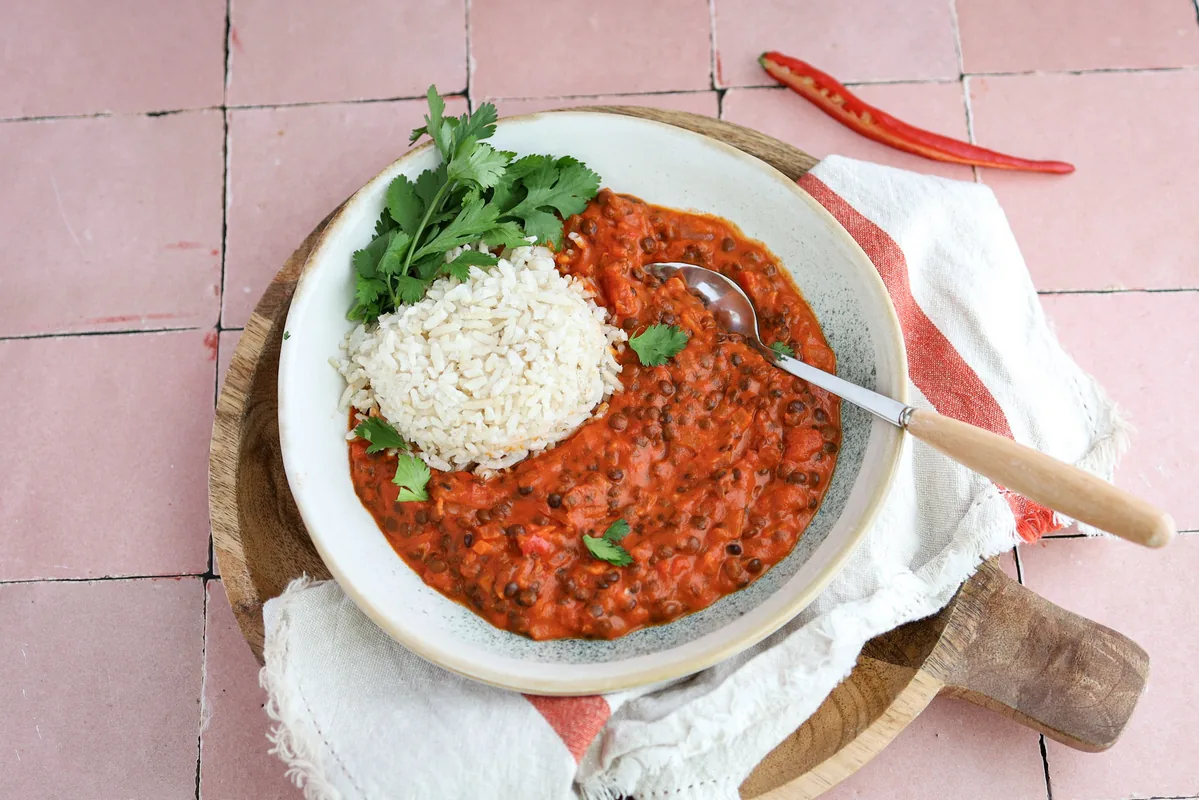
Dal with Lentils & Coconut
Garlic and onion hit the oil first. That’s the oldest trick in dal cooking, and it builds the base everything else rides on. But there’s a second thing happening in that pan. Research found that garlic and onion, heated in oil, convert lycopene (the compound behind tomato’s red color) into a form absorbed up to 8 times more efficiently by the body.
This dal loads both sides of that reaction: two allium sources and two tomato forms (paste for concentrated lycopene, diced for volume), with olive oil bridging them. Canned lentils, coconut milk, and cumin fill out a 625-calorie plant-based dinner on brown rice in 15 minutes.
Garlic and onion hit the oil first. That’s the oldest trick in dal cooking, and it builds the base everything else rides on. But there’s a second thing happening in that pan. Research found that garlic and onion, heated in oil, convert lycopene (the compound behind tomato’s red color) into a form absorbed up to 8 times more efficiently by the body.
This dal loads both sides of that reaction: two allium sources and two tomato forms (paste for concentrated lycopene, diced for volume), with olive oil bridging them. Canned lentils, coconut milk, and cumin fill out a 625-calorie plant-based dinner on brown rice in 15 minutes.
Ingredients
- brown rice 3 ounces
- lentils, canned 5 ounces
- onion 0.5
- garlic 1 clove
- chili pepper 0.5
- olive oil 0.5 tablespoon
- tomato paste 1 tablespoon
- diced tomatoes 5 ounces
- coconut milk 2 fluid ounces
- ground cumin 1 teaspoon
Method
-
Cook the rice according to the instructions on the packaging. Drain the lentils.
-
Finely chop the onion, garlic and chili pepper.
-
Heat the oil in a pan. Sauté the onion, garlic and chili pepper for 2 minutes. Stir in the tomato paste and cook for another minute.
-
Add the lentils, diced tomatoes, coconut milk and ground cumin. Mix everything well and let it simmer for 5-7 minutes until the sauce thickens slightly, stirring occasionally. Add a splash of water if the sauce becomes too thick. Season with salt and pepper to taste.
-
Serve the lentil dal with the rice.
Stir the tomato paste into the oil for a full minute before adding any liquid. This caramelizes the paste and deepens the sauce color. Skip it and the dal tastes flat, the sauce stays pale.
The conversion works because garlic and onion release sulfur compounds when heated. These compounds act as catalysts, bending lycopene molecules into a shape the gut absorbs more readily. In the Honda et al. study, fresh garlic converted 60–68% of the lycopene into this more absorbable form. Fresh onion performed nearly identically. Both need oil present for the reaction to work.
Honda et al. 2019 — Allium-Catalyzed Lycopene Z-Isomerization · DOIBehind this recipe
Can I use dried lentils instead of canned?
Yes, but it changes the timing. Dried red lentils take about 15–20 minutes to cook and break down into the sauce naturally, giving you a creamier texture. Dried green or brown lentils take 25–30 minutes and hold their shape. If you switch, add extra water and simmer longer. The macros stay roughly the same per serving.
Is 20g of protein enough for a dinner?
It depends on your total daily intake. This dal delivers 20g entirely from plants, with lentils and rice providing complementary amino acids (lentils contribute lysine, rice contributes methionine). Research has found that plant protein can match animal protein for muscle building when total daily intake is sufficient.
Read the full evidence reviewDoes the coconut milk add a lot of fat?
The 60ml of coconut milk contributes roughly 9g of fat. The total dish sits at 21g fat for 625 kcal, which is about 30% of calories from fat. That’s moderate. The fat also serves a functional role here: lycopene is fat-soluble, and the olive oil plus coconut milk help your body absorb it from the tomatoes.