Cauliflower & Chickpea Madras with Quinoa
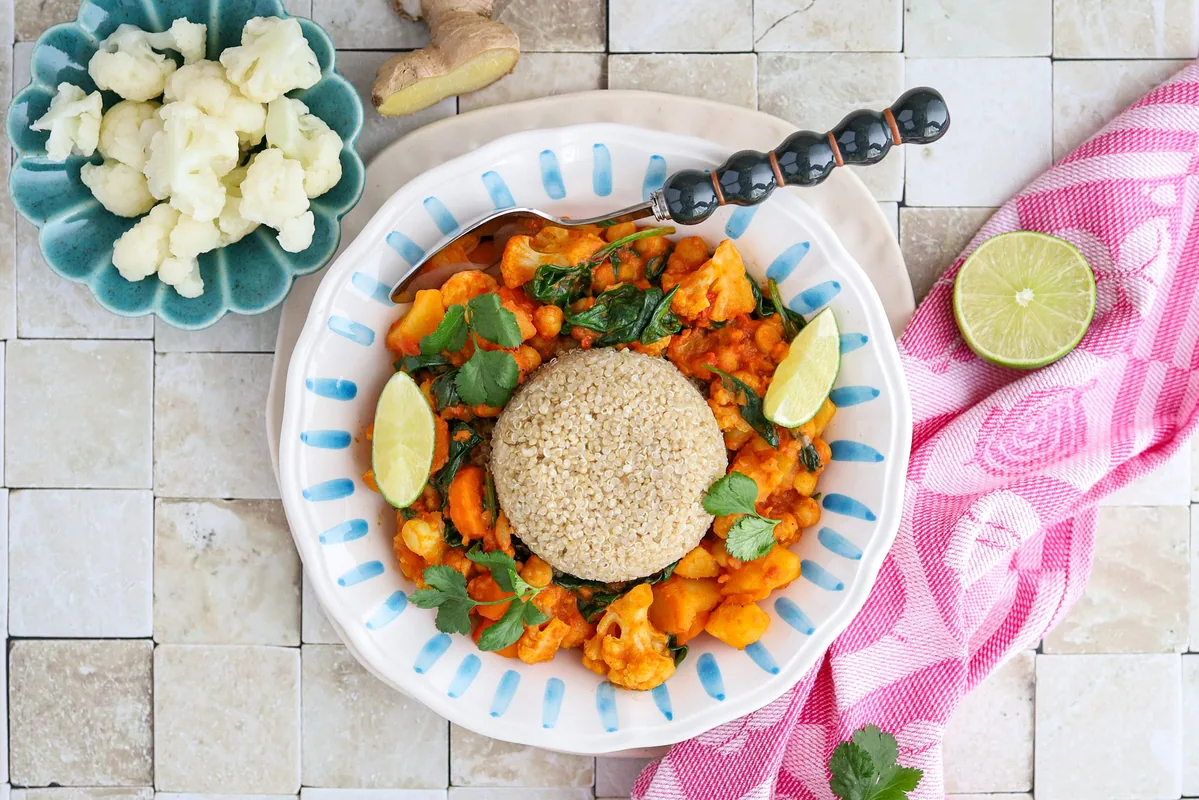
A spice paste built from scratch — onion, garlic, ginger, chili pepper — sautéed in olive oil with turmeric and curry powder before diced tomatoes go in. Five minutes of simmering, then coconut milk, then blanched cauliflower, potato, carrot, and chickpeas folded into the sauce. The spinach goes in last, wilting directly into the coconut milk.
771 calories, 24 grams of protein, 20 grams of fiber. Twenty minutes, one pan for the curry, one pot for the quinoa. The sequence is not random: turmeric meets fat before liquid, and spinach meets coconut milk instead of water. Researchers have measured both of those pairings, and the differences are not small.
A spice paste built from scratch — onion, garlic, ginger, chili pepper — sautéed in olive oil with turmeric and curry powder before diced tomatoes go in. Five minutes of simmering, then coconut milk, then blanched cauliflower, potato, carrot, and chickpeas folded into the sauce. The spinach goes in last, wilting directly into the coconut milk.
771 calories, 24 grams of protein, 20 grams of fiber. Twenty minutes, one pan for the curry, one pot for the quinoa. The sequence is not random: turmeric meets fat before liquid, and spinach meets coconut milk instead of water. Researchers have measured both of those pairings, and the differences are not small.
Ingredients
- quinoa 3 ounces
- carrot 1
- potato 3.5 ounces
- onion 0.5
- garlic 1 clove
- ginger 1 slice
- chili pepper 0.5
- chickpeas 2 ounces
- cauliflower florets 4 ounces
- olive oil 1 tablespoon
- curry powder 1 teaspoon
- turmeric 0.5 teaspoon
- diced tomatoes 5 ounces
- coconut milk 2 fluid ounces
- spinach 1 handful
Method
-
Cook the quinoa according to the package instructions with a pinch of salt and let it rest for 5 minutes.
-
Cut the carrot and potato into pieces. Finely chop the onion, mince the garlic, grate the ginger and finely chop the chili pepper. Rinse and drain the chickpeas in a colander.
-
Blanch the carrot, potato and cauliflower in boiling water for 5-7 minutes. Then drain.
-
Heat oil in a pan over medium heat and sauté the onion for 2 minutes. Then add the garlic, ginger and chili pepper and cook for another 2 minutes.
-
Add curry powder and turmeric, cook for 1 minute and stir in the diced tomatoes. Let it simmer for 5 minutes.
-
Stir the coconut milk into the sauce and bring it to a boil. Add the blanched vegetables and chickpeas and let it simmer for 5 minutes. Add the spinach and let it wilt. Add a dash of water if needed.
-
Serve the curry with the quinoa.
Give the turmeric its full minute in the oil before adding diced tomatoes. Research found that turmeric powder in a fat-containing meal delivered 44 times more curcumin to the bloodstream than turmeric taken without fat. This recipe gives it two fat sources: the tablespoon of olive oil in the pan first, then the coconut milk that follows.
Step 6 wilts spinach directly into coconut milk. Researchers tested 14 plant-based milks and found that coconut milk was the only one that significantly improved lutein liberation from spinach, a 42% increase. The mechanism was not fat content. Coconut milk's protein fraction forms structures during digestion that physically capture lutein and carry it through the intestinal wall. Twenty-five grams of spinach is a small portion, and the absolute benefit scales with the amount of spinach in the bowl, but the mechanism applies regardless of quantity.
Neelissen et al. 2023 — Nutrients · DOIWhy This Works
Behind this recipe
Why does the spinach go in at the very end?
Wilting it directly into the coconut milk sauce matters. Researchers tested 14 plant-based milks and found that coconut milk was the only one that significantly improved how much lutein your body can extract from spinach, a 42% increase. The mechanism is coconut milk's protein fraction, which creates structures during digestion that capture lutein. Adding spinach to water or broth would skip that interaction entirely.
Does this curry need black pepper for the turmeric to work?
No. The most-cited claim is that black pepper's piperine boosts curcumin absorption by 2,000%. But that number comes from a study on isolated supplements, not food. This recipe uses a different delivery system: turmeric sautéed in olive oil, then simmered in coconut milk. A fat-containing meal delivered 44 times more curcumin to the bloodstream than turmeric taken without fat. The oil and coconut milk in this curry are the mechanism.
Can I use a different plant milk instead of coconut milk?
You can, but the sauce will be thinner and the flavor changes. Coconut milk adds body, richness, and fat that other plant milks do not match at this volume. It also happens to be the only plant-based milk (of 14 tested) that improved lutein extraction from the spinach in this recipe. Oat or soy milk will work for sauce consistency, but you lose both the flavor profile and the absorption mechanism.
Is 771 calories too much for one meal?
That comes down to your overall daily intake and activity level. For most active adults eating three meals a day, 771 calories is well within range. This meal also delivers 20 grams of fiber, split between chickpeas, vegetables, and quinoa. Research has linked higher fiber intake to increased satiety and slower gastric emptying, which means this meal keeps you full longer per calorie than the number alone suggests.
Read the full evidence review