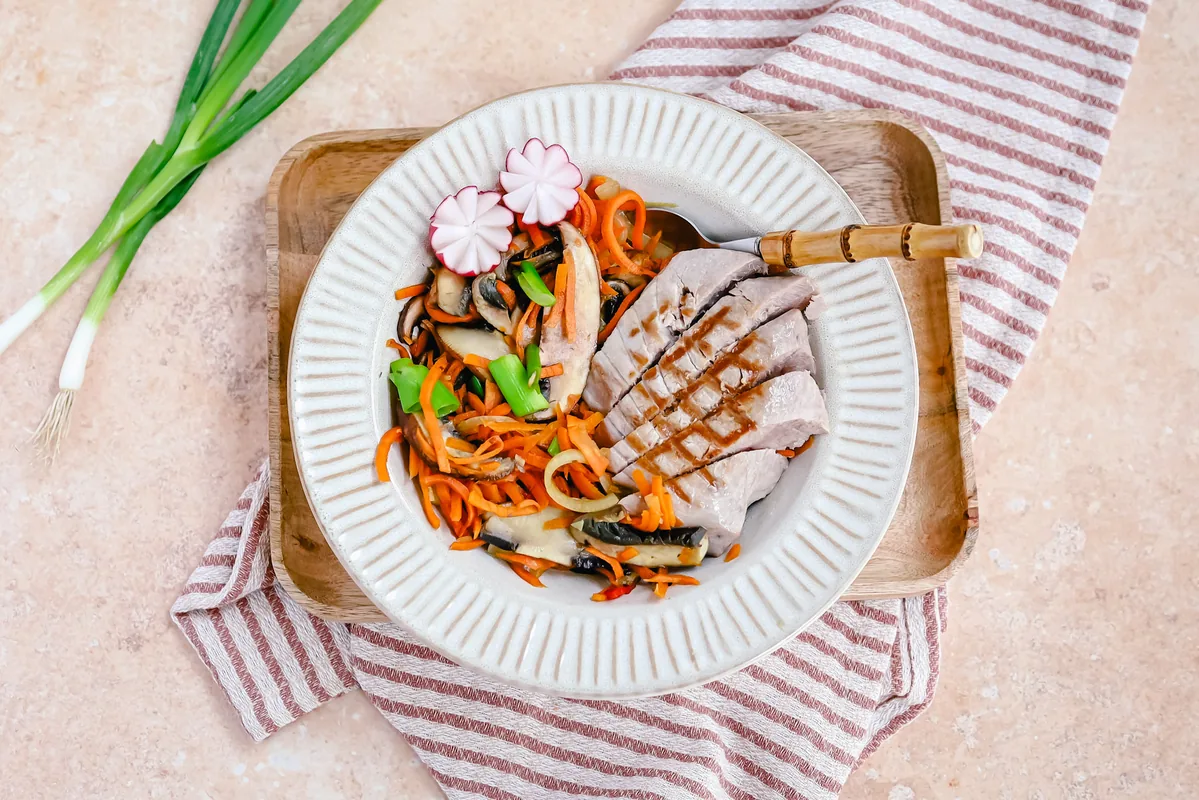
Noodles of Carrot with Portobello & Tuna Steak
Spiralized carrot takes the place of noodles here, and the switch works better than you might expect. A quick stir-fry with curry powder, honey, and half a chili pepper gives the carrot noodles a sweet-spicy glaze that regular pasta never has. Portobello strips add the meaty bite.
A tuna steak, grilled for barely two minutes per side, turns this into a 33g protein dinner at 404 kcal with only 18g of carbs.
Spiralized carrot takes the place of noodles here, and the switch works better than you might expect. A quick stir-fry with curry powder, honey, and half a chili pepper gives the carrot noodles a sweet-spicy glaze that regular pasta never has. Portobello strips add the meaty bite.
A tuna steak, grilled for barely two minutes per side, turns this into a 33g protein dinner at 404 kcal with only 18g of carbs.
Ingredients
- tuna steak 1
- garlic 1 clove
- chili pepper 0.5
- ginger 1 slice
- portobello 1
- scallion 1
- carrot 1
- olive oil 1.5 tablespoon
- curry powder 1 teaspoon
- honey 1 teaspoon
Method
-
Remove the tuna steak from the freezer and let it thaw on a plate.
-
Finely chop the garlic. Cut the chili pepper and ginger into small pieces. Slice the portobello into strips and the scallion into large pieces.
-
Make noodles from the carrot using a spiralizer.
-
Heat half of the oil in a pan. Sauté the garlic and chili pepper for a minute. Then add the portobello along with the curry powder and cook for 3 minutes. Then add the honey, carrot and scallion. Cook for about 3-5 minutes, depending on how soft you want the carrot noodles.
-
Pat the tuna steak dry with paper towels. Rub it with the other half of the oil and some salt and pepper. Heat a grill pan and grill the tuna for 1-2 minutes per side.
-
Serve the carrot noodles with the portobello and the tuna on a plate.
The chili pepper in step 4 does more than add heat. Animal research found that capsaicin boosted beta-carotene levels by 44% through increased bile secretion. The carrot noodles are one of the richest everyday sources of beta-carotene, and the olive oil in the stir-fry is the fat carrier that makes it absorbable. All three are already together in the pan.
Behind this recipe
Can I eat the tuna steak rare?
Yes. The recipe calls for 1 to 2 minutes per side, which sears the outside while keeping the center pink. Fresh tuna steak is commonly served rare to medium-rare. If you want to go very rare, use sushi-grade tuna and make sure it was properly frozen beforehand to reduce parasite risk.
Why carrot noodles instead of regular noodles?
Carrot noodles bring the total carbs down to 18 grams for the entire meal, roughly a third of what whole-wheat noodles would add. They also pick up the curry-honey glaze differently than regular noodles, because spiralizing creates more surface area for the sauce to coat.
Is 33 grams of protein enough for one meal?
Research shows your body can use substantially more protein per sitting than the old 20 to 30 gram guideline suggested. At 33 grams from a single tuna steak, this meal gives your muscles plenty to work with.
Read the full evidence review