Bacon & Broccoli Macaroni
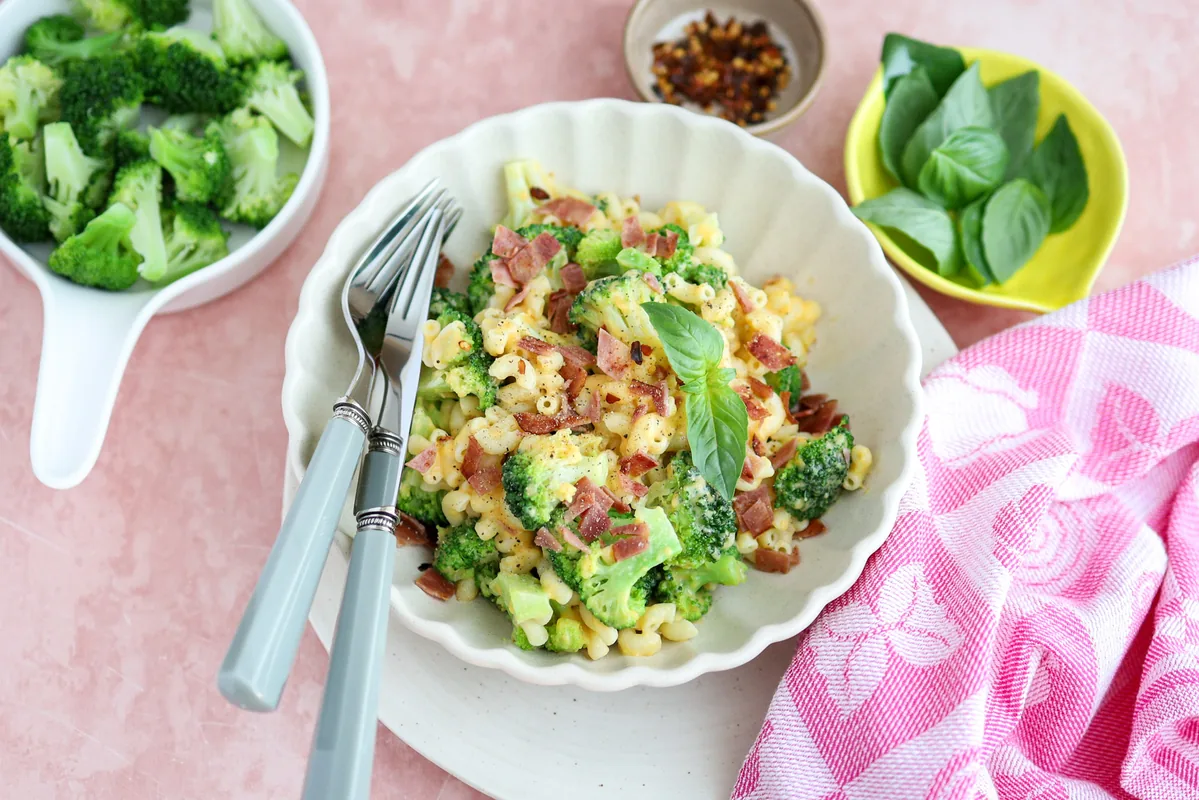
Whole wheat macaroni and frozen broccoli share the same pot — the broccoli goes in for the last three minutes and comes out perfectly tender while the pasta finishes. The cheese sauce builds in the pan where the bacon just crisped, so the rendered fat becomes the base instead of butter.
Nonfat yogurt and 2% milk replace the heavy cream you would find in most mac-and-cheese recipes. The cheddar melts into that lighter base with enough body to coat every noodle. The result is a 15-minute comfort bowl with 44g of protein and 815 kcal per serving, substantially more protein than the boxed version delivers and without the cream-heavy calorie load.
Whole wheat macaroni and frozen broccoli share the same pot — the broccoli goes in for the last three minutes and comes out perfectly tender while the pasta finishes. The cheese sauce builds in the pan where the bacon just crisped, so the rendered fat becomes the base instead of butter.
Nonfat yogurt and 2% milk replace the heavy cream you would find in most mac-and-cheese recipes. The cheddar melts into that lighter base with enough body to coat every noodle. The result is a 15-minute comfort bowl with 44g of protein and 815 kcal per serving, substantially more protein than the boxed version delivers and without the cream-heavy calorie load.
Ingredients
- macaroni, whole wheat 3 ounces
- broccoli florets (frozen) 8 ounces
- bacon 3 slices
- milk, 2% reduced fat 2 fluid ounces
- yogurt, nonfat 2 fluid ounces
- cheddar cheese, shredded 2 ounces
Method
-
Cook the macaroni according to the instructions on the package. Add the broccoli florets in the last 3 minutes of cooking time. Drain and set aside.
-
Cut the bacon into pieces. Heat a small pan over medium heat and cook the bacon until crispy. Remove the bacon from the pan and set aside.
-
Reduce the heat and add the milk to the same pan. Gradually stir in the yogurt until well combined. Slowly add the cheese while constantly stirring until the cheese is melted and the sauce is smooth.
-
Add the macaroni, broccoli and bacon to the cheese sauce. Mix everything well together. Season with salt and pepper to taste.
Keep the heat low when adding yogurt to the bacon pan. Yogurt curdles at high temperatures, and the residual heat from frying bacon is enough to break it if you pour it straight in. Stir continuously as you add the cheddar. Patience here is the difference between a silky sauce and a grainy one.
Frozen broccoli keeps the raw material for a compound researchers study for its links to cell protection, but the enzyme that converts it was destroyed when the broccoli was blanched before freezing. Research by Dosz and Jeffery found that eating a small amount of raw vegetables from the same plant family alongside the frozen broccoli can restore the conversion. A few slices of raw radish, a handful of shredded cabbage, or a pinch of mustard powder as a garnish is enough. The raw vegetable carries the enzyme the frozen broccoli lost.
Dosz & Jeffery, 2013 · DOIBehind this recipe
Is 44g of protein in one meal too much for my body to use?
No. The widely cited 30g-per-meal ceiling was a measurement error. Early studies measured the muscle-building response for 6 hours or less, which missed the slower digestion of larger doses. A 2023 isotope tracer study gave young men 100g of protein in one drink right after a workout and found the body was still processing it more than 12 hours later. Forty-four grams sits between the 25g and 100g doses that study compared.
Read the full evidence reviewCan I use regular macaroni instead of whole wheat?
Yes. Regular macaroni works the same way in the sauce and cooks in similar time. Whole wheat adds more fiber and a slightly nuttier flavor that pairs well with the sharp cheddar, but the recipe holds together either way.
Why yogurt and milk instead of heavy cream?
The nonfat yogurt adds tang and body to the sauce while keeping the calorie count lower than a cream-based version. Combined with 2% milk, it produces a smooth, pourable cheese sauce that coats the pasta without the heaviness. The trade-off is that yogurt curdles at high heat, which is why Step 3 says to reduce the heat before adding it.