Rice Salad with Grilled Zucchini
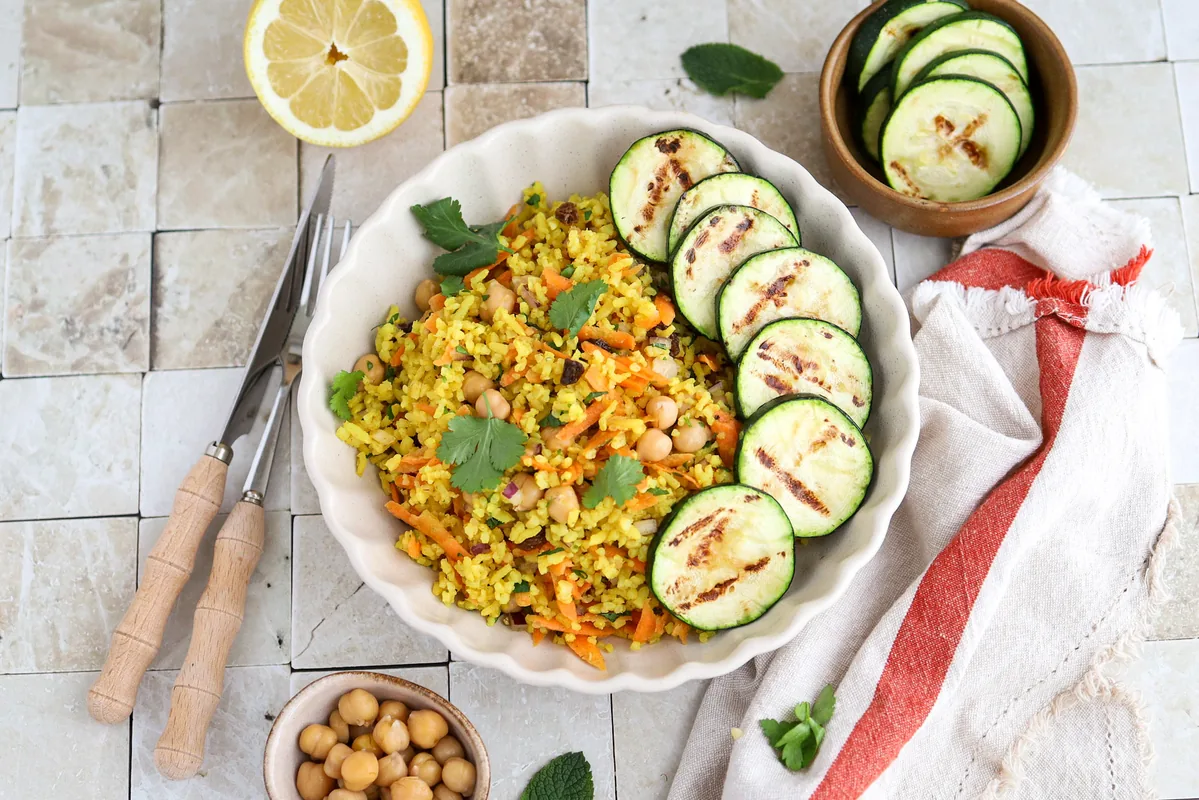
Warm spices in a cold bowl. Cumin, cinnamon, and ginger fold into the olive oil dressing while turmeric tints the brown rice golden — then everything meets at room temperature with grilled zucchini layered on top.
Grated carrot, chickpeas, red onion, and raisins build the base. The spiced dressing ties the bowl together: olive oil, lemon, pressed garlic, fresh ginger, and a dusting of cumin and cinnamon. 691 calories, 14 grams of fiber, 15 minutes, and entirely plant-based.
Warm spices in a cold bowl. Cumin, cinnamon, and ginger fold into the olive oil dressing while turmeric tints the brown rice golden — then everything meets at room temperature with grilled zucchini layered on top.
Grated carrot, chickpeas, red onion, and raisins build the base. The spiced dressing ties the bowl together: olive oil, lemon, pressed garlic, fresh ginger, and a dusting of cumin and cinnamon. 691 calories, 14 grams of fiber, 15 minutes, and entirely plant-based.
Ingredients
- brown rice 3 ounces
- turmeric 0.5 teaspoon
- zucchini 1
- olive oil 1.5 tablespoon
- carrot 1
- ginger 1 slice
- red onion 0.25
- garlic 1 clove
- chickpeas 2 ounces
- lemon juice 1 squeeze
- ground cumin 0.5 teaspoon
- cinnamon 1 pinch
- raisins
Method
-
Cook the rice with the turmeric according to the instructions on the package. Drain and let cool.
-
Slice the zucchini and lightly brush with half of the olive oil. Season with pepper and salt. Heat a grill pan and grill the zucchini slices on both sides for about 3 to 4 minutes.
-
Grate the carrot and ginger, finely chop the red onion, press the garlic clove. Rinse the chickpeas in a colander with cold water and let drain.
-
In a small bowl, mix the other half of the olive oil with the lemon juice, garlic, ginger, cumin, cinnamon and some pepper and salt. Stir well.
-
Put the rice, carrot, red onion, chickpeas and raisins together in a bowl. Pour the dressing over it and toss everything well together.
-
Divide the rice salad onto a plate and place the grilled zucchini slices on top of the rice salad.
Toss the grated carrot through the olive oil dressing first, then add the rice and chickpeas. Raw carrot's beta-carotene is locked behind cell walls — a clinical trial found zero carotenoid absorption from a salad dressed without fat. This recipe's olive oil clears the threshold: about ten grams of fat, where the study measured six as the minimum for meaningful uptake.
The cooling step is doing nutritional work most people miss. When cooked rice sits and cools, some of its starch locks into tighter crystalline structures that resist your digestive enzymes — behaving more like fiber than like regular carbs. A clinical trial tested this directly: refrigerating cooked rice for 24 hours more than doubled the amount of this resistant starch, and the cooled rice produced a measurably lower blood sugar spike than the same rice served hot.
Why This Works
Behind this recipe
Can I make this rice salad ahead of time?
Yes — and it may work better the next day. When cooked rice sits in the fridge, some of its starch crystallizes into tighter bundles called resistant starch — structures your digestive enzymes struggle to break apart. A clinical trial found that refrigerated rice had more than double the resistant starch of freshly cooked rice and produced a lower blood sugar response. The flavors also develop: the cumin-cinnamon dressing soaks deeper into the rice overnight. Keeps well in a sealed container, refrigerated, for a couple of days.
Why is there turmeric in the rice water?
Turmeric gives the rice a warm golden color and adds a subtle earthy undertone that pairs with the cumin and cinnamon in the dressing. It also contains curcumin, though the amount in one gram of turmeric is small. The olive oil in the dressing does provide some fat at the table, which research links to better curcumin absorption — but at this dose, the turmeric is more about flavor and color than a nutritional headline.
Do the raisins affect iron absorption from the chickpeas?
They can. Raisins contain concentrated tannins that bind to non-heme iron — the kind in chickpeas and brown rice — and reduce how much your body absorbs. A laboratory study found low iron bioavailability from all three common raisin types, with inhibitors that may also reduce uptake from other foods in the same meal. The lemon juice in the dressing provides some vitamin C, which works in the opposite direction, but five milliliters is a modest counterweight.