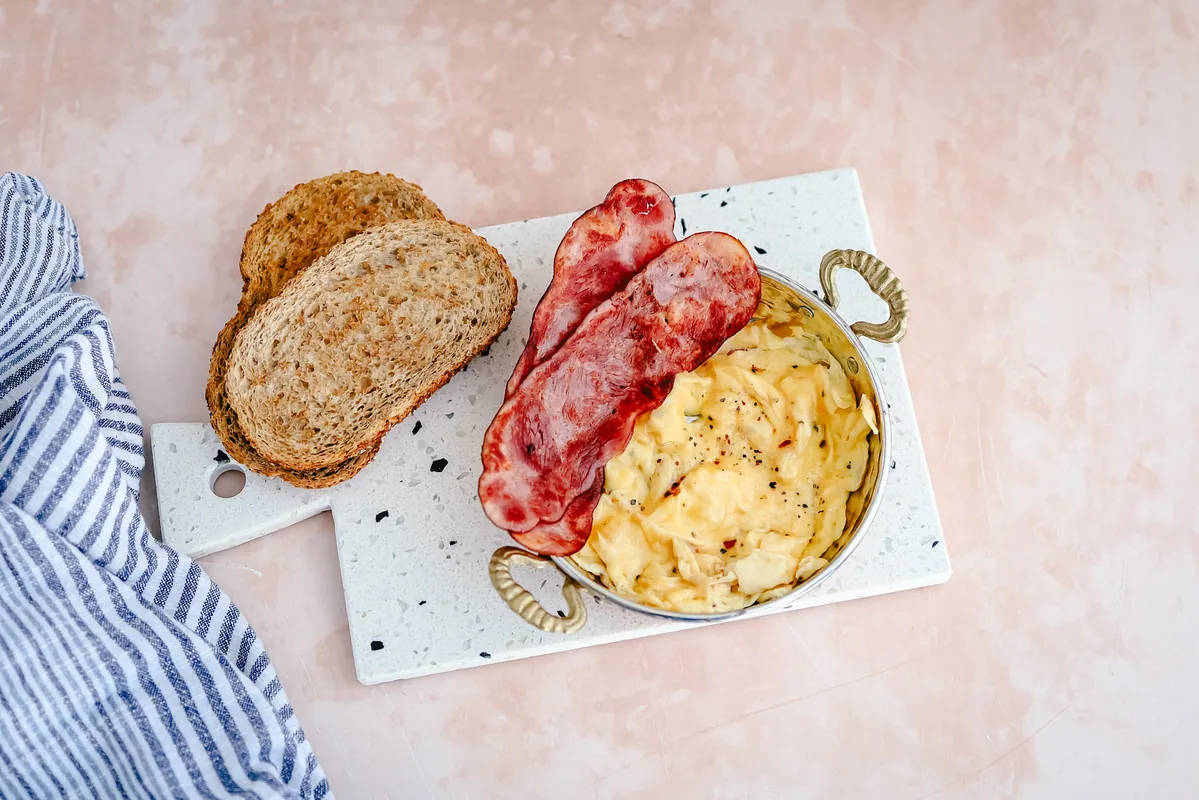
Ham & Cheese Omelet
The layered sauté is the move. Ham browns first in olive oil, onion softens into the fat, diced tomato joins for a final two minutes. Eggs poured over that base, cheddar sprinkled on top, and one fold to trap everything together.
Thirty-five grams of protein between the eggs, ham, and cheese. Six grams of fiber from the whole wheat bread. Ten minutes, one pan.
The layered sauté is the move. Ham browns first in olive oil, onion softens into the fat, diced tomato joins for a final two minutes. Eggs poured over that base, cheddar sprinkled on top, and one fold to trap everything together.
Thirty-five grams of protein between the eggs, ham, and cheese. Six grams of fiber from the whole wheat bread. Ten minutes, one pan.
Ingredients
- ham 2 slices
- onion 0.25
- tomato 1
- eggs 2
- olive oil 1 tablespoon
- cheddar cheese, shredded 1.5 ounce
- bread, whole wheat 2 slices
Method
-
Dice the ham, onion and tomato into small pieces.
-
In a small mixing bowl, beat the eggs with a fork or whisk until they are well mixed. Add salt and pepper to taste.
-
Heat the oil in a frying pan and sauté the ham for 1-2 minutes until it browns. Add the onion and cook for 1-2 minutes. Then add the tomato and cook for another 1-2 minutes.
-
Add the eggs to the pan. Sprinkle the cheese on top. Fold the omelet in half when the bottom is golden brown. Let it cook for another 1-2 minutes until the cheese melts and the eggs are cooked.
-
Slide the omelet onto a plate and serve hot.
-
While the omelet is cooking, toast the bread until golden brown.
-
Serve the ham and cheese omelet hot with the (toasted) bread on the side.
Sauté the onion and tomato together in the olive oil for the full two to three minutes before adding the eggs. When allium vegetables like onion cook alongside tomato in fat, they trigger a structural change in lycopene that increases its absorption more than eightfold. That conversion only happens when all three — allium, tomato, and fat — meet heat together.
The olive oil in step 3 helps your body absorb the tomato's lycopene — cooking in fat increased plasma lycopene by 82% in a controlled trial. But the 42 grams of cheddar add a tension: in a randomized crossover study, calcium reduced lycopene absorption by 83%. The catch is that the study used calcium supplements, not dairy. Whether cheese calcium behaves the same way is still an open question.
Why This Works
Behind this recipe
Is 40 grams of fat in one breakfast too much?
That depends on your full day. Forty grams sounds high until you map the sources: egg yolks, olive oil, and cheddar each bring different fatty acid profiles. The olive oil also doubles as a delivery system — tomato lycopene is fat-soluble, so cooking it in oil helps your body absorb it. If you eat three to four meals a day, this plate leaves plenty of room for leaner choices later.
Can I use a different cheese?
Mozzarella, Swiss, gouda, or goat cheese all melt well inside an omelet. The texture changes but the protein stays close. Feta works too, though it crumbles more than it melts — add it after folding rather than before.
Does the cheese block the tomato's nutrients?
Possibly, partially. A randomized trial found that calcium reduced lycopene absorption by 83%, but the study used calcium supplements, not dairy. Whether cheese calcium behaves the same way is an open question. The onion and olive oil in this recipe work in the opposite direction — promoting a structural change in lycopene that increases its absorption eightfold. The sauté step is working in your favor either way.